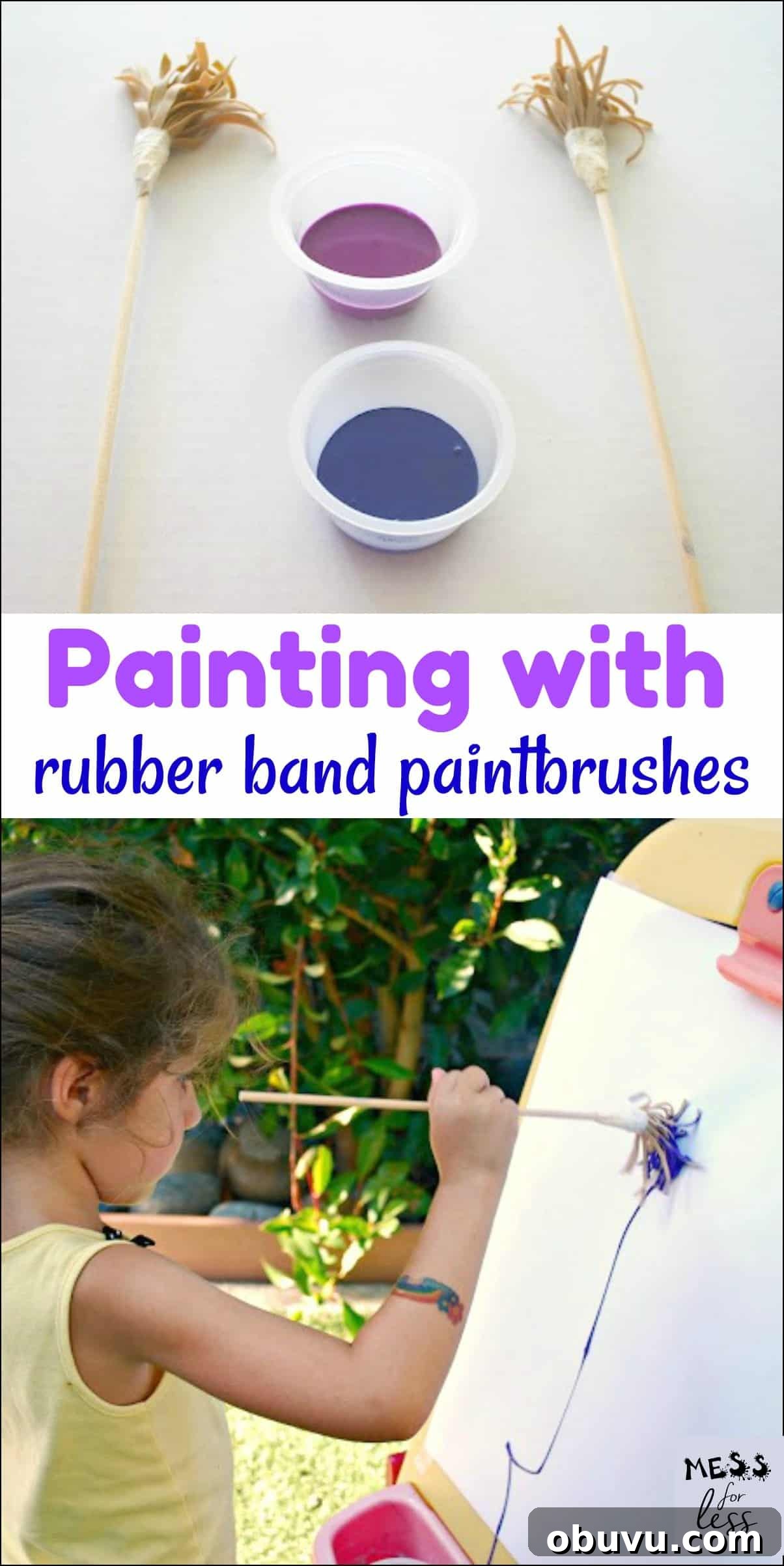
My kids love to paint, so I’m always searching for fresh, simple ways to let them explore color and texture. One of our favorite recent projects was making our own paintbrushes from items you likely already have at home. These rubber band paintbrushes are easy to assemble, produce interesting marks, and inspire creative play. If you enjoy unusual painting techniques, you might also like trying shape painting with building blocks or other toys.
Painting with Rubber Band Paintbrushes
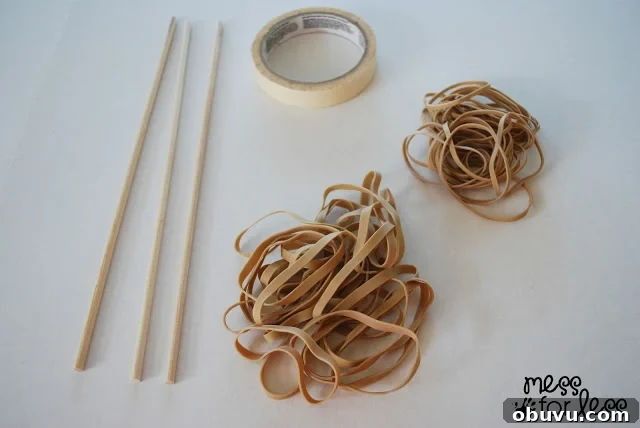
What you’ll need:
- Rubber bands — we used a mix of thicker and thinner bands to create different effects (about 14 halves per brush worked well)
- Wooden dowels — our dowels were thin (around 3/16″) but any lightweight handle will do
- Masking tape to secure the rubber bands to the dowel
For each brush, gather rubber bands and cut them in half so the ends form floppy “bristles.” You can mix band thicknesses: thicker bands give bolder, chunkier marks, while thinner bands make finer lines.
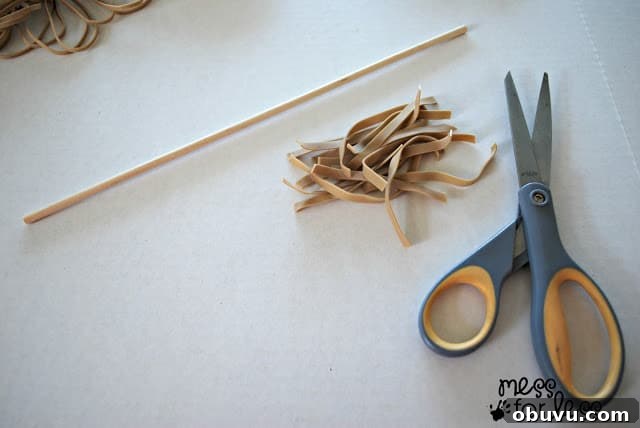
Bundle the cut rubber bands around one end of the dowel and wrap masking tape tightly around them near the tip. Position the tape as close to the end of the dowel as possible so the rubber bands have room to bend and flex while painting.
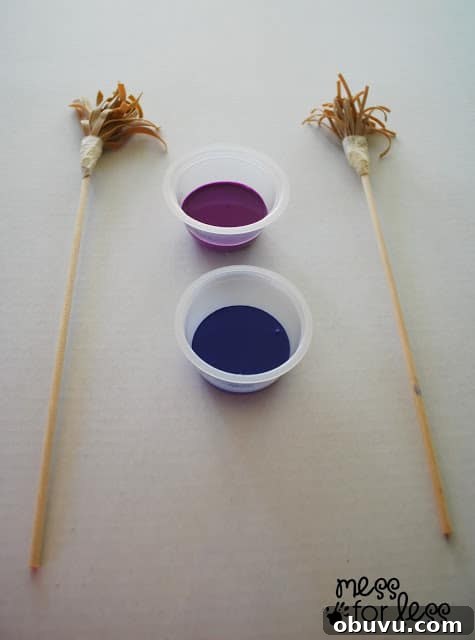
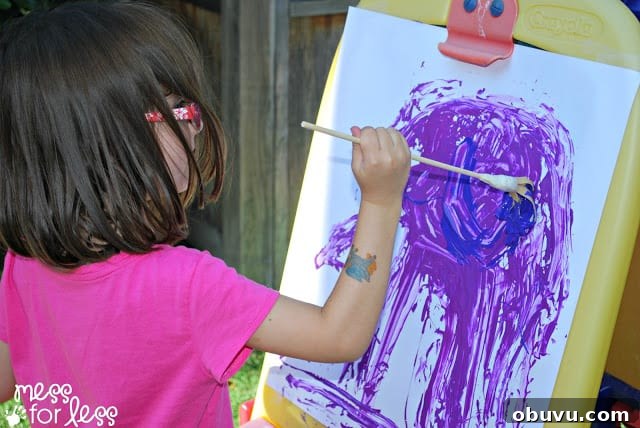
Set up an easel or a flat painting surface, pour paints into shallow cups, and let the kids experiment. Because the “bristles” are longer and more flexible than a standard brush, they create flowing curves, streaks, and overlapping textures that are hard to achieve with regular brushes.
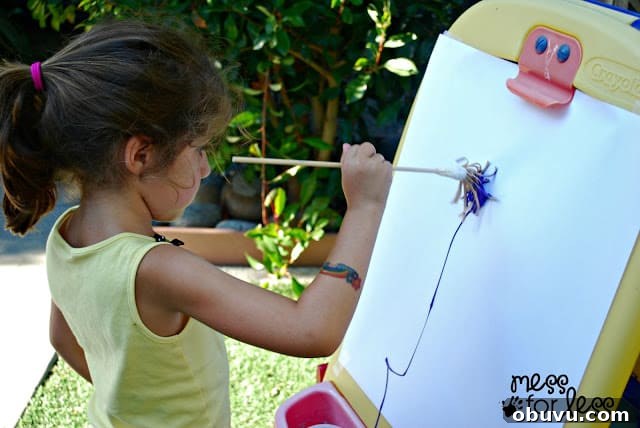
These brushes also hold a surprising amount of paint, so they can make broad, saturated strokes as well as delicate patterns depending on how you press and move them.
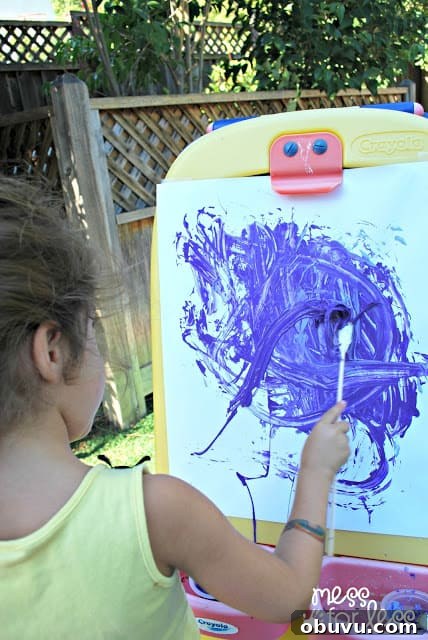
My daughter preferred the chunkier marks from the thicker rubber bands — she loved the rhythmic, almost comb-like patterns they made. I was initially worried that bits of rubber might come loose, but when the bands are cut and taped securely the brushes held up well through multiple children and several paintings.
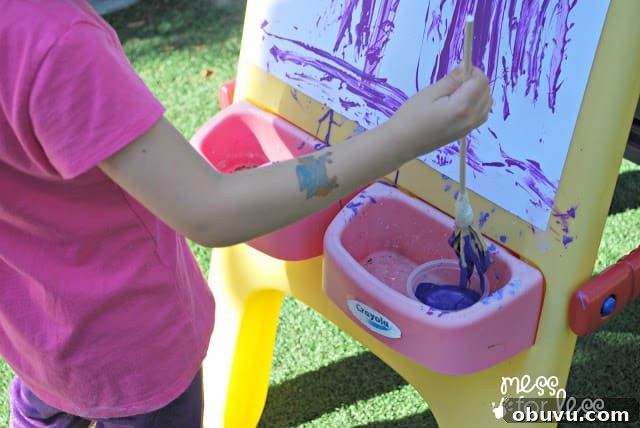
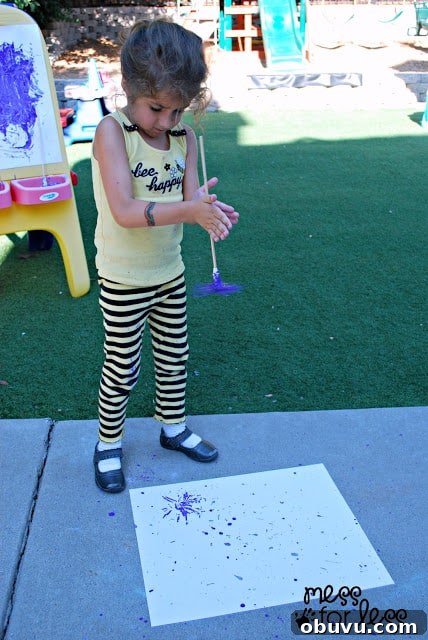
We also explored alternative techniques. One favorite was dipping the brush in paint and rolling the dowel between hands to fling tiny splatters onto the paper. This method is messy and lively — use smocks or play clothes and protect surfaces.
Another fun move was spinning the brush and dropping it onto the page to create large blots and radial bursts that look like fireworks. The unpredictability is part of the charm and encourages kids to experiment with motion, speed, and pressure.
These simple homemade brushes are a great way to get kids painting in new ways. They promote sensory play, fine motor practice, and creative problem solving as children discover how different motions and band combinations change the marks they make. Try varying the number of bands, mixing colors on the same brush, or using paper of different textures to expand the exploration.
If you enjoyed this activity, consider other playful painting ideas and sensory crafts to keep little hands engaged. Homemade tools like these are inexpensive, easy to make, and a fun alternative to traditional supplies.