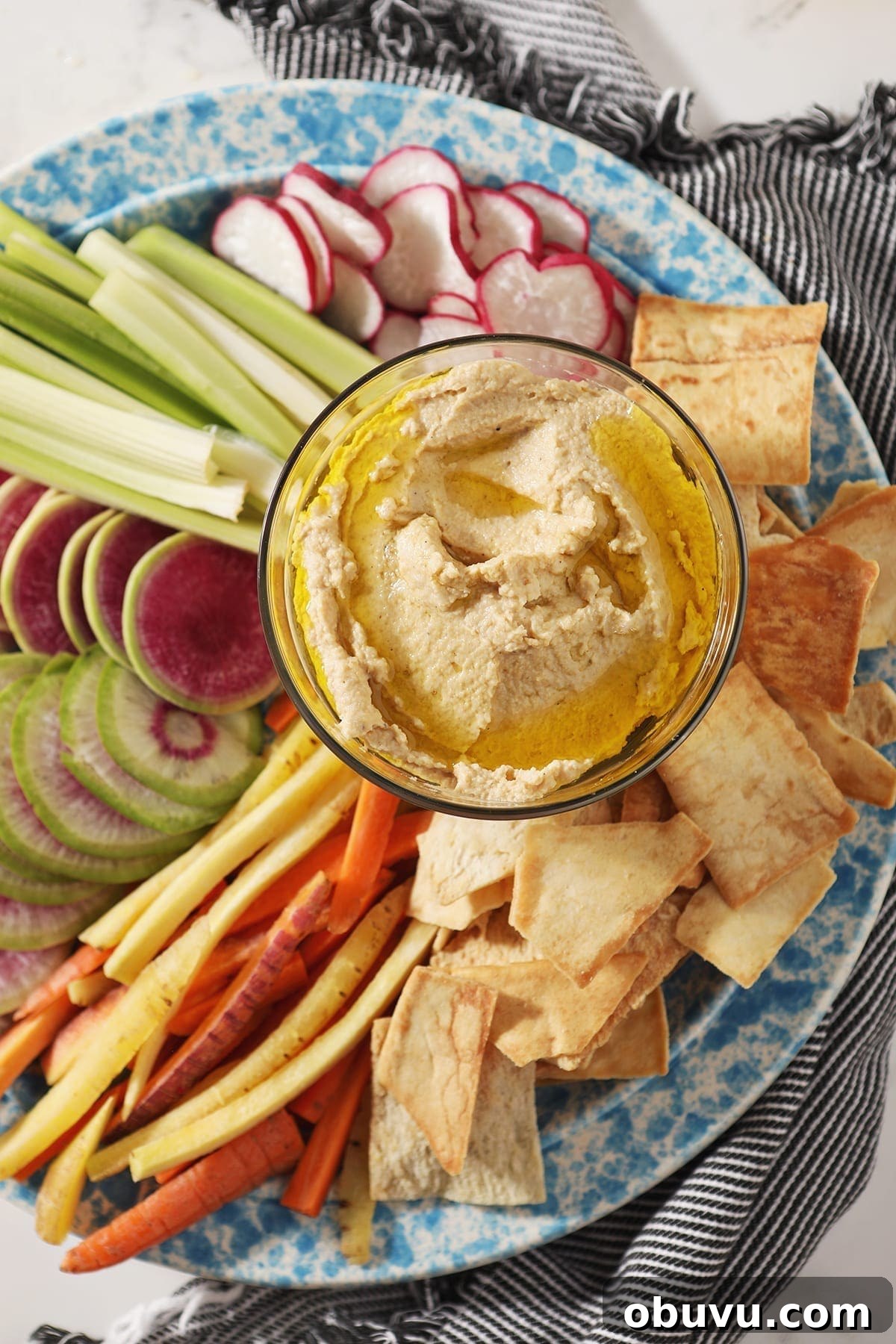
This garlicky hummus pairs beautifully with pita chips or sliced vegetables. It’s a simple, flavorful garbanzo bean dip that makes a great appetizer for gatherings. Makes 5–6 servings; the recipe can easily be doubled or tripled.
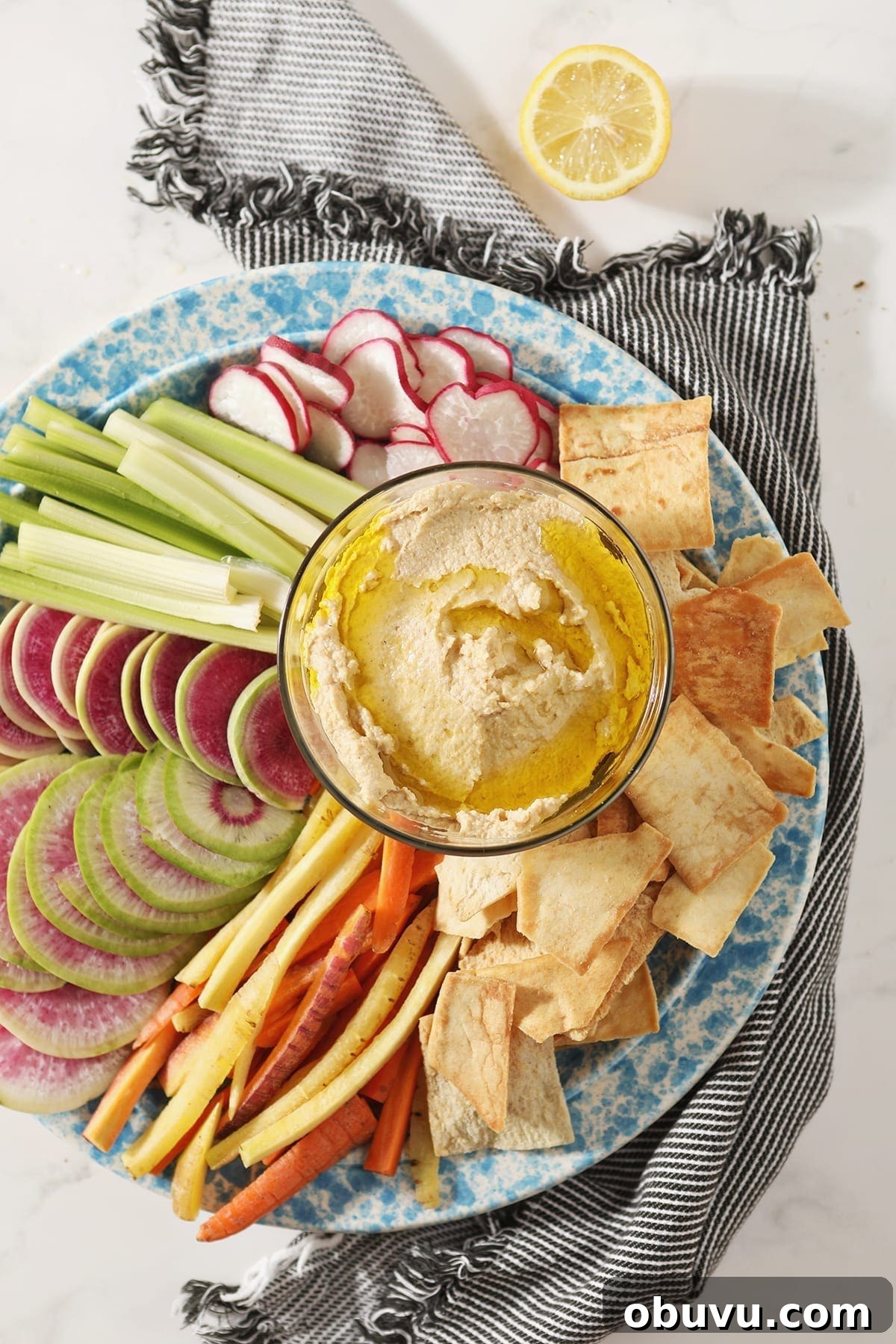
2020 Update: This hummus recipe was originally published January 30, 2013. The photographs and text were updated and republished on June 29, 2020.
Growing up in Memphis, I hadn’t tried hummus until my first solo weekend in Baton Rouge, when I discovered Lebanese food at lunch with a new friend. I was intimidated by the unfamiliar menu, but when the table ordered hummus and baba ghanoush, I fell in love at the first bite.
Why I love this recipe:
This version is inspired by the bold, garlicky hummus we enjoyed at Lebanese restaurants in South Louisiana. Over the years it’s been adapted to match our taste: bright with lemon, rich from tahini, and unapologetically garlicky. It’s not a roasted-garlic hummus and it isn’t meant to be a perfectly traditional Middle Eastern recipe — it’s an American take that’s easy, tasty, and crowd-pleasing.
If you love a punch of fresh garlic, this recipe is calling your name. It’s a great starter for casual get-togethers, game days, or any time you want a reliable, flavorful dip.
Other dip ideas we enjoy include Shrimp Spinach Artichoke Dip, Black Eyed Pea Dip, Whipped Ricotta Dip and Hot Corn Dip.
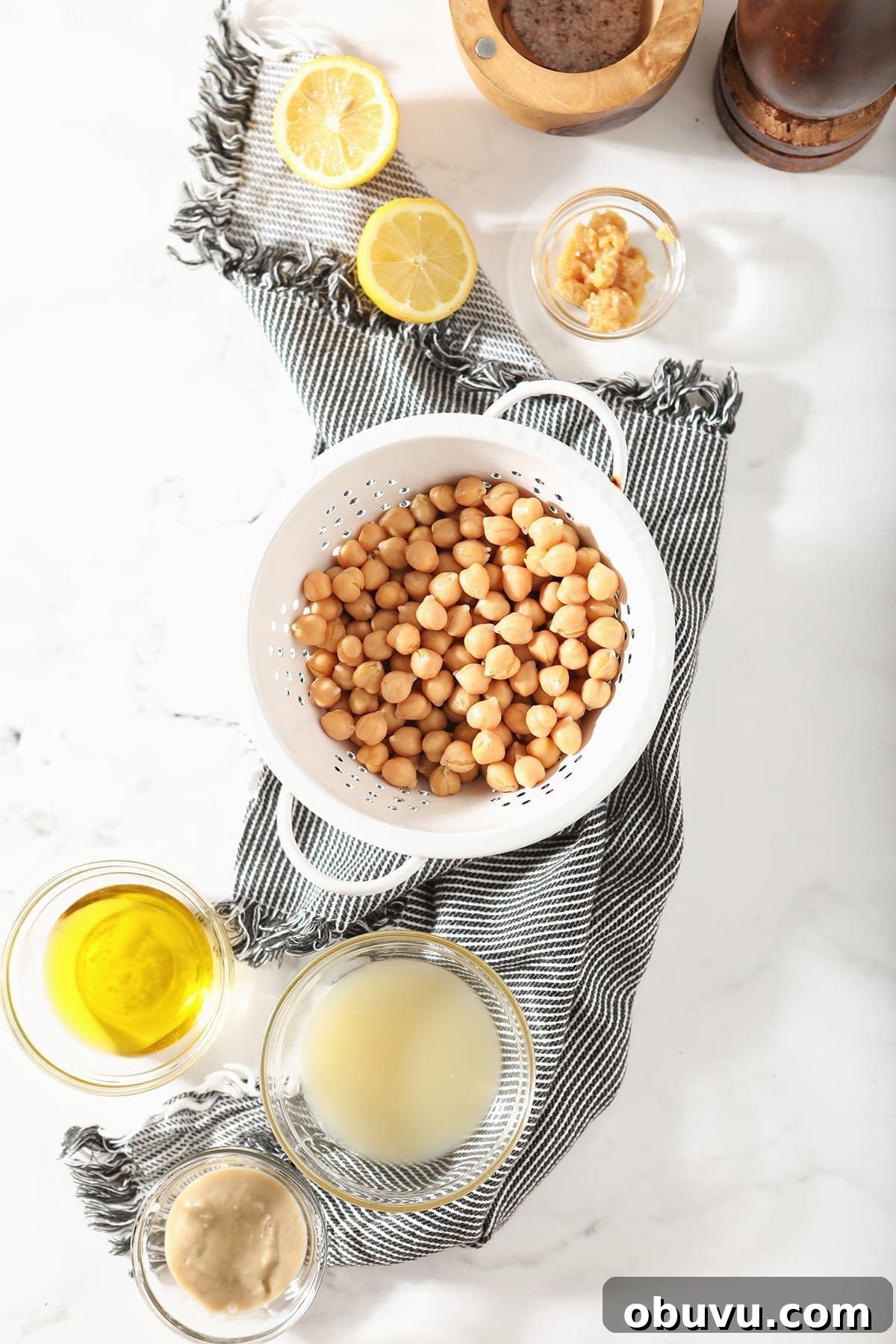
What you need to make this recipe:
Basic kitchen tools and common pantry items are all you need. The recipe card below lists exact measurements and step-by-step instructions.
- Food processor or a high-powered blender
- Colander or fine-mesh strainer
- Sharp knife
- Citrus juicer or reamer
Let’s talk ingredients!
You likely already have several of these ingredients on hand. Scroll to the recipe card for precise quantities.
You just need a handful of ingredients:
- Chickpeas — canned chickpeas are convenient; drain and rinse them well.
- Garlic — use freshly minced garlic for the best, brightest flavor.
- Extra-virgin olive oil — adds richness; you can use another neutral oil if preferred.
- Fresh lemon juice — fresh juice brightens and balances the dip; bottled lemon juice will work in a pinch.
- Tahini — sesame paste adds a nutty creaminess. Look for it in the international or dry-goods aisle.
- Seasonings — kosher salt and freshly cracked black pepper to taste.
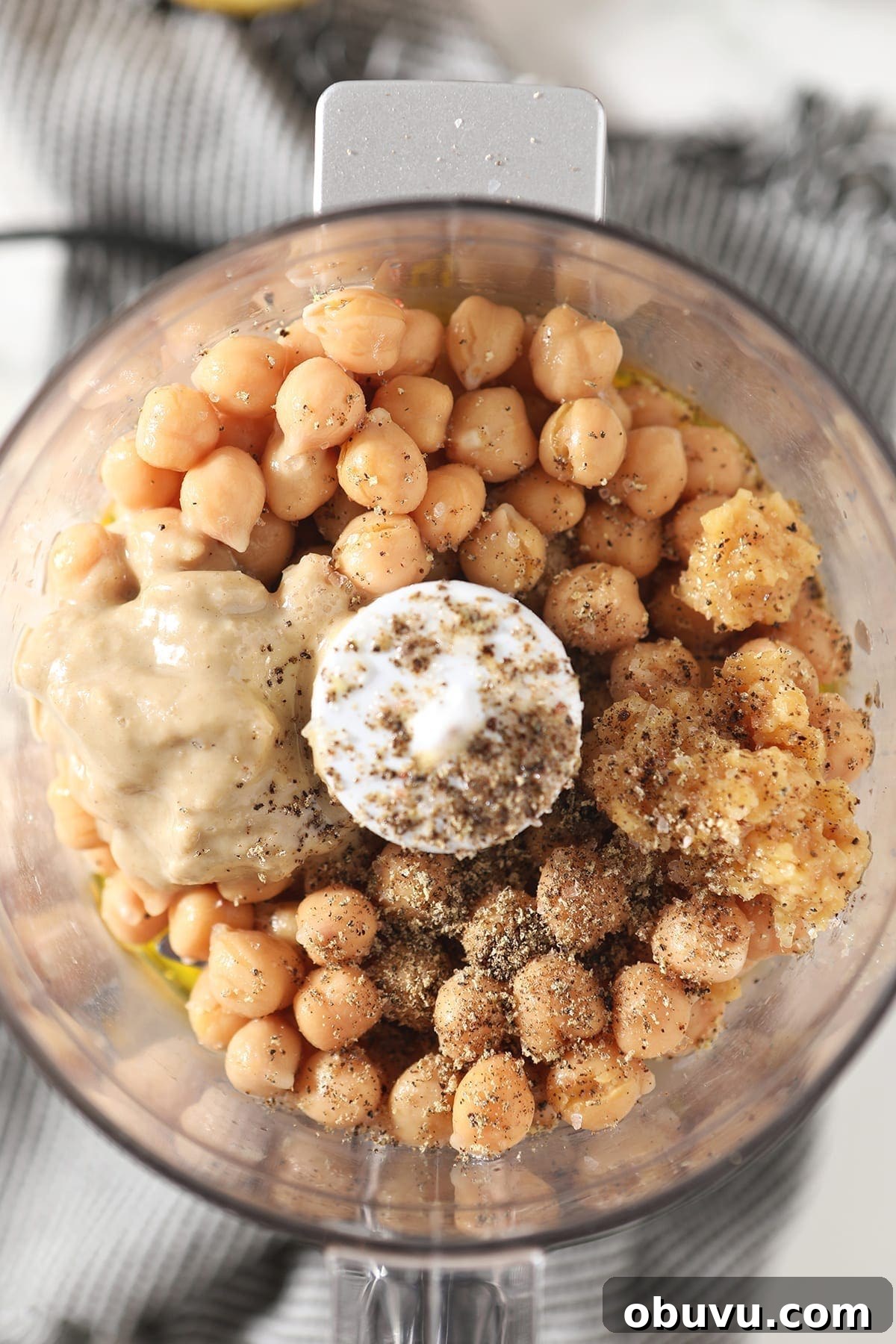
How to Make Homemade Garlic Hummus
Start by preparing the chickpeas: open the can, pour the beans into a colander, and rinse thoroughly under cold water. If you like, reserve the canning liquid (aquafaba) to use in other recipes.
Some recipes recommend removing the skins from each chickpea for an ultra-smooth texture. That step takes time and is optional — we skip it and still get a creamy result.
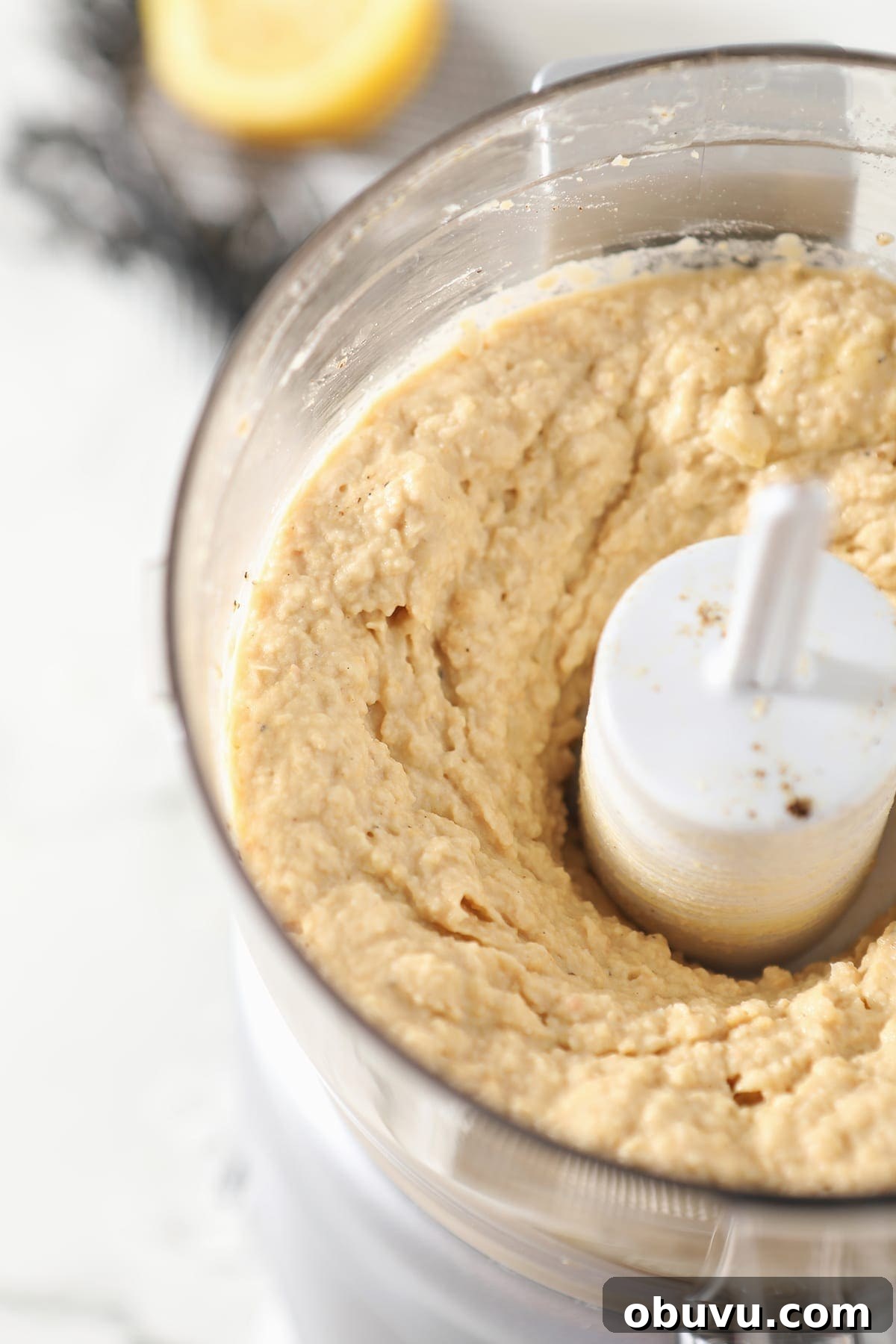
Add the drained chickpeas to your food processor with the minced garlic, olive oil, lemon juice and tahini. Blend until smooth. If the hummus is too thick, add a little more olive oil or a splash of cold water to thin it to your preferred consistency.
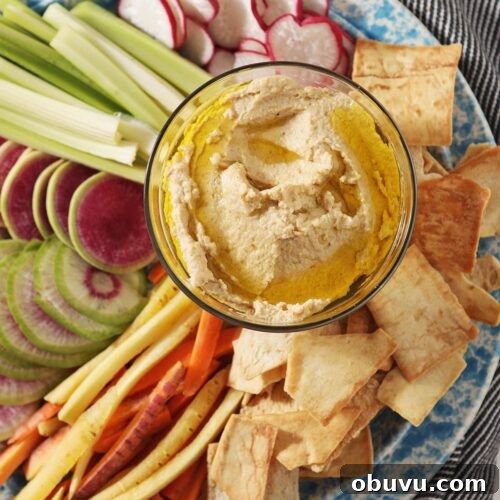
Taste and season with kosher salt and freshly cracked black pepper. If you want more brightness, add another tablespoon of lemon juice. Transfer the hummus to a serving bowl and garnish as you like — a drizzle of olive oil, a sprinkle of paprika or chopped parsley, or toasted sesame seeds are all nice touches.
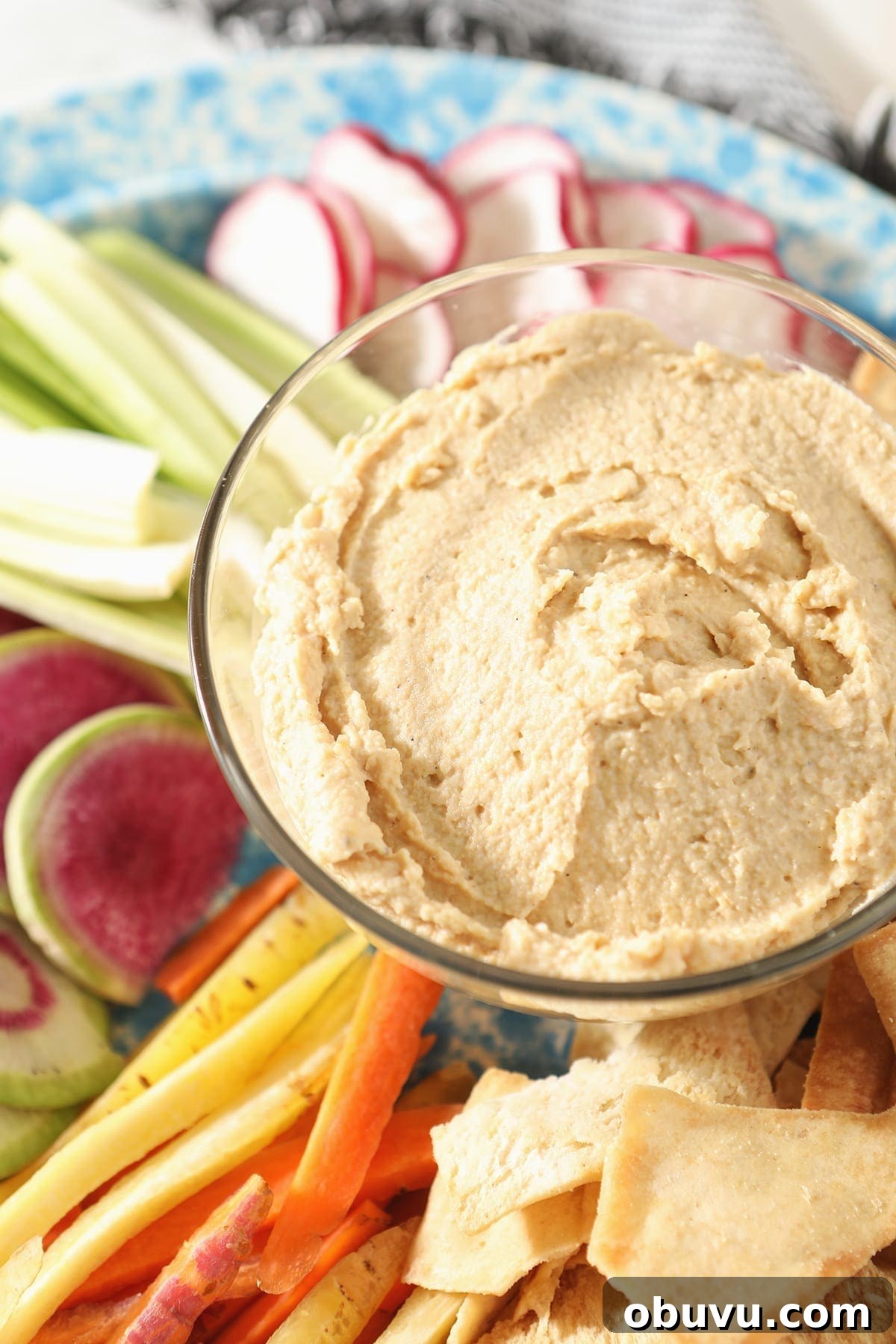
Serve with pita chips or fresh vegetables such as carrot sticks, celery and radishes.
How to store:
Store leftover hummus in an airtight container in the refrigerator for 3–4 days. It keeps well and is even better after the flavors rest for a few hours.
Erin’s Easy Entertaining Tips
We make this hummus for gatherings because it’s fast to prepare and can be made ahead. A few extra tips:
- Make it early. Transfer to a serving dish, cover tightly, and refrigerate until needed.
- Double the batch. For larger crowds, make extra — just remember raw garlic’s intensity increases when multiplied.
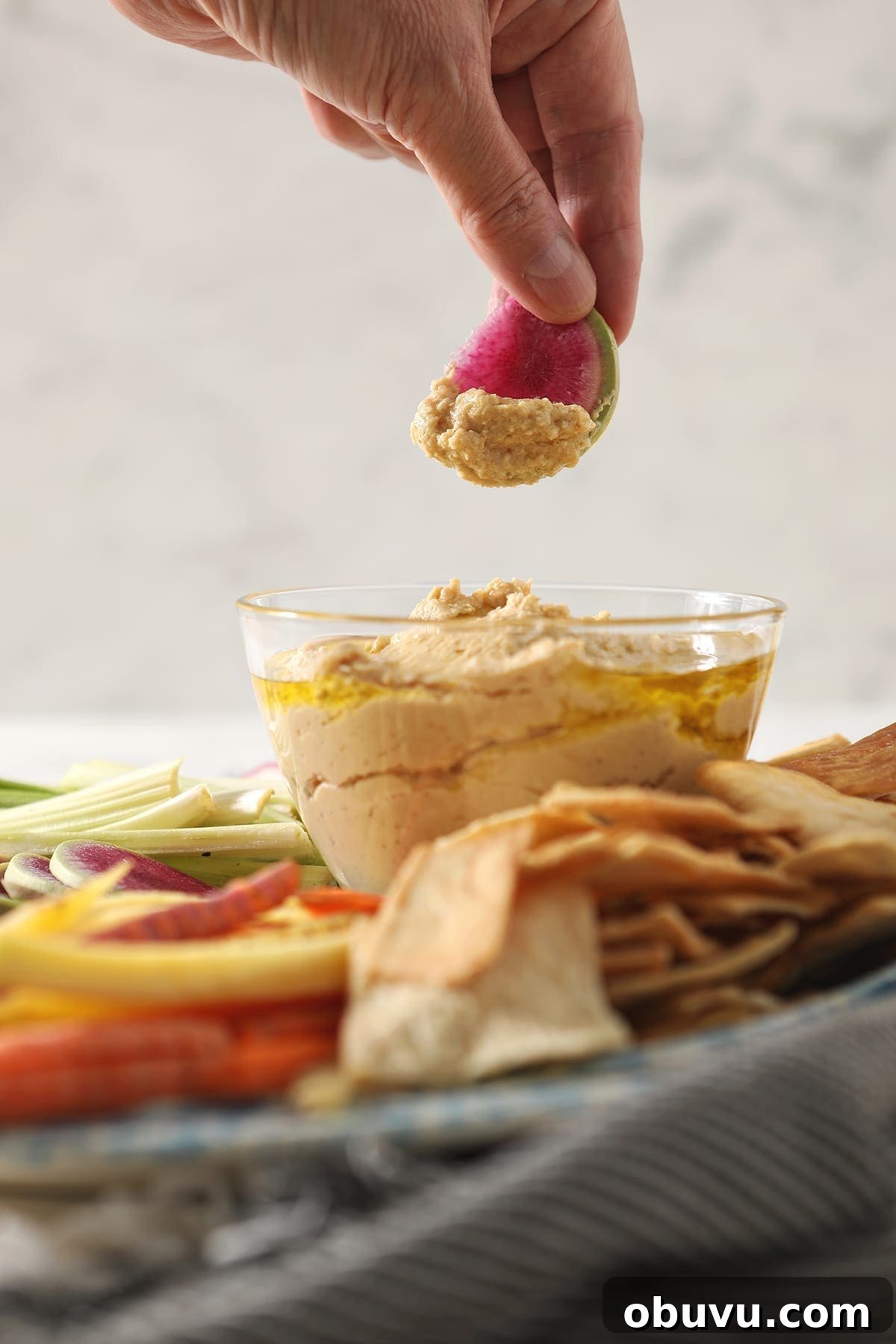
- Offer varied dippers. In addition to pita chips, serve halved carrots, radishes and celery for a colorful selection.
Frequently Asked Questions
Fresh lemon juice adds a clean, bright acidity that balances the tahini and garlic and makes the hummus taste fresher than bottled juice.
Stored in an airtight container in the refrigerator, hummus will keep 3–4 days.
Use it as a spread on sandwiches or wraps in place of mayonnaise, or as a creamy element in salads and grain bowls.
Here’s the recipe card with ingredients and instructions:
Winston’s Hummus
Winston Skinner, The Speckled Palate
EQUIPMENT
- Food processor
- Fine mesh strainer
- Citrus juicer
- Garlic press (optional)
Ingredients
- 15 oz. chickpeas, rinsed and drained
- 3 cloves garlic, minced (about 1½ tsp)
- 2 tbsp extra virgin olive oil
- 3 tbsp freshly squeezed lemon juice
- 1 tbsp tahini
- Kosher salt, to taste
- Black pepper, to taste
Dippers
- Carrots (halved or baby carrots)
- Pita chips
- Watermelon radishes
- Celery sticks
Instructions
- Open the can of chickpeas and pour them into a colander. Drain and rinse thoroughly.
- Add the chickpeas, garlic, olive oil, lemon juice and tahini to the food processor. You can peel the chickpeas if you want an extra-smooth texture, but it’s optional.
- Blend until smooth, adding more oil or a splash of cold water if needed to reach your desired consistency.
- Taste and season with salt and pepper.
- Serve immediately with pita chips and vegetables, or store in an airtight container in the refrigerator for 3–4 days.
Notes
This recipe uses canned chickpeas. If using dried chickpeas, soak overnight and cook until very tender before proceeding. If doubling or tripling the recipe, work in batches so your food processor isn’t overloaded.
Nutrition
Calories: 209 kcal
Carbohydrates: 25 g
Protein: 8 g
Fat: 9 g
Let us know how it was!