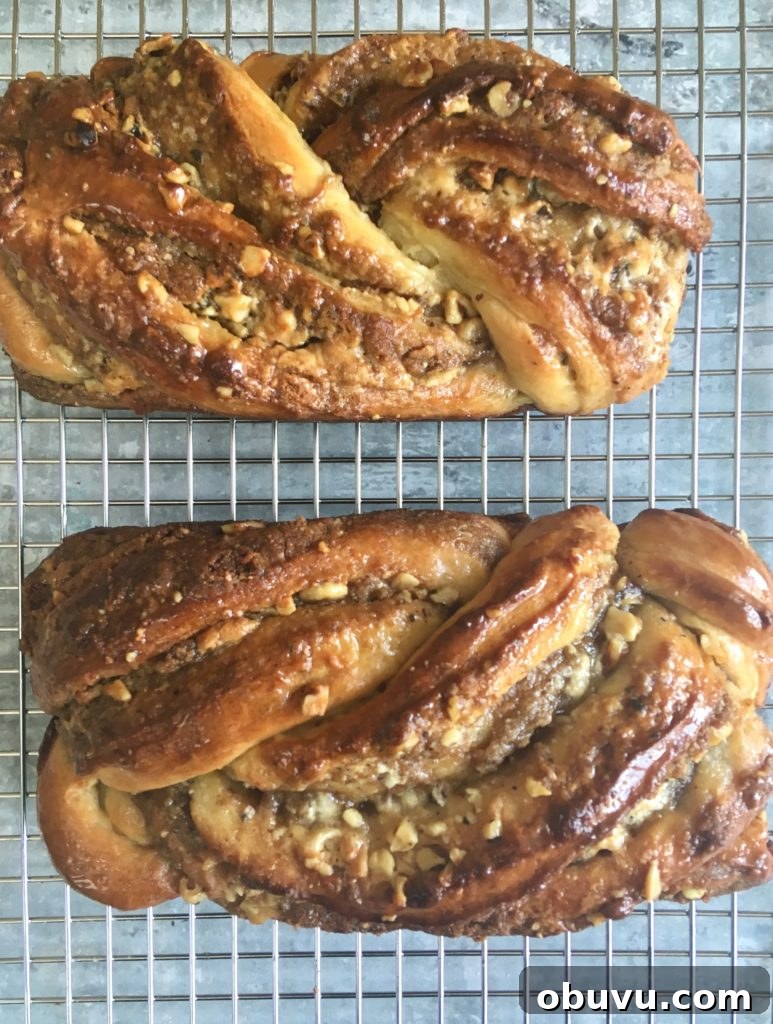
This recipe blends two Ottolenghi inspirations into a single, elegant loaf: the dough is adapted from the chocolate krantz cakes in Jerusalem (via Smitten Kitchen), while the filling — crumbled halva, chopped walnuts, plus more walnuts processed with brown sugar, butter, tahini, and a touch of cinnamon — draws from the walnut‑halva cake in Plenty More. The resulting babka balances nutty, slightly floral halva flavors with rich, buttery dough. It’s not overly sweet and is deeply satisfying when baked correctly, though it took a couple of attempts to perfect.
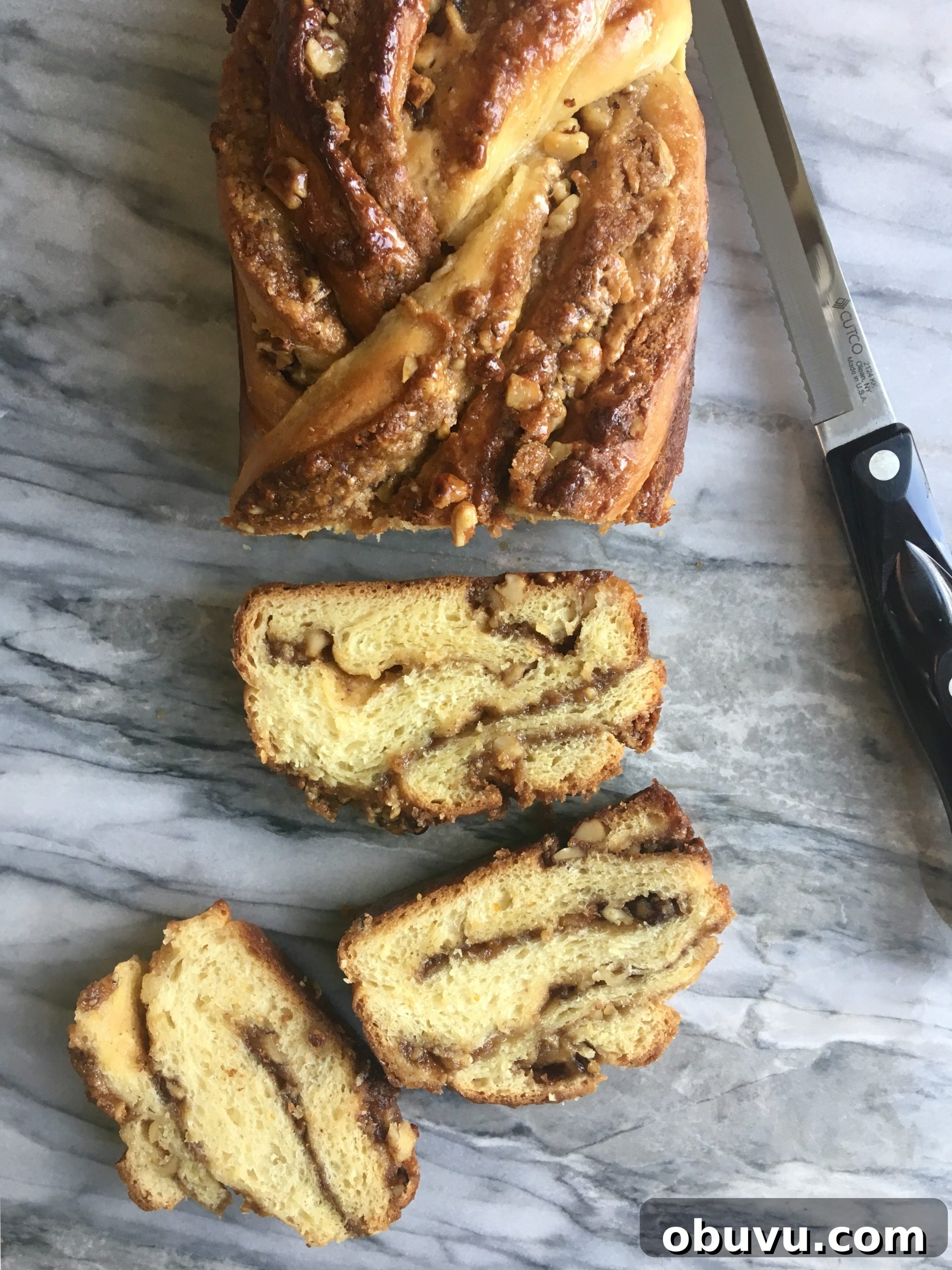
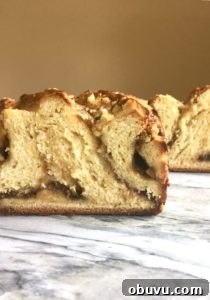
The first time I made these loaves I posted a photo on Instagram and the reaction was overwhelmingly positive. The loaves looked golden and glossy, spiraled with layers of halva and walnut. But here’s the honest part: those photogenic loaves were underbaked. After the photo I removed them from the pans and they collapsed; the center was almost raw. I had followed a recipe that suggested thirty minutes of baking and even checked the internal temperature with an instant‑read thermometer (it read about 190°F), so I assumed they were done. A small “mini‑babka” I baked from the trimmed ends reached perfection after only twenty minutes, which added to my confusion. In the end, the gorgeous loaves were largely inedible — a reminder that photos rarely tell the whole story when it comes to baking.
My sister suggested there might be a philosophical takeaway in that anecdote. Maybe — but what I take away is practical: I love making beautiful things, and I also want them to taste great. Sharing these missteps on this blog helps me stay accountable and improves the final results for anyone following the recipe.
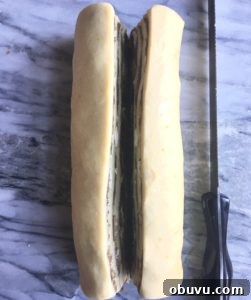
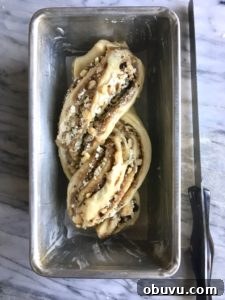
When baked properly, this walnut‑halva babka does work. The loaves can be awkward to shape, but freezing the filled dough logs briefly before slicing makes twisting them much easier. Note that this is not a classic, airy babka — the dough is a bit denser and more substantial, closer to a rich enriched bread than a light pastry. I appreciate that texture, but if you expect a featherlight crumb, be forewarned.
Walnut-Halva Babka
Adapted from Jerusalem, by Yotam Ottolenghi, via Smitten Kitchen.
Ingredients
Dough
- 4 1/4 cups (530 grams) all-purpose flour
- 1/2 cup (100 grams) granulated sugar
- 2 teaspoons instant yeast
- grated zest of 1/2 orange
- 3 large eggs
- 1/2 cup (125 ml) water
- 3/4 teaspoon fine sea or table salt
- 2/3 cup (150 grams) unsalted butter at room temperature
- neutral oil for greasing pans
Filling
- 1 1/2 cups (175 grams) walnut pieces lightly toasted and cooled
- 1/2 cup (100 grams) brown sugar
- 3 1/2 tablespoons (50 grams) unsalted butter at room temperature
- 2 tablespoons tahini
- 1/2 teaspoon cinnamon
- 1/2 cup (75 grams) crumbled halva
Syrup
- 6 tablespoons sugar
- 1/3 cup water
Instructions
-
Make the dough: In the bowl of a stand mixer combine the flour, granulated sugar, orange zest, and yeast. Add the water and eggs and mix on low with the dough hook until ingredients come together. Add the salt. Incorporate the butter one tablespoon at a time, waiting until each addition is fully blended before adding the next. Continue kneading on low until the dough becomes smooth and pulls away from the sides of the bowl (for me this took under five minutes once all the butter was added). Place the dough in a large greased bowl, cover, and refrigerate for at least 10 hours or preferably overnight.
-
Make the filling: Pulse the walnuts in a food processor until they are chopped into small pieces. Remove about half the chopped walnuts and set them aside. To the remaining chopped walnuts in the processor add the brown sugar, butter, cinnamon, and tahini and process until a spreadable paste forms.
-
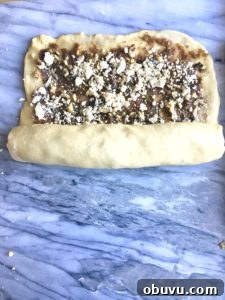
Assemble: Grease two standard loaf pans and line the bottoms with parchment. Remove half the chilled dough (keep the other half refrigerated). On a lightly floured surface roll the dough into a rectangle roughly 12 by 10 inches. Spread half the walnut‑tahini paste over the dough, leaving a 1/2‑inch border. Sprinkle half the reserved chopped walnuts and half the crumbled halva over the paste, pressing gently to adhere. Wet the short edge farthest from you with a little water, then roll the dough toward you into a log starting from the near short end. Freeze the log for 15 minutes to firm it up. Repeat with the remaining dough. Trim about 1/2 inch from each end of the frozen logs, then slice each log lengthwise. Twist the two cut halves together keeping the cut sides facing outward and place the twisted loaf into a prepared pan. You can tuck the trimmed ends into the pan or bake them separately as mini babkas. Cover with a damp towel and let the loaves rise at room temperature for 1 to 1.5 hours.
-
Bake: Preheat the oven to 375°F (190°C). Bake the loaves for 40–45 minutes, or until a skewer inserted into the center meets little resistance and comes out free of raw dough. If the tops brown too quickly, tent with foil for the final 10 minutes. Immediately after removing the loaves from the oven, brush them with the warm sugar syrup, then cool in the pans on a wire rack for 20 minutes before transferring to a rack to cool completely.
-
Make the sugar syrup: While the loaves bake combine 6 tablespoons sugar and 1/3 cup water in a small saucepan. Heat gently until the sugar dissolves, then remove from heat and set aside.
Recipe Notes
Some versions of the krantz cake and chocolate babka recipes call for a shorter bake time. In my experience with this walnut‑halva variation, 30 minutes was not sufficient; I recommend beginning to check for doneness at about 30 minutes, but plan on 40–45 minutes and use a skewer or visual cues (a firm center and a skewer that comes out clean) to confirm the loaves are fully baked. Oven performance varies, so trust texture and skewer tests over a strict time alone.