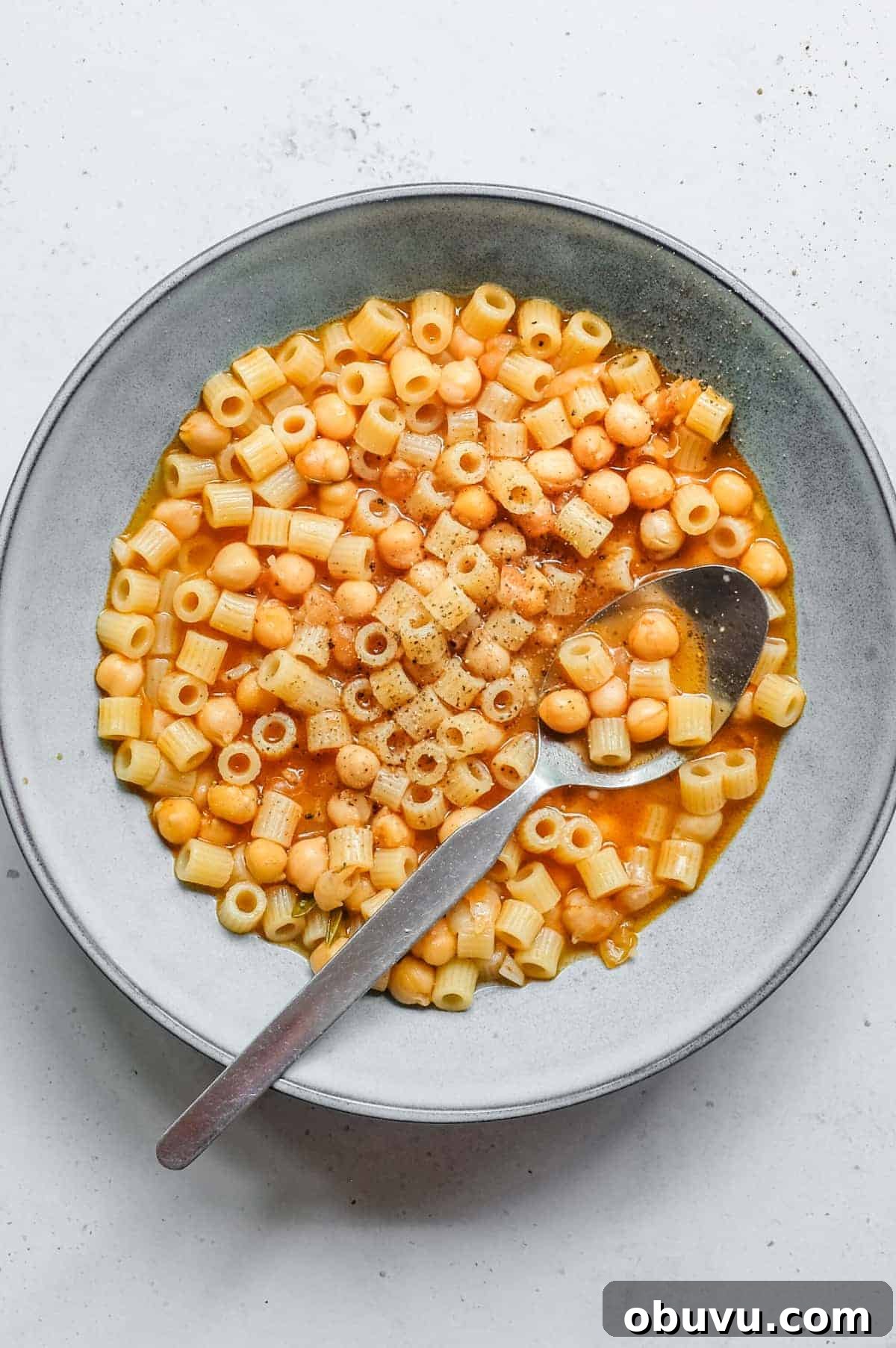
Pasta e Ceci (Pasta with Chickpeas)
By Lee Jackson ↣ Published on: January 6, 2026
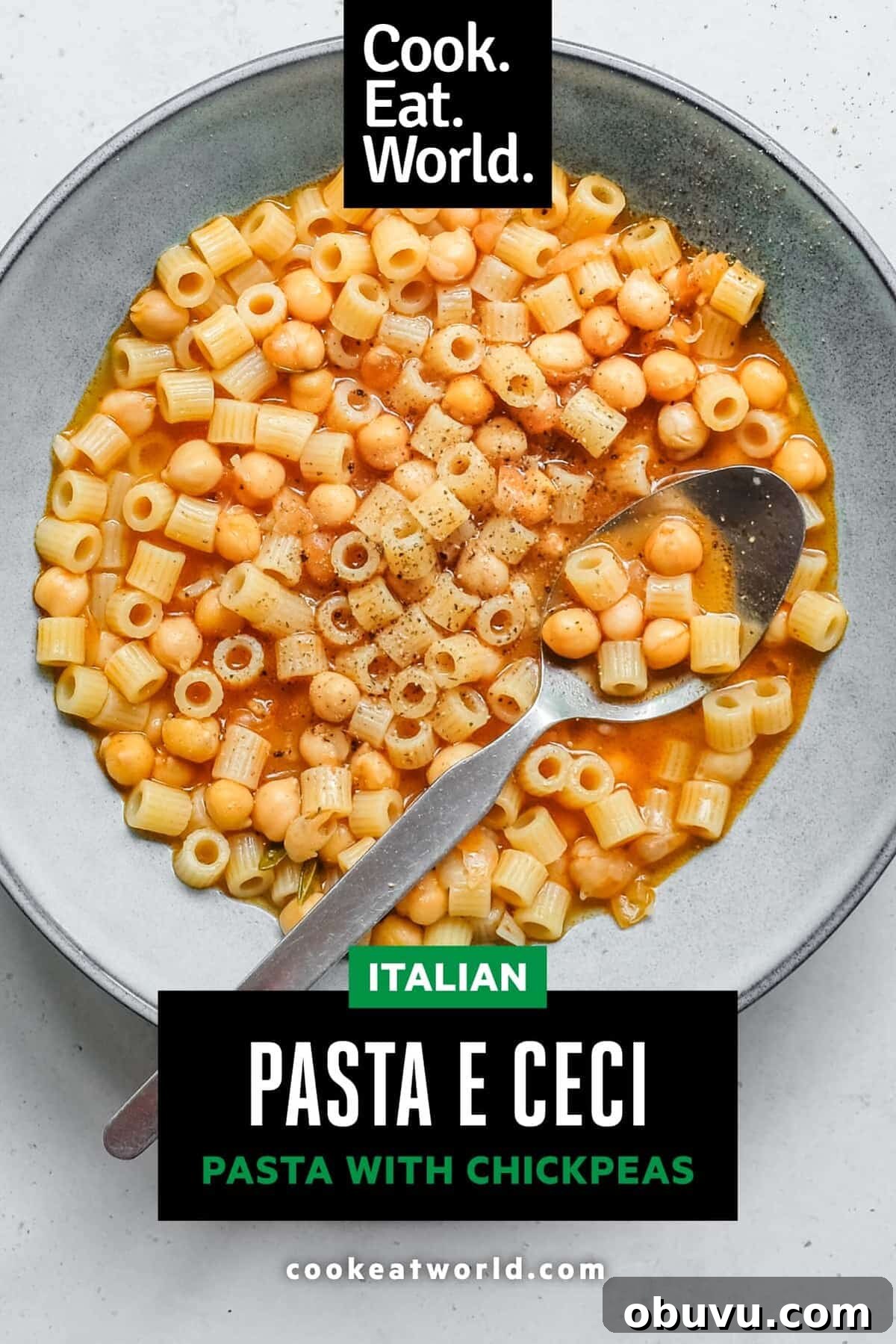
Pasta e Ceci is a humble, comforting Italian classic made from pantry staples. It’s deeply savoury and incredibly satisfying — a perfect example of how simple ingredients can create a memorable meal.
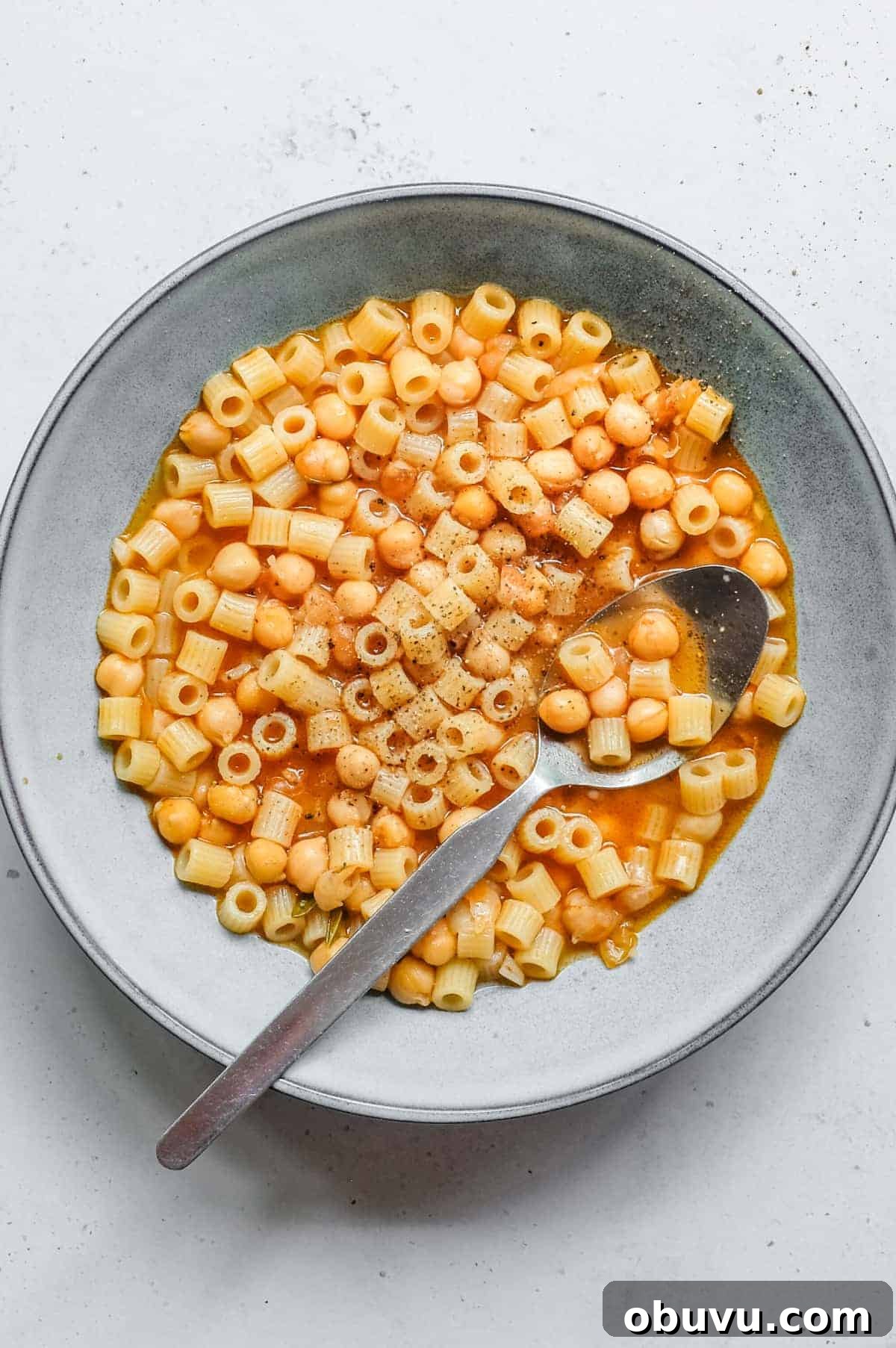
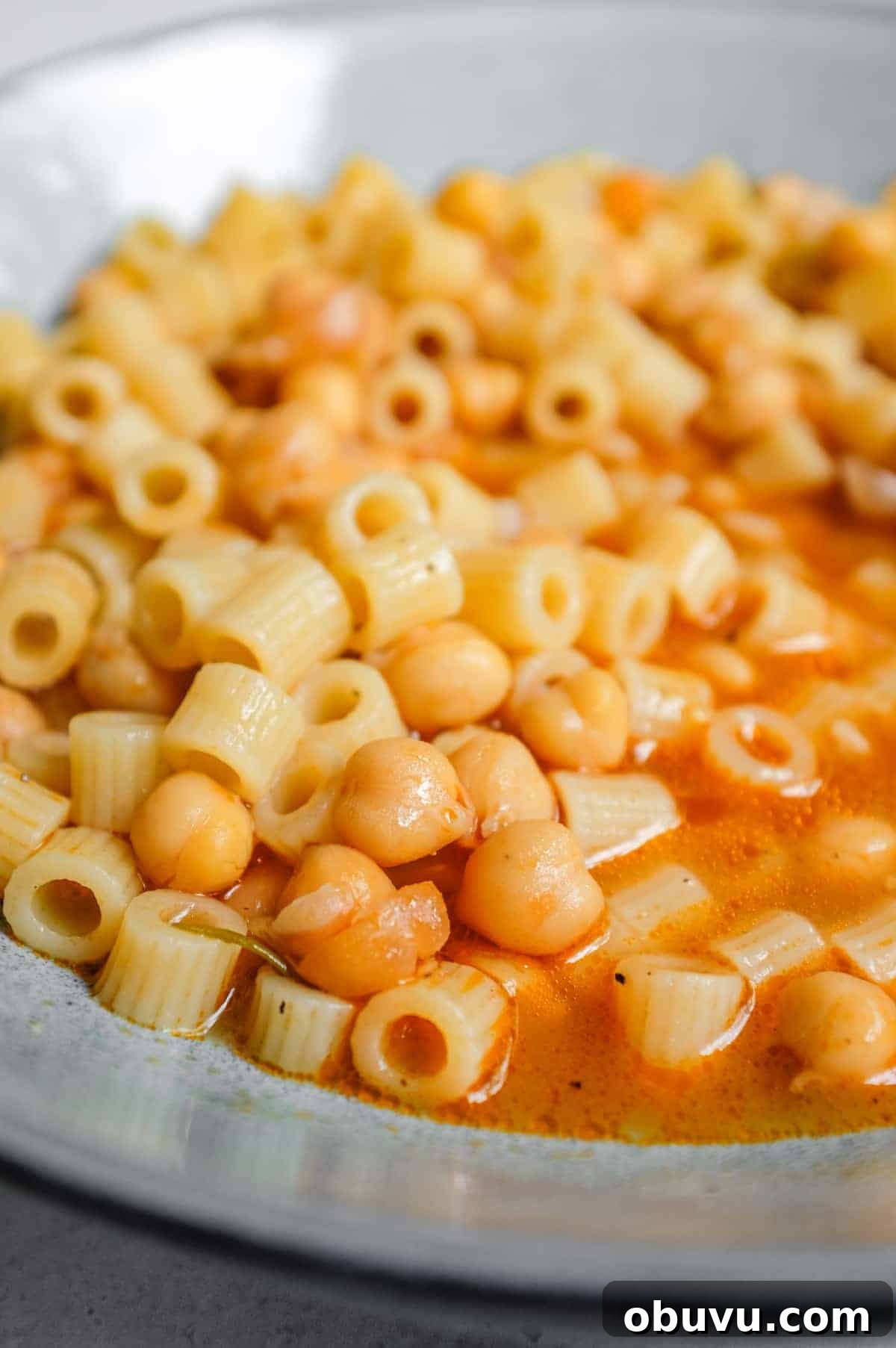
Pasta e Ceci is a classic of cucina povera — peasant cooking that turns basic storecupboard items into something special. In this version, chickpeas simmer with garlic, olive oil and rosemary, and the pasta cooks right in the broth so the starch thickens the liquid into a naturally creamy sauce. The dish is warming, economical and surprisingly luxurious given its modest ingredient list.
This recipe is easy to make vegetarian or vegan by omitting anchovies and using vegetable stock.
This recipe is part of the author’s Italian and Vegetarian Italian collections, celebrating simple, authentic flavours.
What’s Ahead?
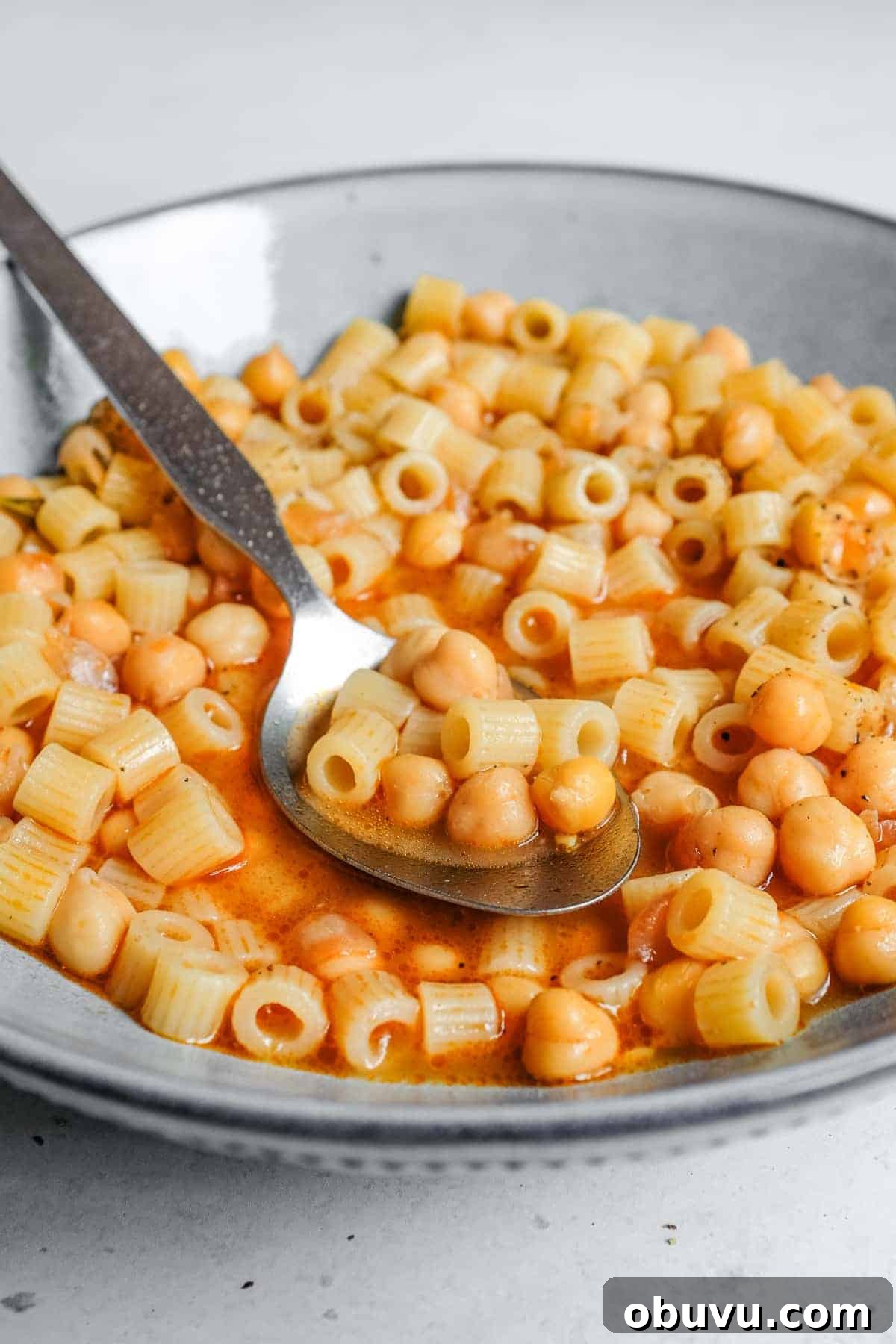
What is Pasta e Ceci?
Pasta e Ceci is a traditional Roman dish from the Lazio region. It pairs chickpeas with small pasta shapes, garlic, olive oil and herbs, all cooked together so the pasta releases starch into the broth and creates a silky, comforting texture. It’s economical, nourishing and a staple of Italian home cooking.
The dish is found across central and southern Italy with regional variations; the author first enjoyed it in Abruzzo and later encountered similar versions in Campania and Puglia.
Why you’ll love it
- Budget-friendly pantry ingredients — easy to make with staples you probably already have.
- One-pot, low-effort — pasta cooks in the sauce, so cleanup is minimal.
- Hearty, but not heavy — filling without feeling overstuffed.
- Quick — about 25 minutes from start to finish.
- Vegetarian adaptable — omit anchovies and use vegetable stock for a satisfying vegetarian or vegan meal.
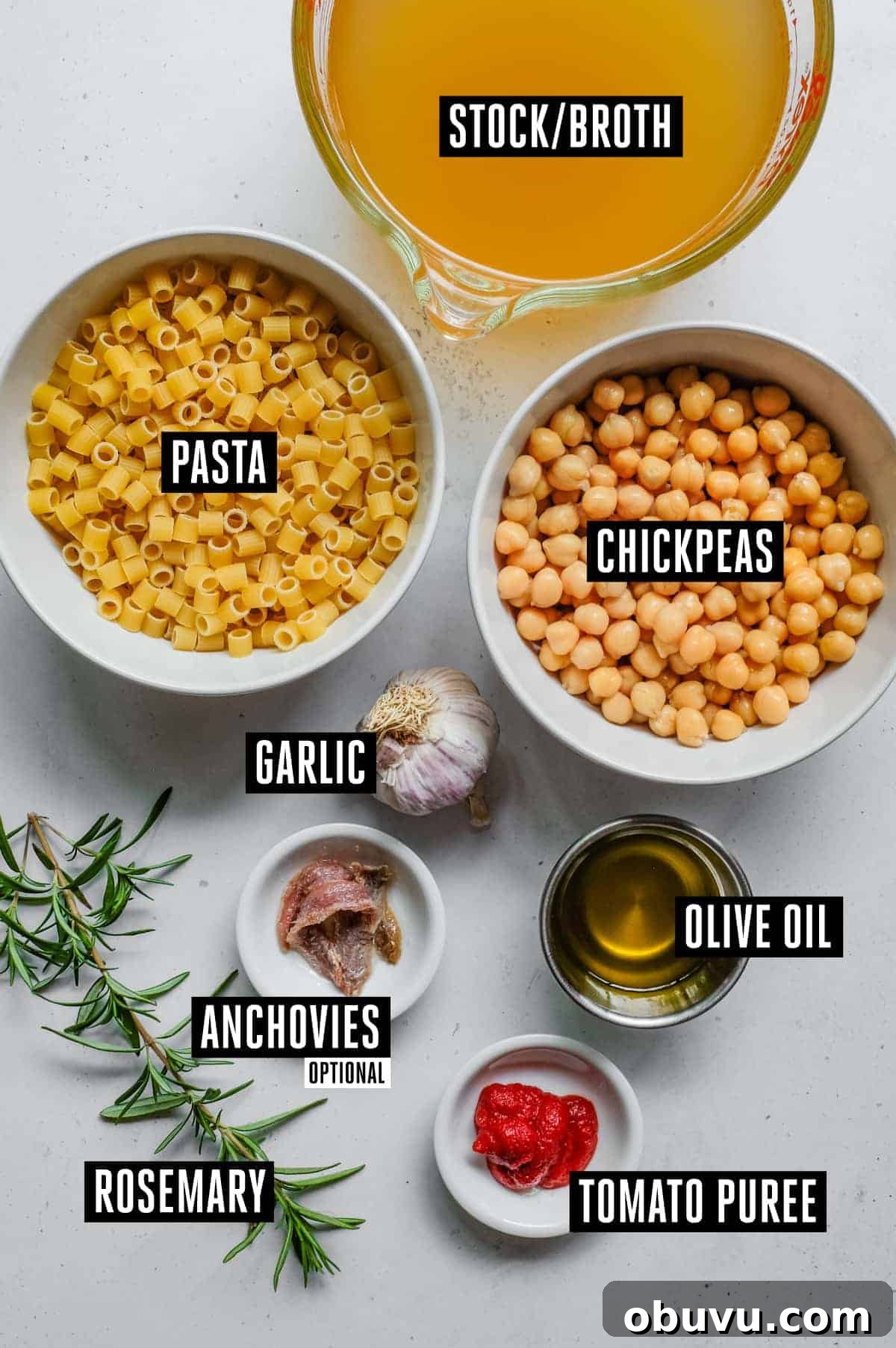
Stuff You’ll Need
Most of these are pantry staples — you may already have everything required.
- Chickpeas — canned chickpeas are convenient and work perfectly.
- Pasta — small shapes like ditalini are traditional; alternatives are suggested below.
- Anchovies — optional; they melt into the oil to give a salty umami depth. Omit for vegetarian/vegan versions.
- Garlic — a clove or two for flavour.
- Tomato paste — a spoonful for depth, not a full tomato sauce.
- Rosemary — a sprig adds fragrance; substitute other herbs if preferred.
- Stock or broth — vegetable stock keeps it vegetarian; chicken or beef stock can be used for more richness.
Step by Step
Pasta e ceci is straightforward and forgiving. Follow these steps for a reliably tasty result.
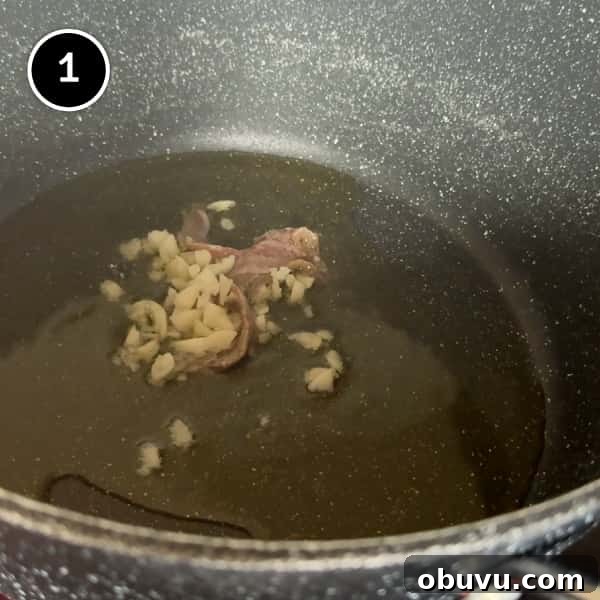
- Sauté: Heat oil in a large pot. Fry anchovies (if using) and garlic until anchovies dissolve, about 1–2 minutes. If vegetarian, just fry the garlic.
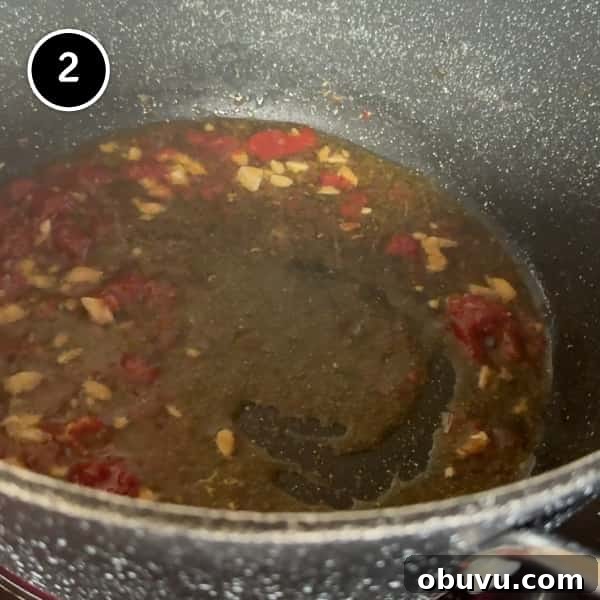
- Add tomato paste: Stir in the concentrate briefly to release its flavour.
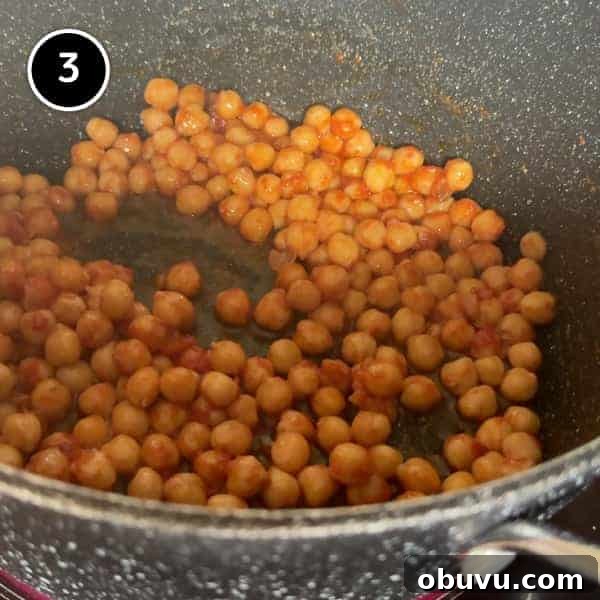
- Add chickpeas: Stir to combine so they pick up the tomato and oil.
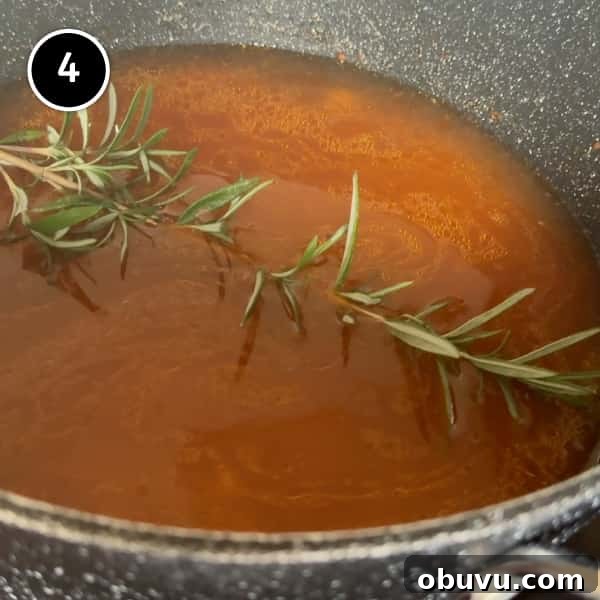
- Add stock and rosemary: Pour in the broth and add the rosemary sprig, then simmer for about 10 minutes to meld flavours.
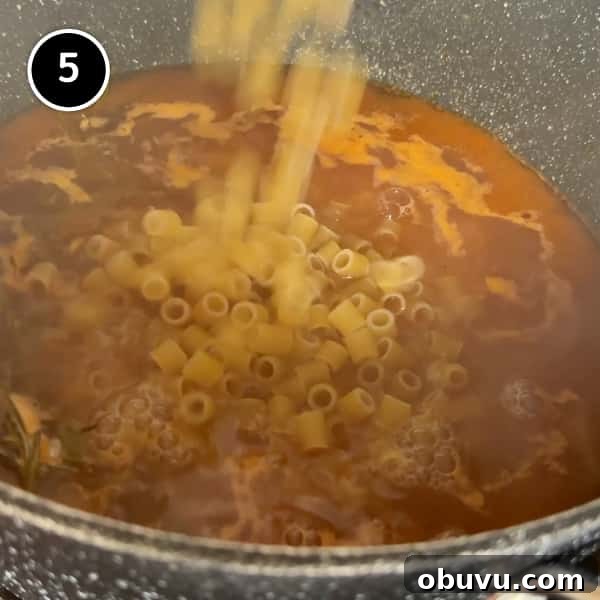
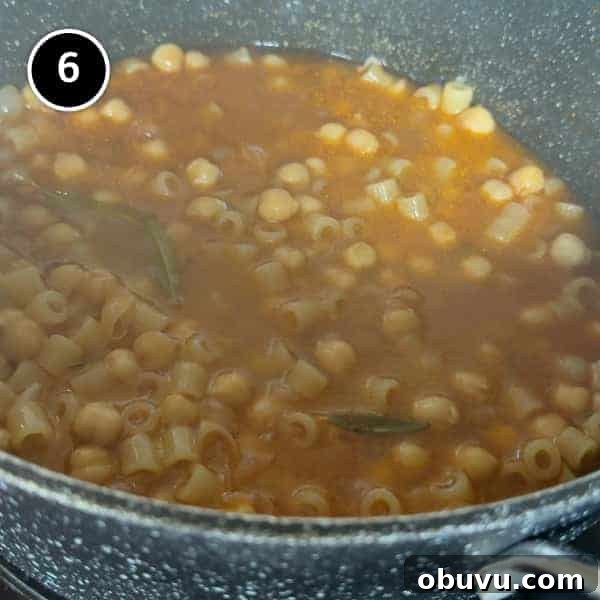
- Add pasta: Add the pasta and cook uncovered or partially covered according to packet instructions, keeping the liquid at a gentle simmer and stirring regularly to prevent sticking. Add extra stock or water if the mixture becomes too dry; the pasta starch will thicken the broth.
- Adjust seasoning when finished and remove the rosemary before serving.
Substitutions and variations
The recipe is adaptable and forgiving; here are a few common variations.
- Vegetarian / Vegan / Meat eaters: Omit anchovies for veggie versions, or replace them with pancetta or guanciale for a richer, meaty flavour.
- Herbs: Swap rosemary for bay leaf, thyme, oregano or marjoram to vary the aroma.
- Pasta: Ditalini is ideal, but tubetti, fregola, quadrucci or risoni (orzo) work well. Broken long pasta like spaghetti is traditional in some areas.
- Gluten-free pasta: It’s suitable here but may require extra stock and careful stirring to avoid sticking.
Serving & Storage Suggestions
- Serve immediately for best texture; if refrigerated the pasta will soften but flavours remain for 1–2 days.
- You can freeze portions, though reheating will soften the pasta — add a splash of stock or water when reheating to restore a looser consistency.
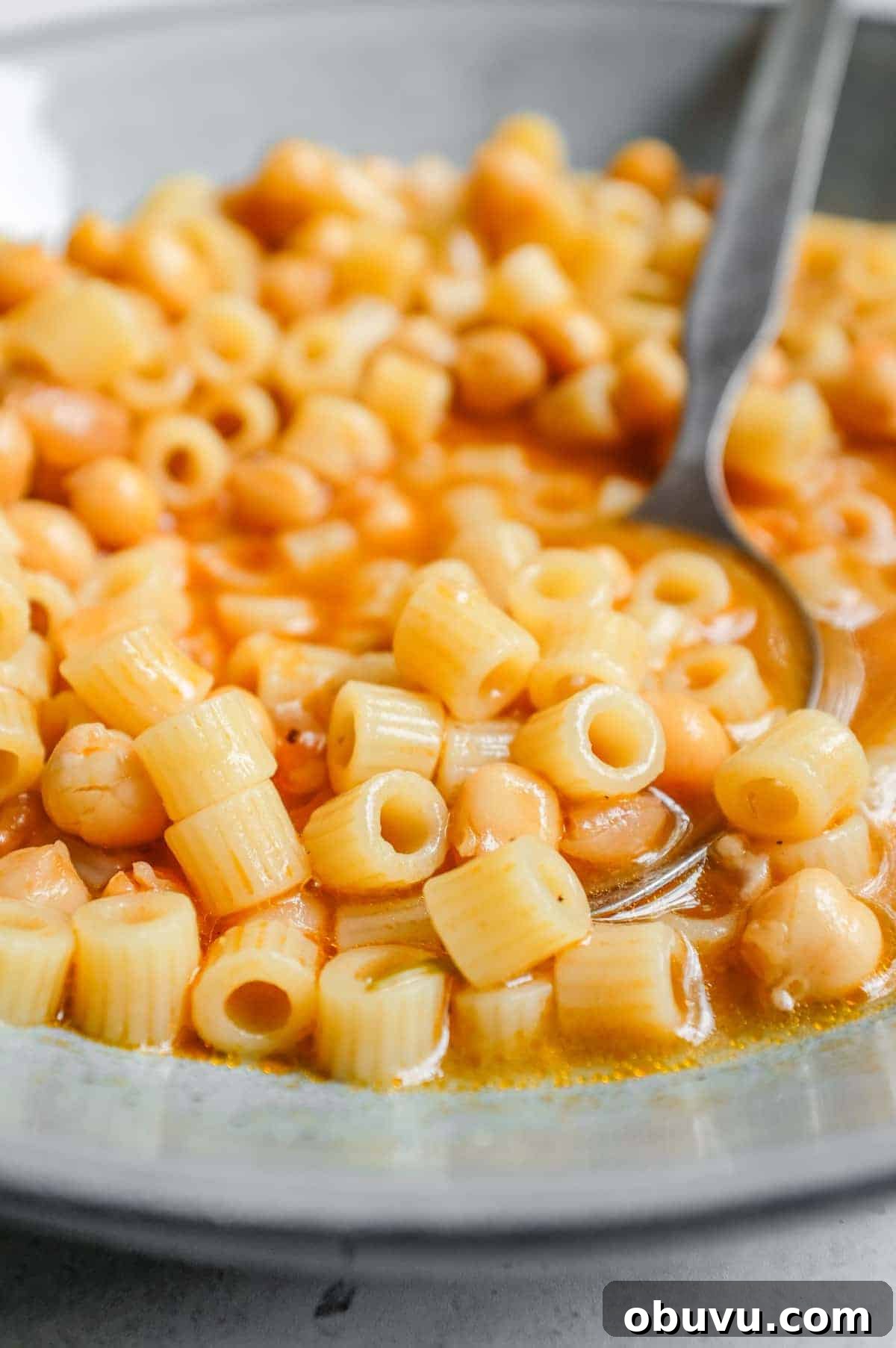
- Traditionally finished with black pepper and a drizzle of extra virgin olive oil.
- Optionally, grate Pecorino or Parmigiano Reggiano over the top for extra richness.
Ready to get cooking?
If you want a comforting Italian meal with minimal fuss, Pasta e Ceci is a perfect choice. It proves that technique and a few quality ingredients are all you need. Mangiano tutti!
More delicious pasta recipes
If you enjoyed this recipe, try some other standout pasta dishes from the same collection.
- Pasta with Walnut Sauce (Salsa di Noci)
- Spaghetti with Cavolo Nero & Almonds
- Pasta with Potatoes (Pasta e Patate)
- Pasta Alla Norma
Any Questions? (FAQ)
Have a question about Pasta e Ceci? Leave a comment and the author will respond.
Is Pasta e Ceci vegetarian?
Yes. The recipe can be made vegetarian by omitting anchovies and using vegetable stock. Anchovies are optional for added umami.
What pasta is best for Pasta e Ceci?
Small shapes like ditalini, fregola, tubetti, risoni (orzo) or broken long pasta work well.
Can I use canned chickpeas?
Absolutely. Canned chickpeas are convenient and produce excellent results; you can also cook dried chickpeas from scratch if you prefer.
Does Pasta e Ceci thicken as it sits?
Yes. The pasta absorbs liquid and the starch thickens the dish. Add a splash of stock or water when reheating to loosen the consistency.
This recipe uses affiliations and may receive a commission based on your activity (link clicks). Learn more.
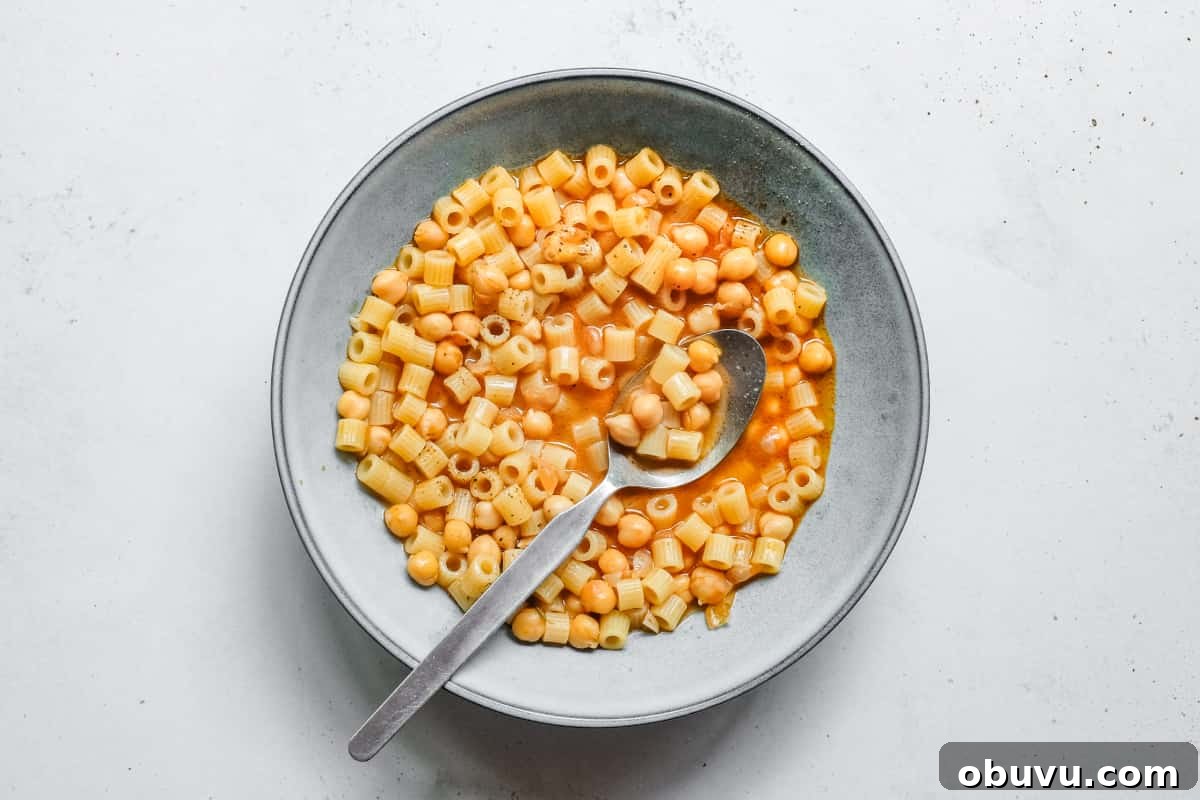
Pasta e Ceci (Pasta with Chickpeas)
Rate this recipe
Print Recipe
Pin Recipe
Ingredients
- 1 can chickpeas (400g/15oz), drained
- 2 tbsp extra virgin olive oil
- 1 garlic clove, chopped
- 3 anchovies (optional)
- 1 tbsp tomato concentrate
- 1 sprig rosemary
- 1.5 litres low-sodium vegetable stock (or chicken/beef stock)
- 200 g ditalini pasta
- Salt & pepper
Instructions
-
Heat the oil in a large pot over medium heat. Fry anchovies (if using) and garlic until the anchovies dissolve, 1–2 minutes.
-
Stir in the tomato concentrate, then add the chickpeas and combine.
-
Pour in the stock and add the rosemary sprig. Simmer for 10 minutes.
-
Add the pasta and cook gently to packet timings, stirring frequently to prevent sticking. Add more broth or water if needed.
-
Remove from heat, season carefully with salt (stock and anchovies add salt), and grind black pepper. Discard the rosemary sprig.
-
To serve, drizzle with extra virgin olive oil and add grated Pecorino or Parmigiano if desired.
Notes
- Vegetarian / Vegan / Meat: Omit anchovies for a vegan version or use pancetta/guanciale for a meatier dish.
- Herbs: Swap rosemary for bay leaf, thyme, oregano or marjoram.
- Pasta shapes: Ditalini is ideal, but other small shapes or broken long pasta work well. Cook to the longest required time when mixing shapes.
- Gluten-free pasta: Works here but may need extra broth and more stirring to prevent sticking.
Serving & Storage (Notes)
- Serve immediately for the best texture.
- Leftovers: Keep refrigerated 1–2 days; pasta will soften but flavour remains.
- Freezing: You can freeze portions, though texture may soften when reheated — add stock or water to loosen.
- To serve: Finish with black pepper and extra virgin olive oil; grated Pecorino or Parmigiano is optional and delicious.
Nutrition