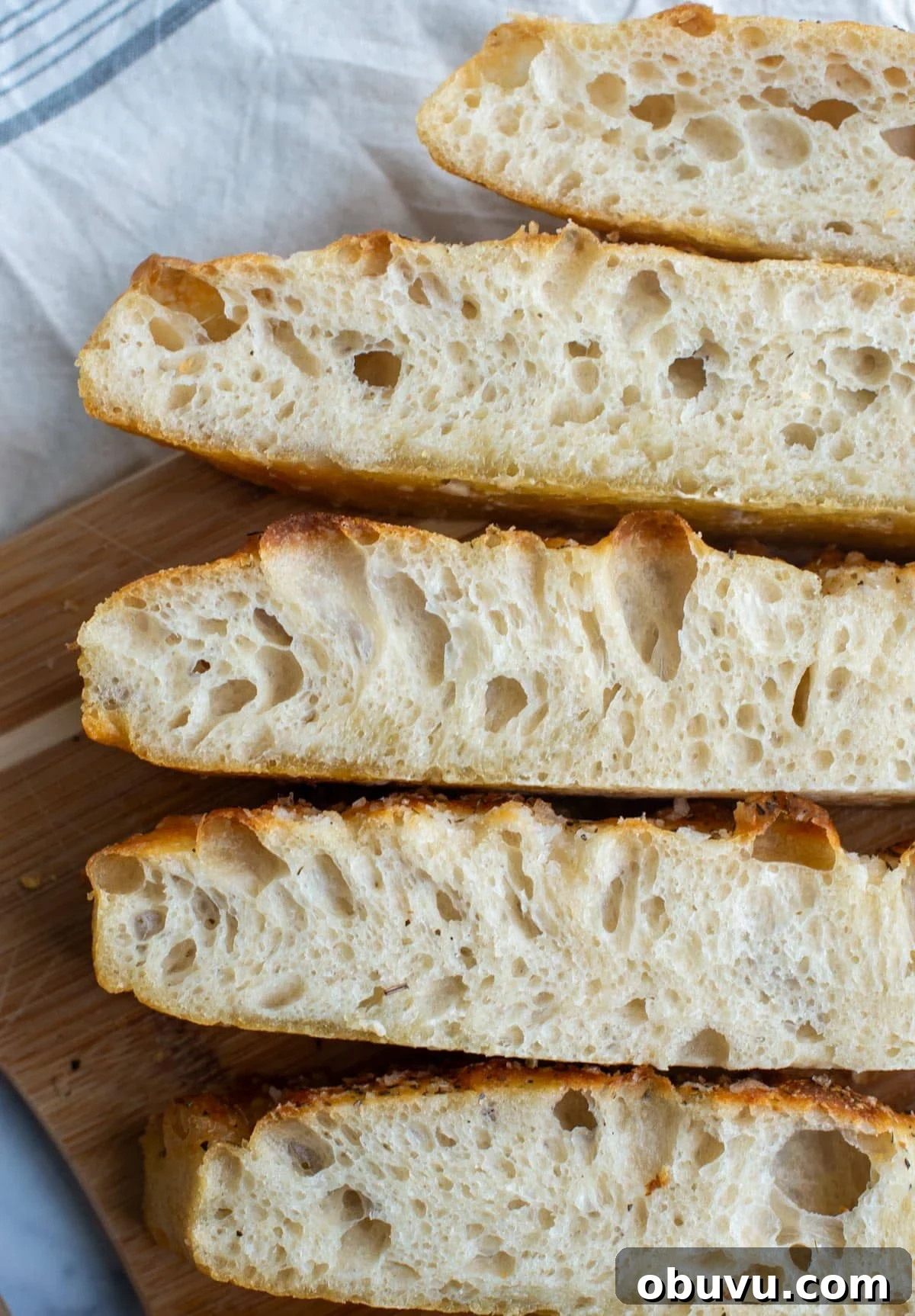
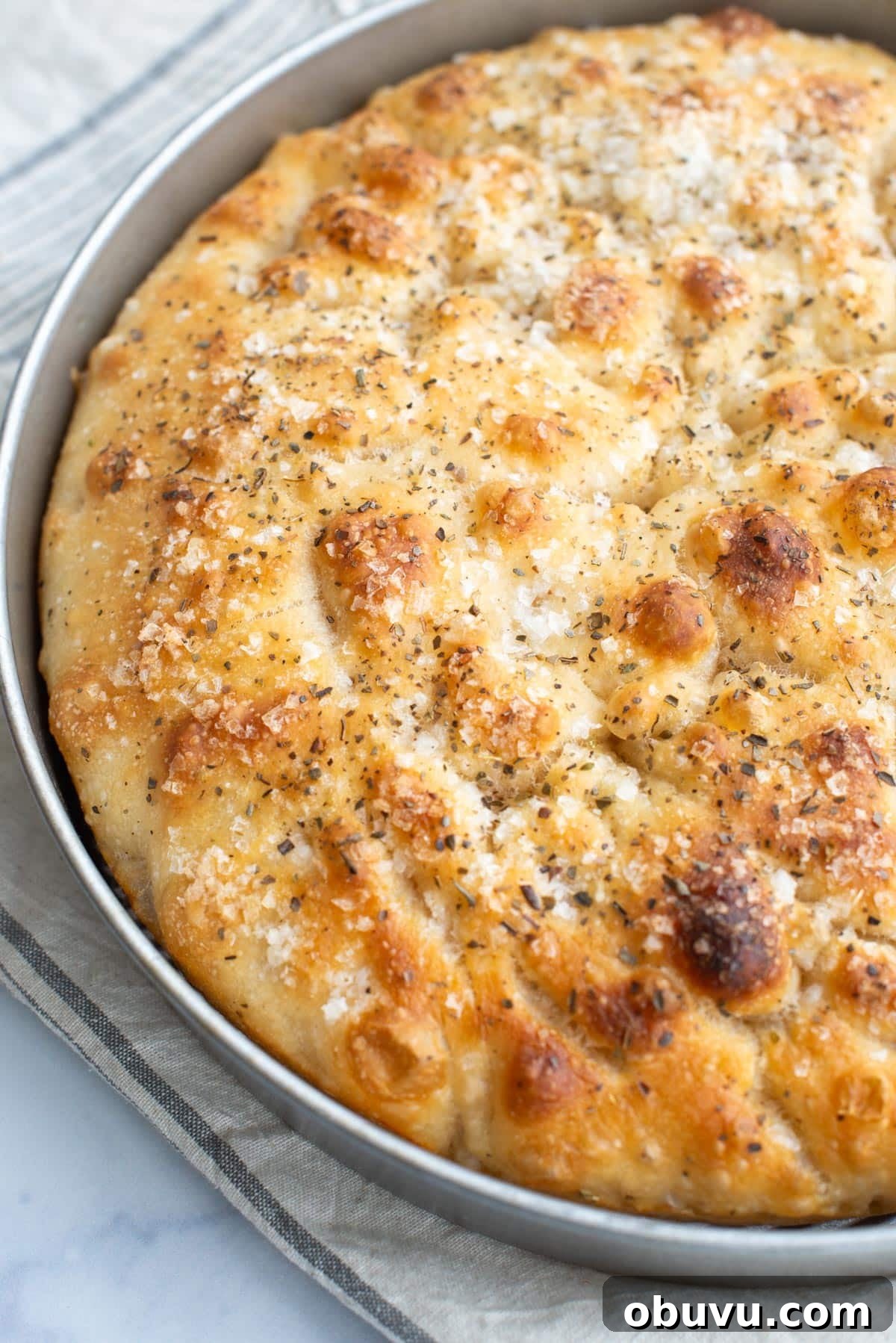
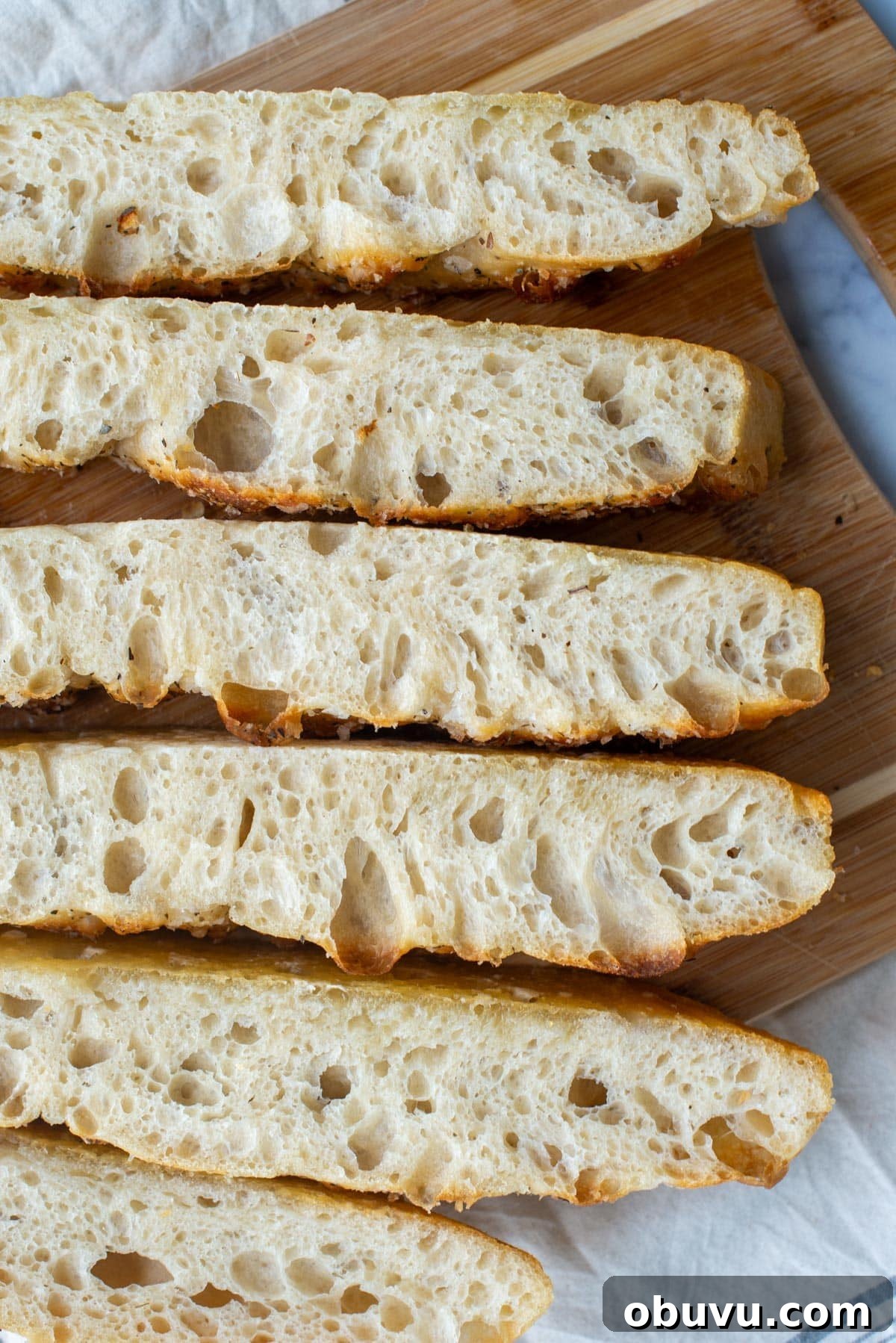
I used to make focaccia with instant yeast, but once I started baking with my sourdough starter, focaccia became a household favorite. This Sourdough Focaccia Recipe is simple and reliable: airy and chewy with craggy holes, a tender crumb, and a crisp, golden bottom. It’s excellent sliced for sandwiches, topped with cherry tomatoes, or enjoyed plain.
This basic sourdough focaccia is also an adaptable base for many other recipes: cheesy garlic focaccia, focaccia rolls, and even focaccia-style pizza. Every time I bake it, it disappears quickly — it’s one of my family’s most-requested breads.
Why You’ll Love Sourdough Focaccia Bread
- So easy – Despite its impressive texture, sourdough focaccia is straightforward to make. With a few simple steps, some folding, and patience, you’ll have a beautiful loaf.
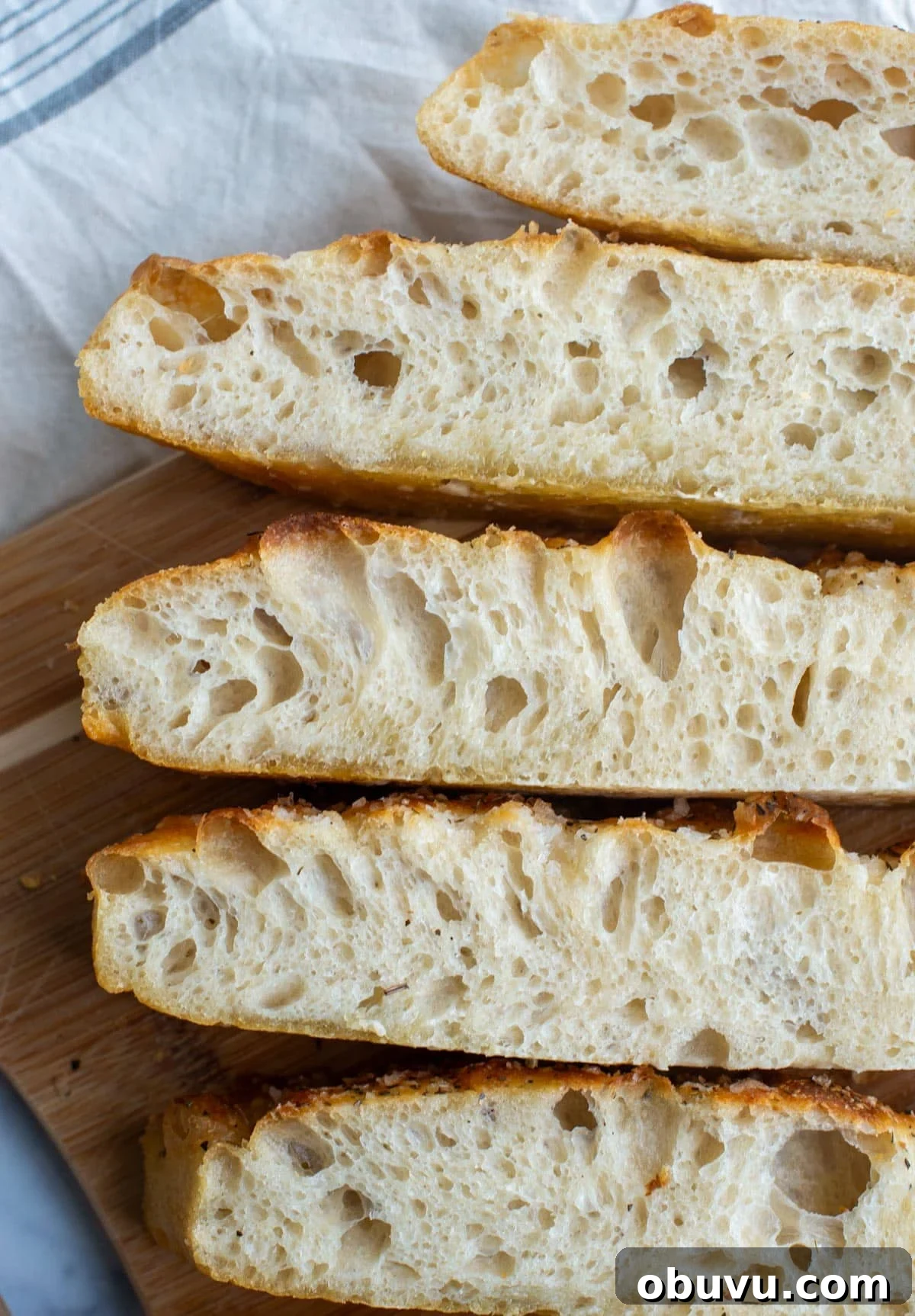
- Incredible texture – Crisp, golden edges combine with a soft, pillowy center and large, open holes for a satisfying bite.
- Versatile – Use this recipe as a base for savory or sweet variations. It’s wonderful with herbs and flaky salt, or topped with olives, roasted garlic, or fruit and honey for a sweeter version.
- Made with 100% sourdough – This focaccia is naturally leavened with sourdough starter for flavor and character. If you prefer, you can use a version that uses sourdough discard for a quicker bake.
New to sourdough? If you’re starting out, learn how to create and maintain a sourdough starter. Natural fermentation takes longer than commercial yeast but rewards you with deeper flavor and better texture.
Important Ingredients
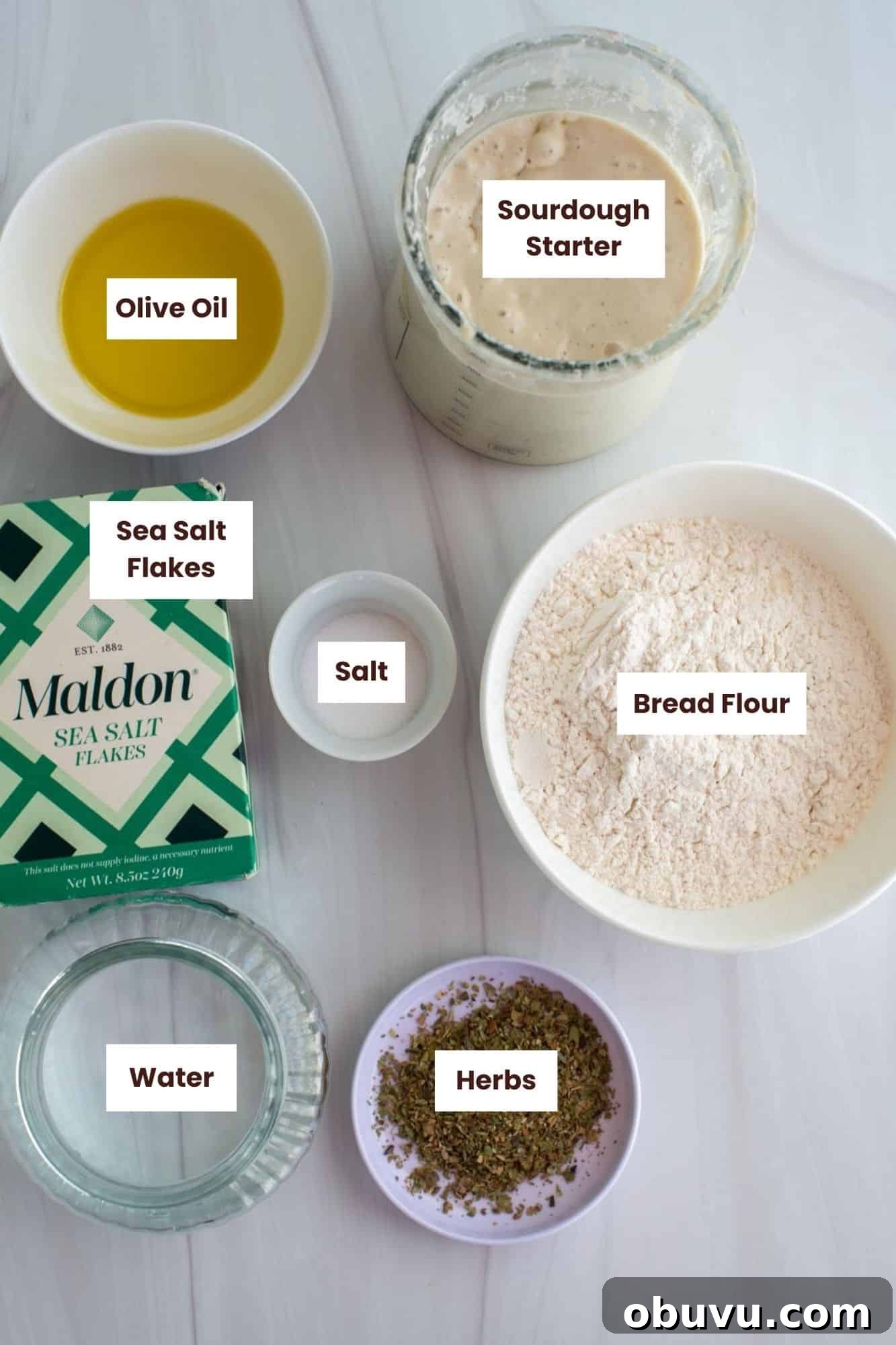
- Sourdough starter – Use an active, bubbly starter (ripe and mildly tangy) to build the levain or substitute 100 g of ripe starter for the levain.
- Bread flour – Aim for flour with 12.5% protein or higher for best structure and chew.
- Herbs – Dried oregano, rosemary, thyme, or fresh herbs work well sprinkled on top.
- Olive oil – Choose an olive oil with a flavor you enjoy. Light-tasting olive oil is subtle; extra-virgin adds more olive character.
See the recipe card below for full ingredient quantities and notes.
Substitutions
- Bread flour: You can use high-gluten bread flour (around 14% protein) for extra height and chew.
- All-purpose flour: To use all-purpose flour, reduce the water to 350 g, or add 25 g vital wheat gluten to 475 g all-purpose flour and follow the recipe as written.
- Olive oil: Any flavored olive oil is fine; the focaccia will pick up the oil’s taste, so use one you like.
- Variations: Try toppings like olives, fresh rosemary, roasted garlic, cherry tomatoes, or sweet options such as honey and butter. The focaccia adapts well to many flavor combinations.
Sourdough Baker’s Timeline
Sourdough ferments more slowly than yeast breads, so a sample timeline helps plan the bake. This recipe uses a levain built overnight, followed by mixing, coil folds during bulk fermentation, a cold rest in the pan, then a final proof and bake. The timeline below assumes a dough temperature around 78–80°F; cooler doughs will take longer and warmer doughs will move faster.
| Day 1 | Mix levain (overnight, 10–12 hours) |
| Day 2 | Mix dough, coil-fold during bulk fermentation, then transfer to oiled pan and refrigerate overnight (or up to 48 hours) |
| Day 3 | Proof and bake — bring to room temperature until airy and jiggly, dimple, top, and bake |
How to Make Sourdough Focaccia Bread
Mixing the Levain
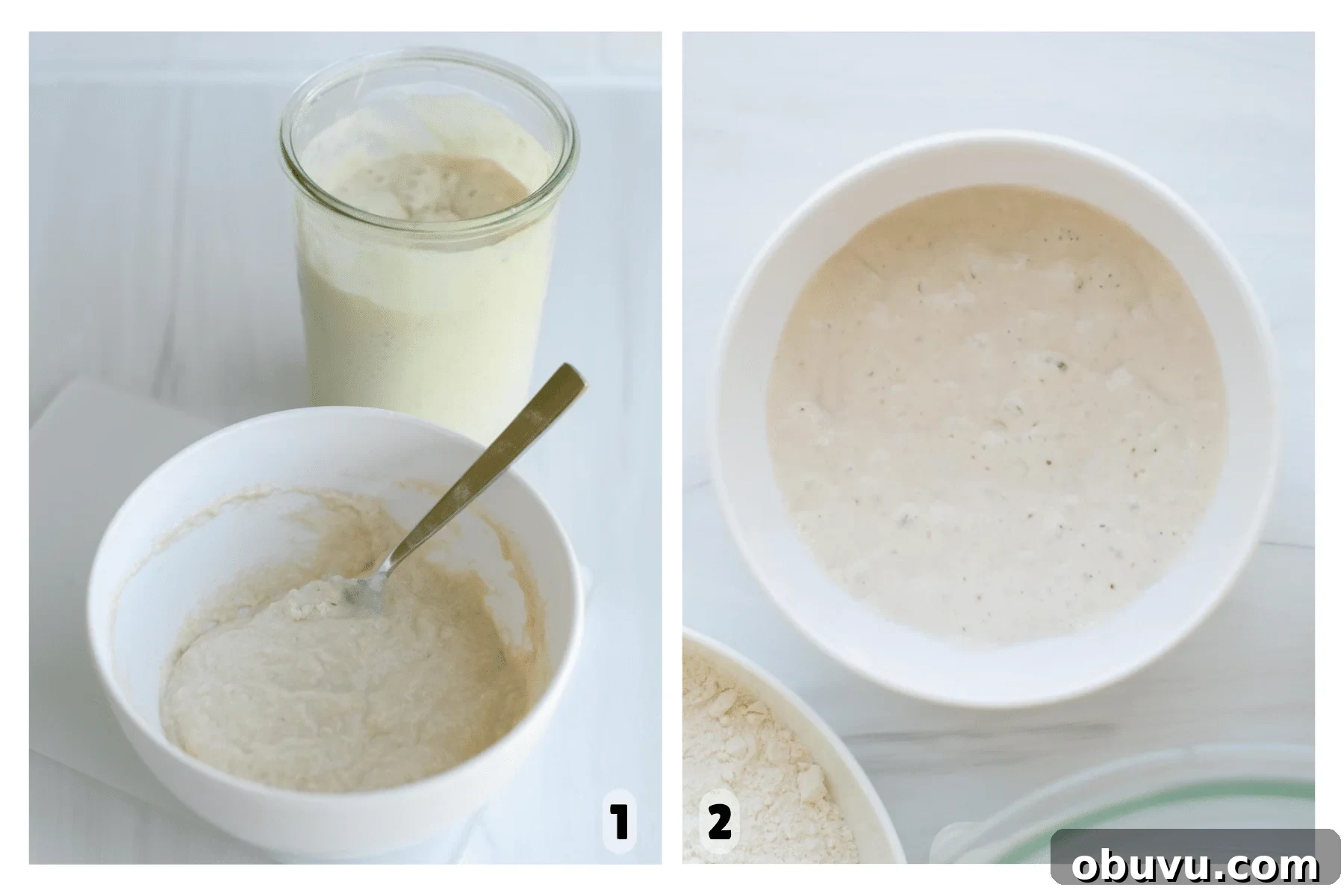
Step 1: Mix levain. Combine ripe starter with water and flour to make a levain. Let it sit at warm room temperature until doubled and bubbly (about 10–12 hours). If you already have a ripe, bubbly starter, you can substitute 100 g of starter for the levain.
Mixing the Dough
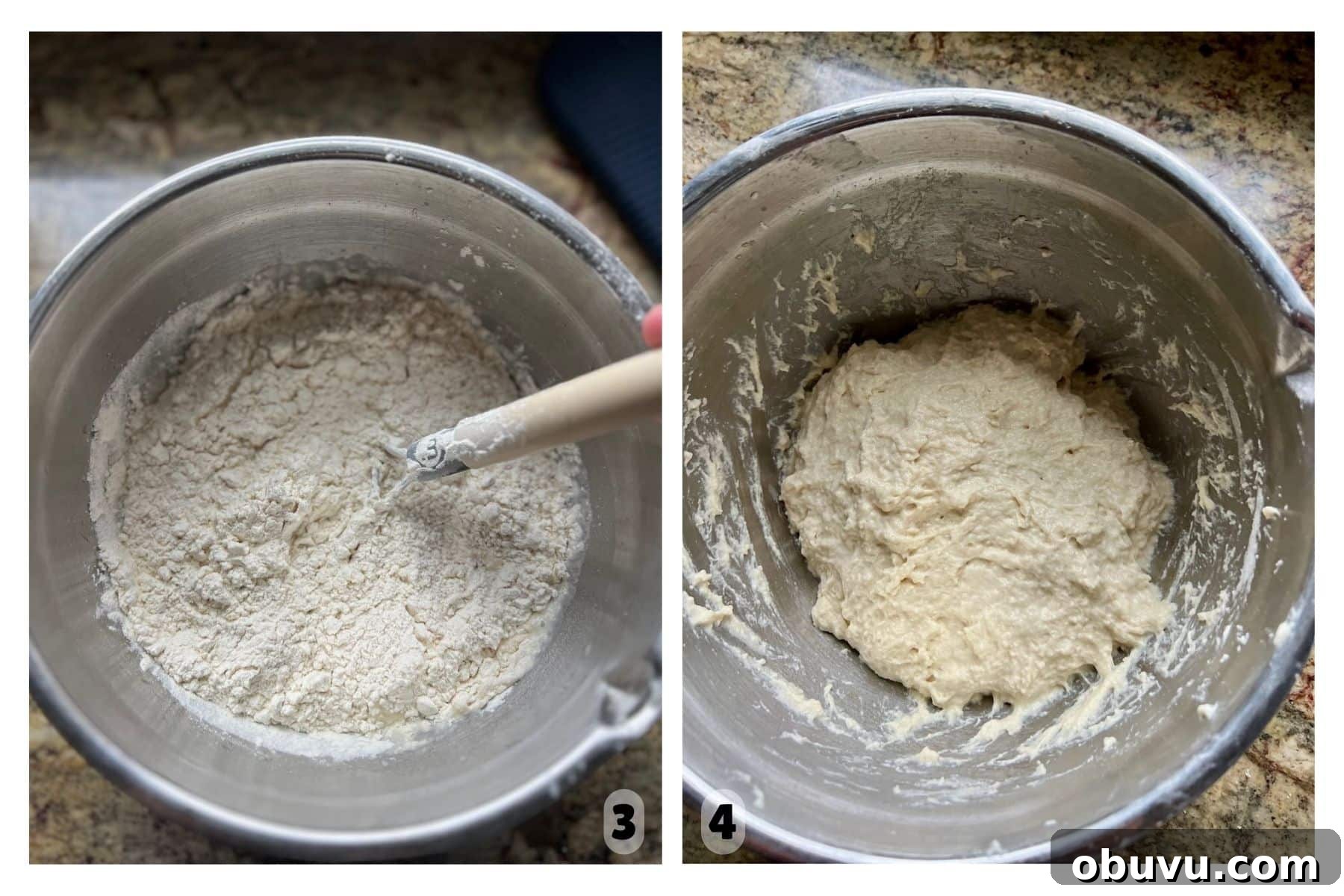
Step 2: Mix dough. In a large bowl, combine 100 g levain, 425 g water, 500 g bread flour, and 13 g salt. Mix until a shaggy, sticky dough forms. Cover and rest for 30 minutes. A dough whisk works well, but you can mix by hand. The dough will be very wet — that hydration is what yields an open, airy crumb.
Bulk Fermentation and Coil Folds
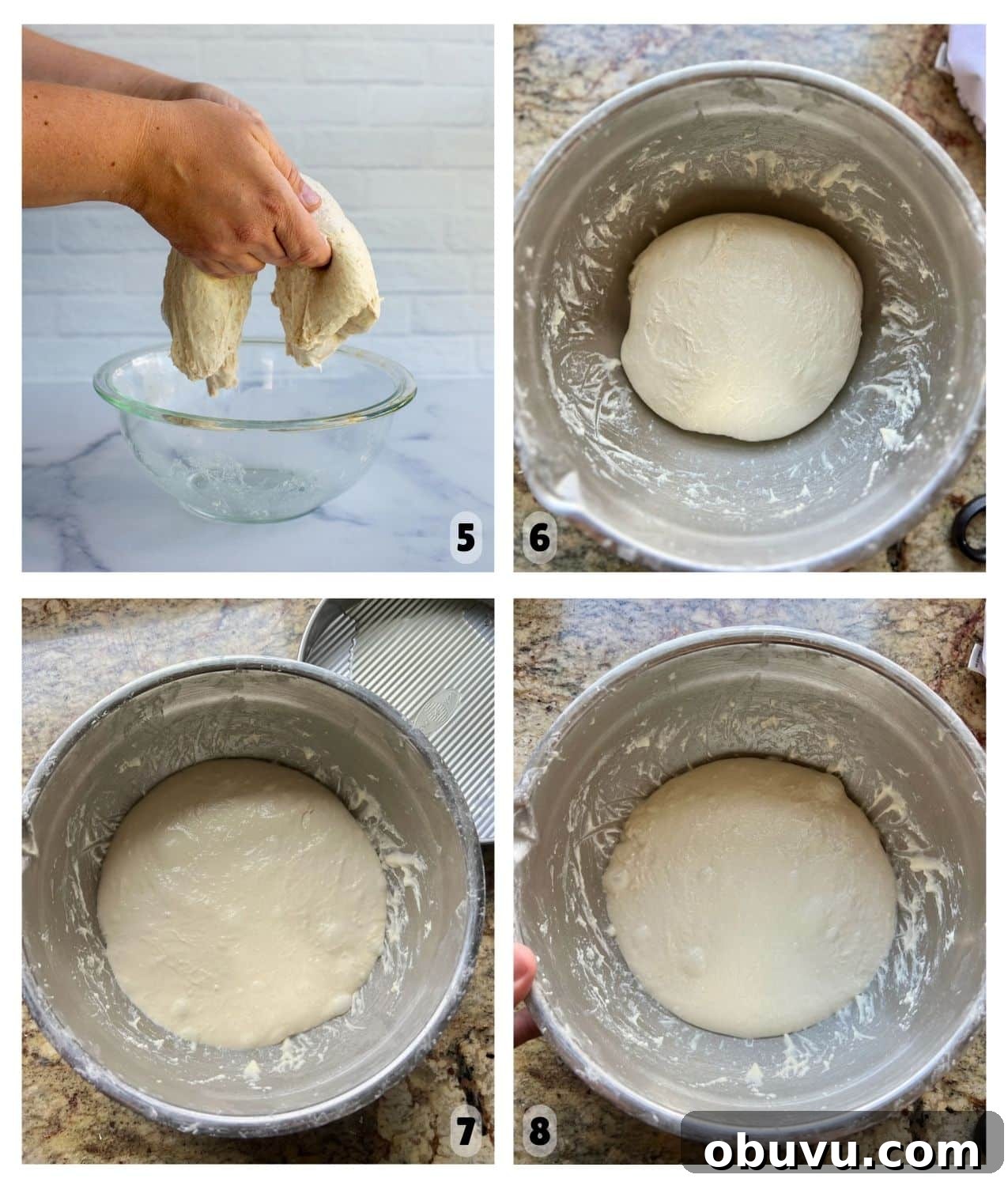
Step 3: Coil folds during bulk fermentation. Over the next 3–4 hours at about 78ºF, strengthen the dough with sets of coil folds. Wet your hands, reach under the dough, lift it up in the center so it stretches, and let it fold back under itself. Perform 4–6 coil folds per set and repeat every 30 minutes for four sets. Between sets, cover and let rest 30 minutes. The dough will grow stronger and more elastic with each set and develop bubbles.
Shaping and Refrigerating the Dough
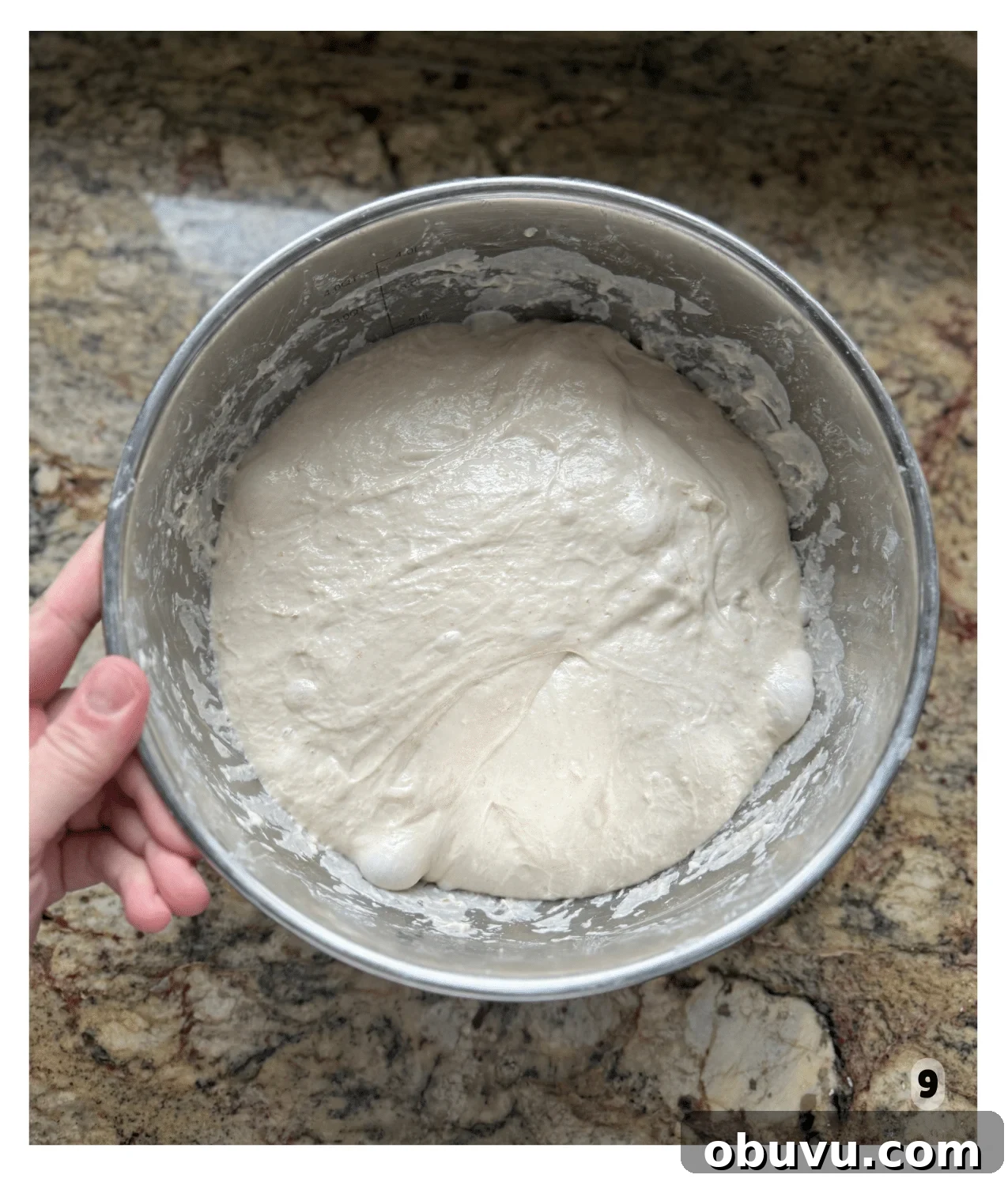
Step 4: Finish bulk fermentation. Let the dough rest until it has risen about 30–40% and shows scattered bubbles around the edges.
Step 5: Transfer to oiled pan. Pour about 40 g (3 tbsp) olive oil into a 12-inch round or 9×13 metal pan and tilt to coat the bottom. Turn the dough into the pan and gently stretch it to the edges. Cover and refrigerate overnight or up to 48 hours for deeper flavor. If you prefer to skip the cold rest, proof at room temperature until bubbly and doubled, then bake.
Proofing the Dough
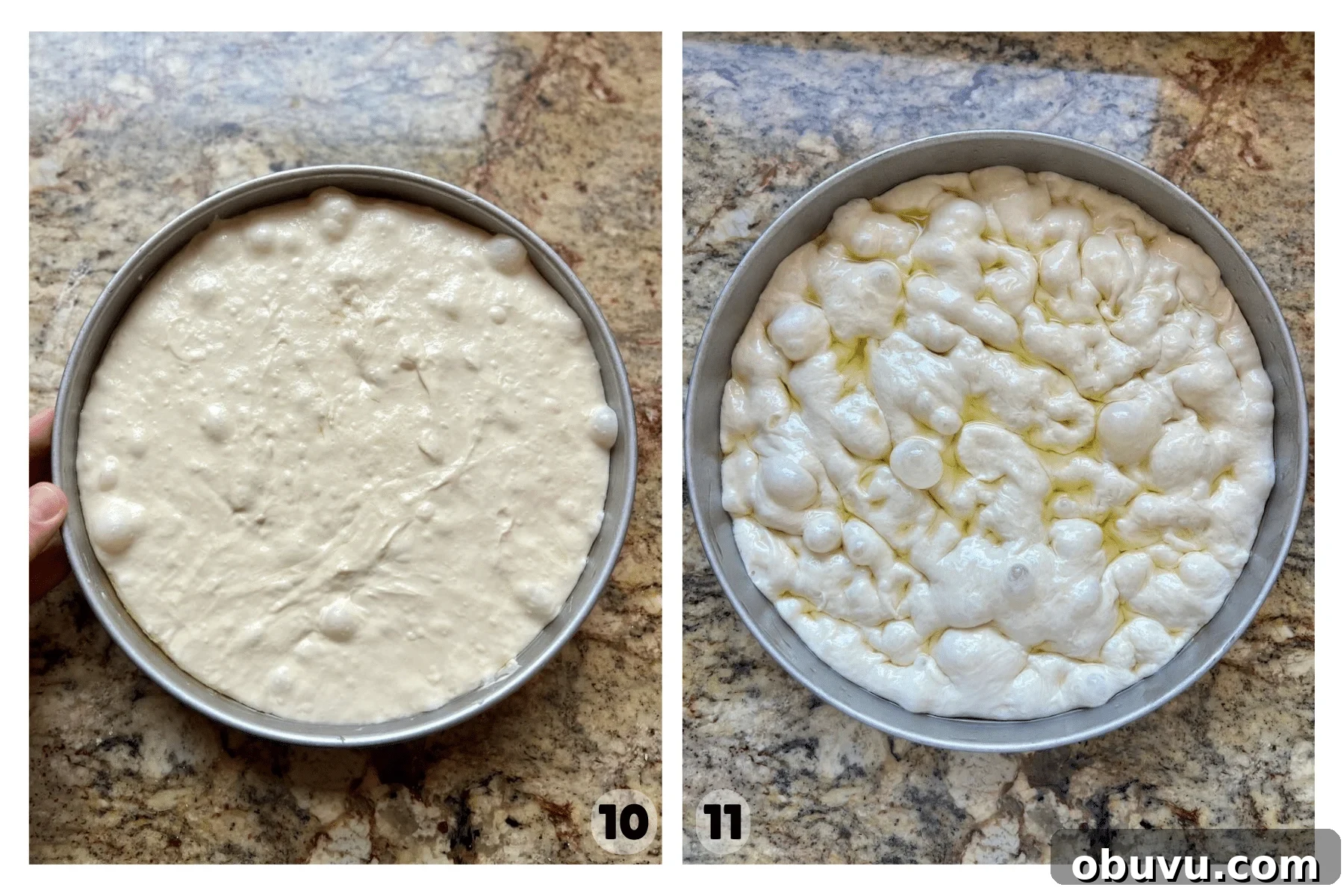
Step 6: Cold rest. Refrigerate covered overnight. This cold proof builds flavor and can be extended to 24–48 hours.
Step 7: Final rise at room temperature. Remove the pan from the fridge and let the dough proof at 78–80ºF for 3–5 hours until airy and jiggly. Drizzle about 30 g (2 tbsp) more olive oil over the surface, then dimple the dough with your fingers, working from one side to the other. Sprinkle flaky sea salt and herbs as desired. At this stage you can add toppings such as cherry tomatoes, olives, or roasted garlic.
Bake the Focaccia
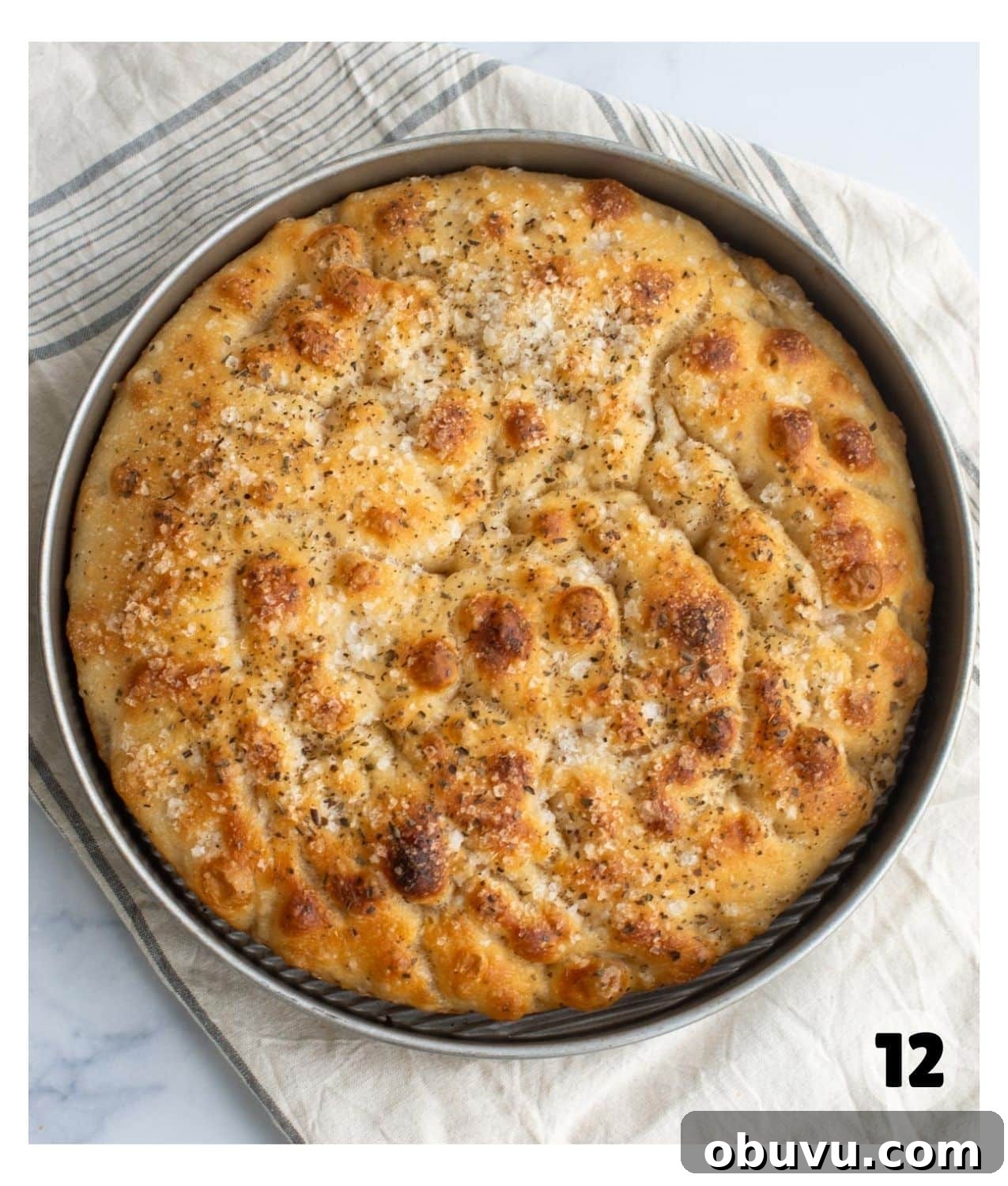
Step 8: Bake. Preheat the oven to 450ºF and bake for 25–30 minutes until the top is light golden brown, crisp, and bubbly. Let cool in the pan for 5–10 minutes, then transfer to a wire rack to cool completely before slicing.
How to Store Leftovers
At room temperature, focaccia will stay fresh for about 24 hours. After that, slice and store in an airtight container or bag in the refrigerator for a few days, or freeze for up to a couple of months. To refresh frozen or day-old focaccia, warm slices in a 300ºF oven for 5–8 minutes to restore crispiness.
Amy’s Recipe Tip
For big dimples and an airy interior, be generous with proofing time and keep the dough warm enough during rises. Pushing the final proof will give the best open crumb and dimpling.
Frequently Asked Questions
Use a good quality non-stick metal pan. If your pan sticks, line the bottom with parchment, add the oil on top of the parchment, then the dough. A bit of melted butter with the oil can also help prevent sticking.
This is often due to uneven heat or using a non-ideal pan. Use a metal, non-stick pan for best results and consider increasing the bake time slightly if the top and edges are done but the bottom is pale.
Try multiplying the recipe 1.5x and bake in a large half-sheet pan. If doubling, watch oil volume and bake carefully—thicker focaccia can bubble and overflow if the pan is too small.
Slice for sandwiches, serve alongside a meal in place of rolls, or tear pieces to dip in olive oil and balsamic. It’s also delicious plain for snacking.
Yes. This focaccia is high hydration (around 85%), which yields a light, airy crumb but feels wet to work with. If you’re new to wet doughs, reduce the water slightly to make handling easier and wet your hands during folds to prevent sticking.
Other Favorite Sourdough Recipes
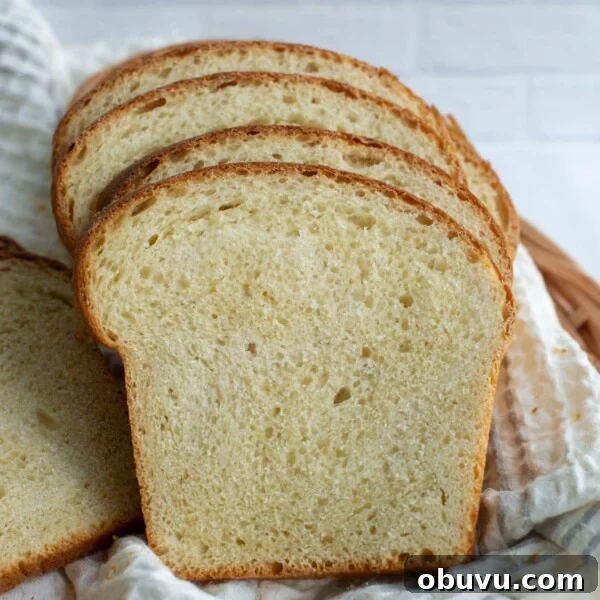
Soft Sourdough Sandwich Bread
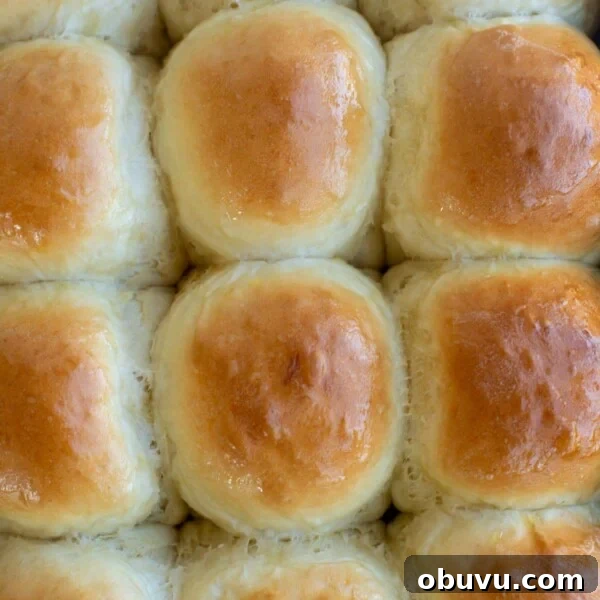
One Hour Sourdough Discard Rolls

Pretzel Bites with Sourdough Discard
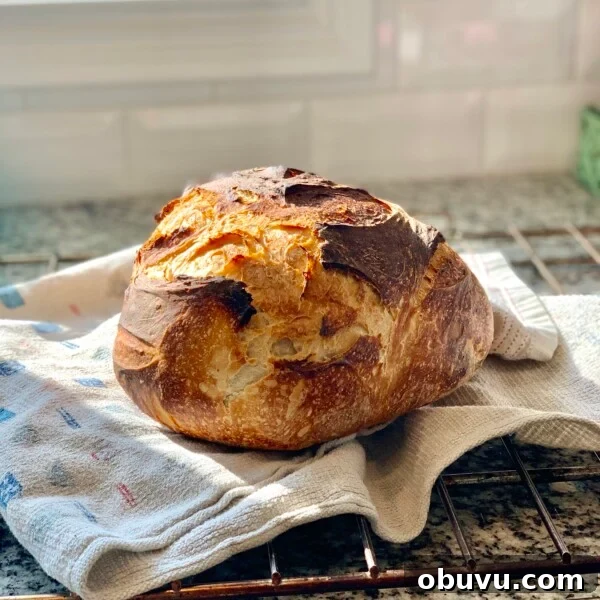
Beginner Sourdough Bread
If you try this Sourdough Focaccia Bread, leave a star rating and let me know how it went in the comments. Happy baking!

Easy Sourdough Focaccia Recipe
Ingredients
Levain (1:10:10)
- 5 g ripe sourdough starter
- 55 g room temperature water
- 55 g all-purpose or bread flour
Sourdough Focaccia Dough
- 100 g ripe, bubbly levain
- 425 g room temperature water
- 500 g bread flour
- 13 g salt
Olive Oil & Toppings
- 70 g olive oil, divided
- 5–10 g flaky sea salt
- Fresh or dried herbs, optional
Instructions
Day 1: Mix the Levain
- Mix 5 g starter with 55 g water and 55 g flour. Cover and let sit 10–12 hours at about 78ºF until doubled and bubbly. (Or substitute 100 g ripe starter for the levain.)
Day 2: Mix and Develop Dough (78ºF)
- Mix 100 g levain, 425 g water, 500 g bread flour, and 13 g salt until a sticky dough forms. Cover and rest 30 minutes.
- Perform 4–6 coil folds. Repeat every 30 minutes for four sets total, covering between sets. After the final folds, rest 1.5–2 hours until the dough has bubbles around the edges and has risen ~30–40%.
- Oil a 12-inch round or 9×13 metal pan with ~40 g olive oil. Transfer the dough, gently stretching to fit. Cover and refrigerate overnight.
Day 3: Proof and Bake
- Remove the dough from the fridge and proof at 78–80ºF for 3–5 hours until airy and jiggly.
- Preheat oven to 450ºF. Drizzle ~30 g olive oil over the dough, dimple with your fingers, and sprinkle with flaky sea salt and herbs.
- Bake 25–30 minutes until golden and crisp. Cool in the pan 5–10 minutes, then transfer to a rack to cool completely before slicing.
Notes
Bread flour: Higher protein flour gives better bubbles and chew. If handling wet dough is new to you, reduce the water to 400 g. To boost height, use high-gluten flour or add 10 g vital wheat gluten.
All-purpose substitution: Reduce water to 350 g, or use 475 g all-purpose plus 25 g vital wheat gluten.
Sourdough starter: A ripe, bubbly starter can substitute for the levain.
Olive oil & pan: A light-tasting olive oil is recommended. A non-stick metal pan yields crisp edges; use parchment if your pan sticks.
Nutrition (per slice, approx.)
Calories: 227 kcal; Carbs: 35 g; Protein: 6 g; Fat: 7 g; Sodium: 585 mg.