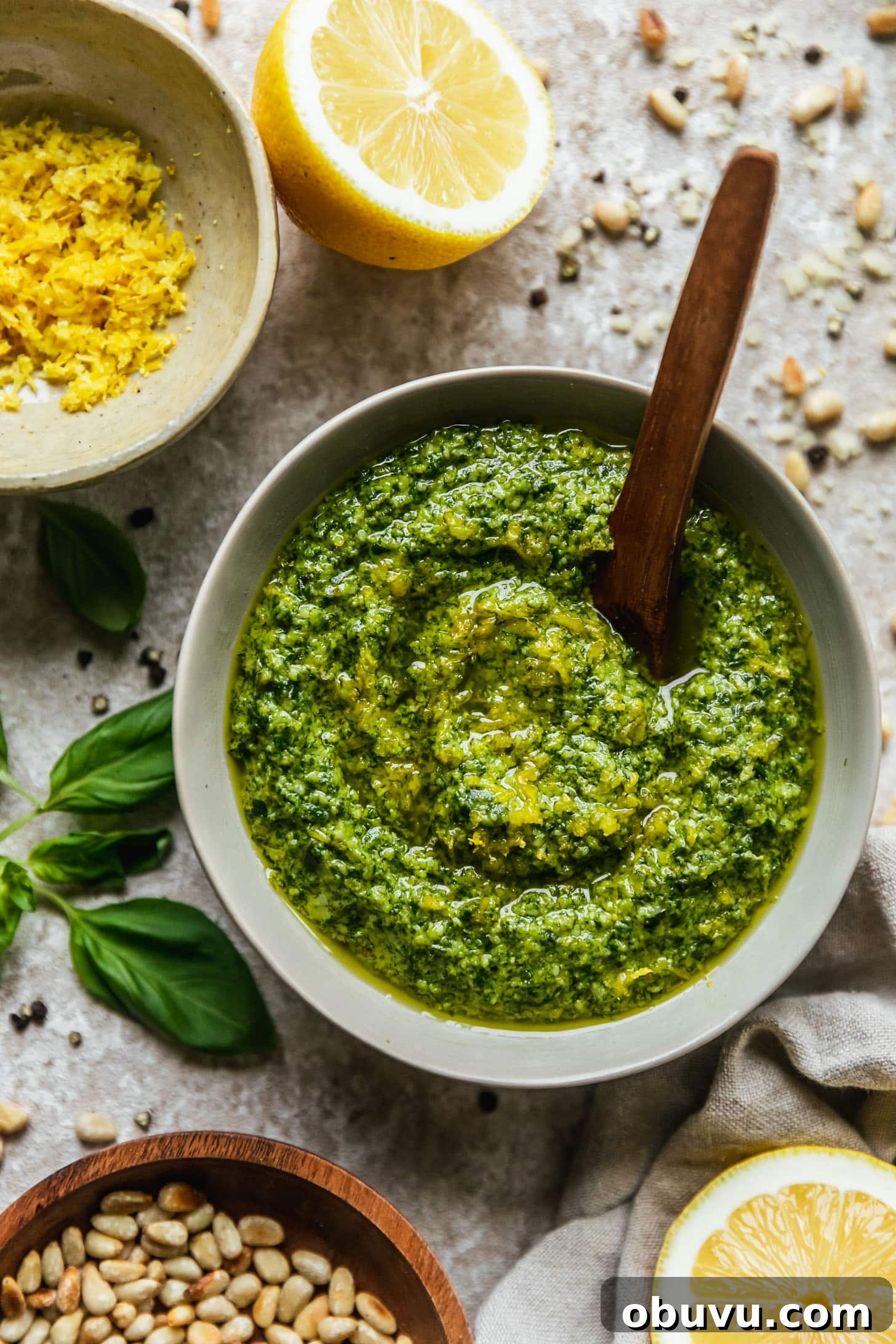
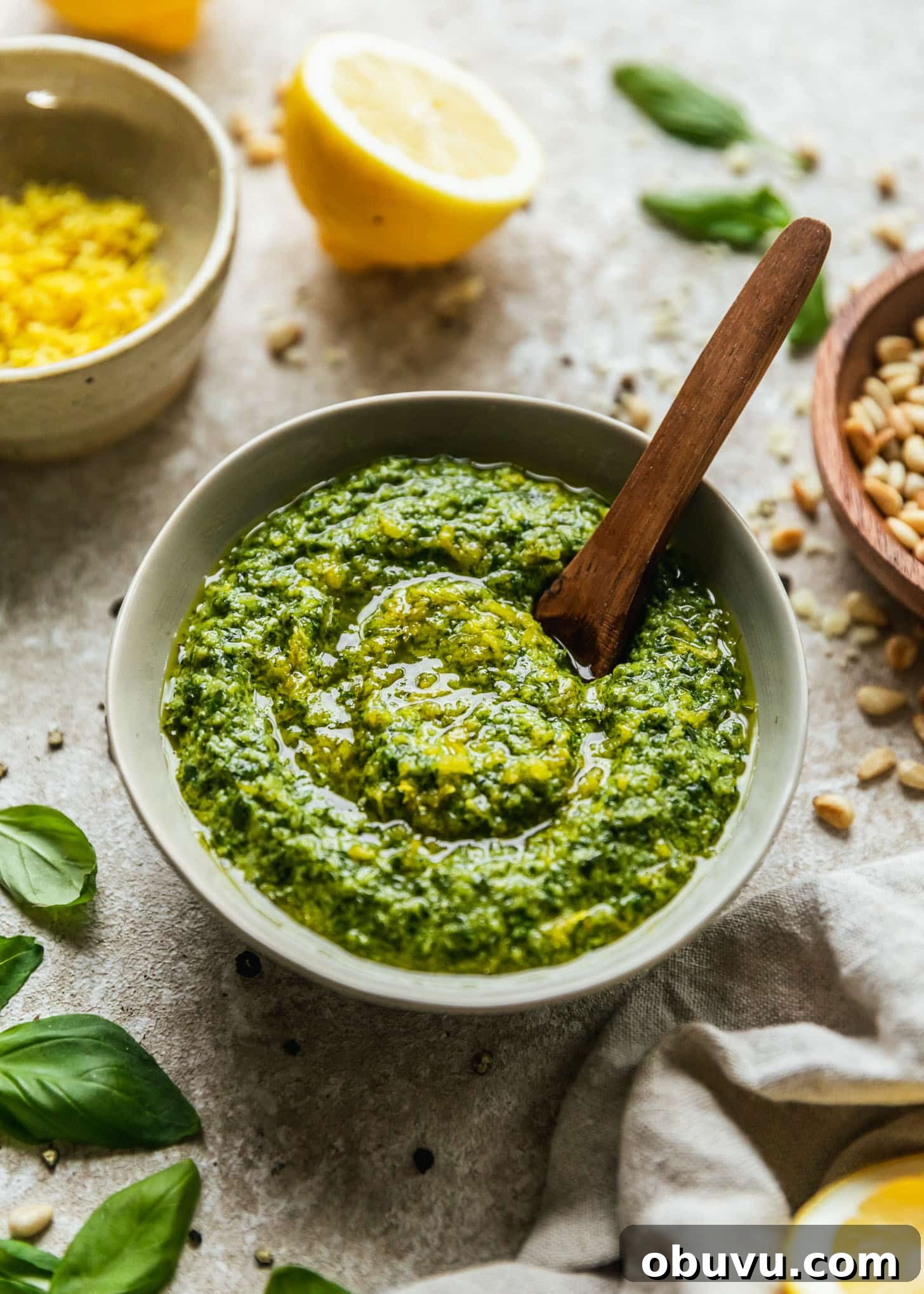
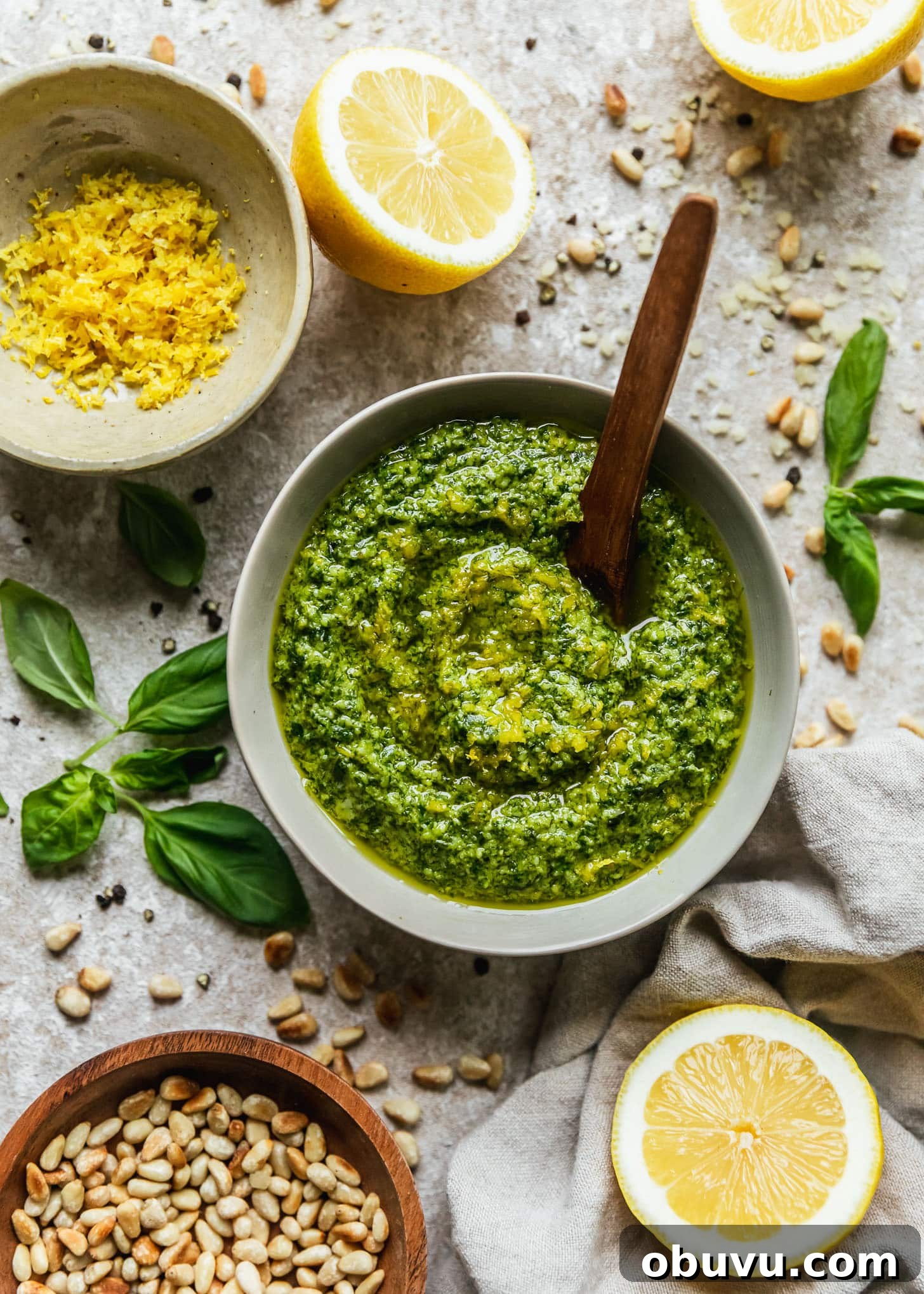
I could put this lemon pesto on almost everything. Inspired by classic Italian pesto, this version adds a bright citrus twist. Fresh basil, toasted pine nuts, lemon zest, Parmesan, and olive oil combine to create a sauce that’s salty, herbaceous, and savory. It’s fantastic on pasta, chicken, pizza, sandwiches, and more.
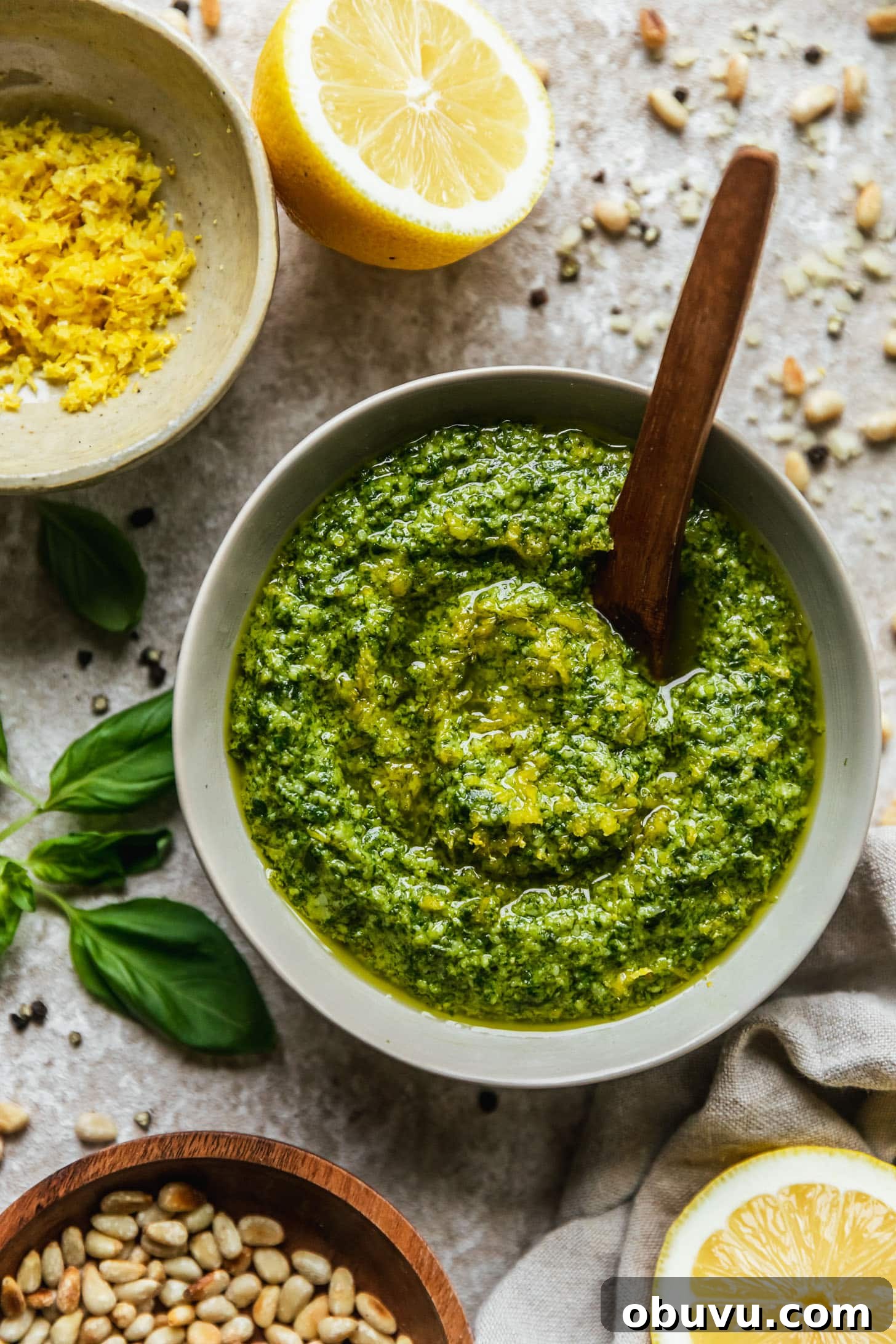
Now that my basil plant is thriving, I make pesto constantly. It stars in simple appetizers like crostini and richer dishes like fried burrata, and sometimes I’m guilty of eating it by the spoonful. Basil and lemon are a classic pairing, so I always add plenty of lemon zest to my go-to pesto recipe. The result is bright, fresh, and perfectly balanced.
Knowing how to make pesto is a useful kitchen skill — it’s quick, versatile, and an easy way to elevate weeknight dinners when your basil plant is overflowing. Use this lemon pesto anywhere you would use traditional pesto: toss it with pasta, spread it on sandwiches, spoon it over grilled fish or chicken, or brush it onto pizza. Summer flavor in a jar.
Fresh basil
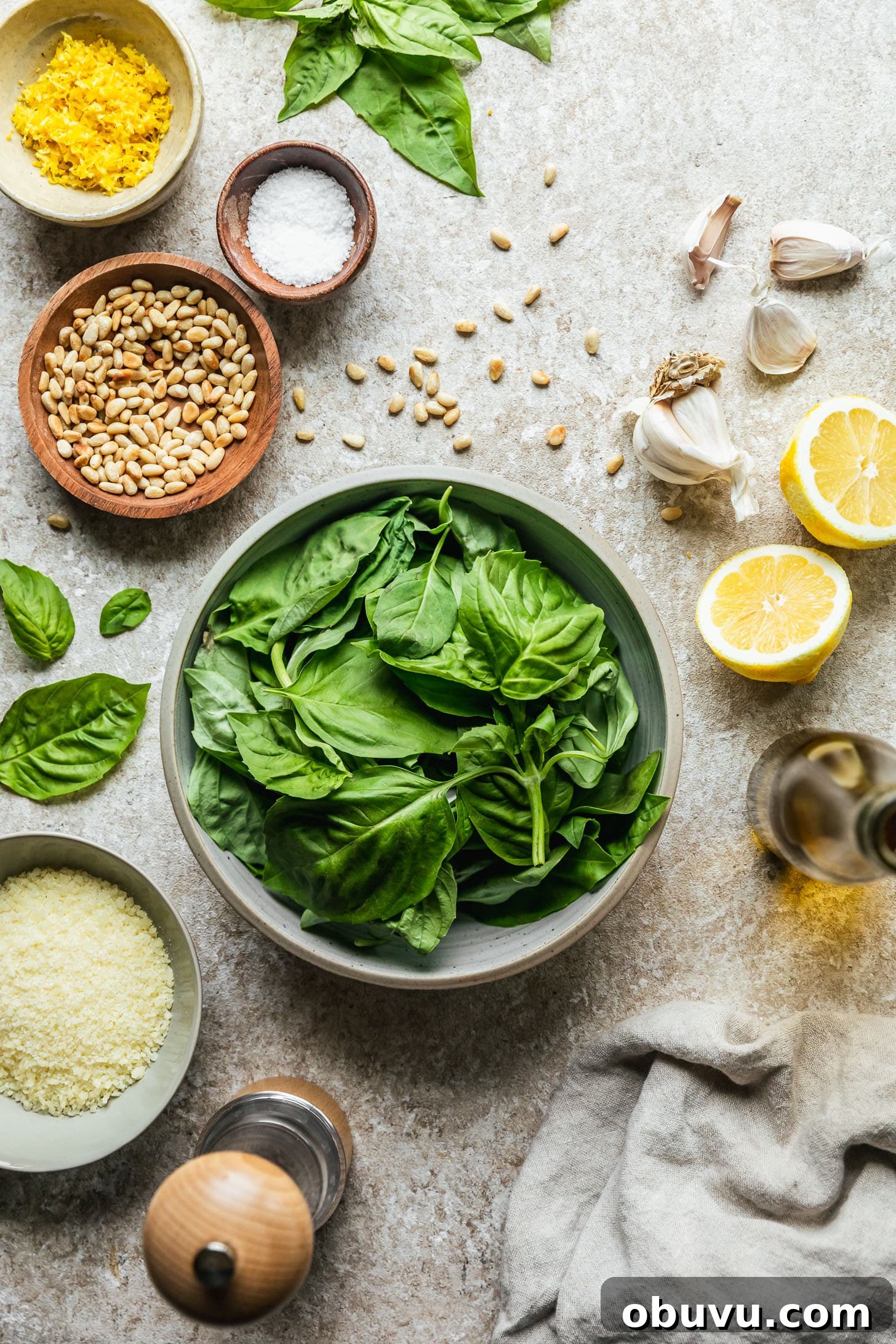
Great pesto starts with great basil. Choose fragrant, vibrant leaves without browning or limp spots for the best flavor and texture. Fresh basil makes a pesto that far outshines store-bought jars.
Other essential ingredients include toasted pine nuts, a clove of garlic, lemon zest and juice, grated Parmesan, extra-virgin olive oil, kosher salt, and freshly ground black pepper. If you prefer, swap the pine nuts for walnuts or almonds, or use pepitas or sunflower seeds for a nut-free option.
Step-by-step directions
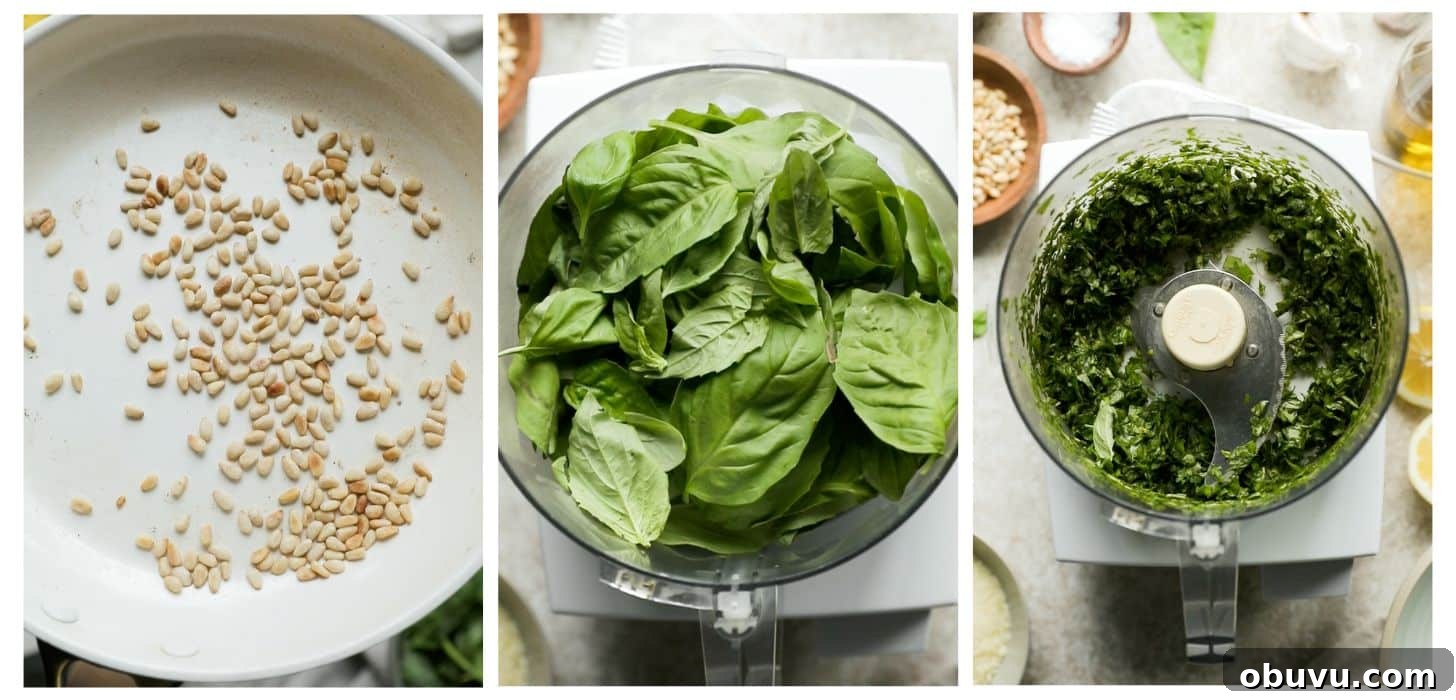
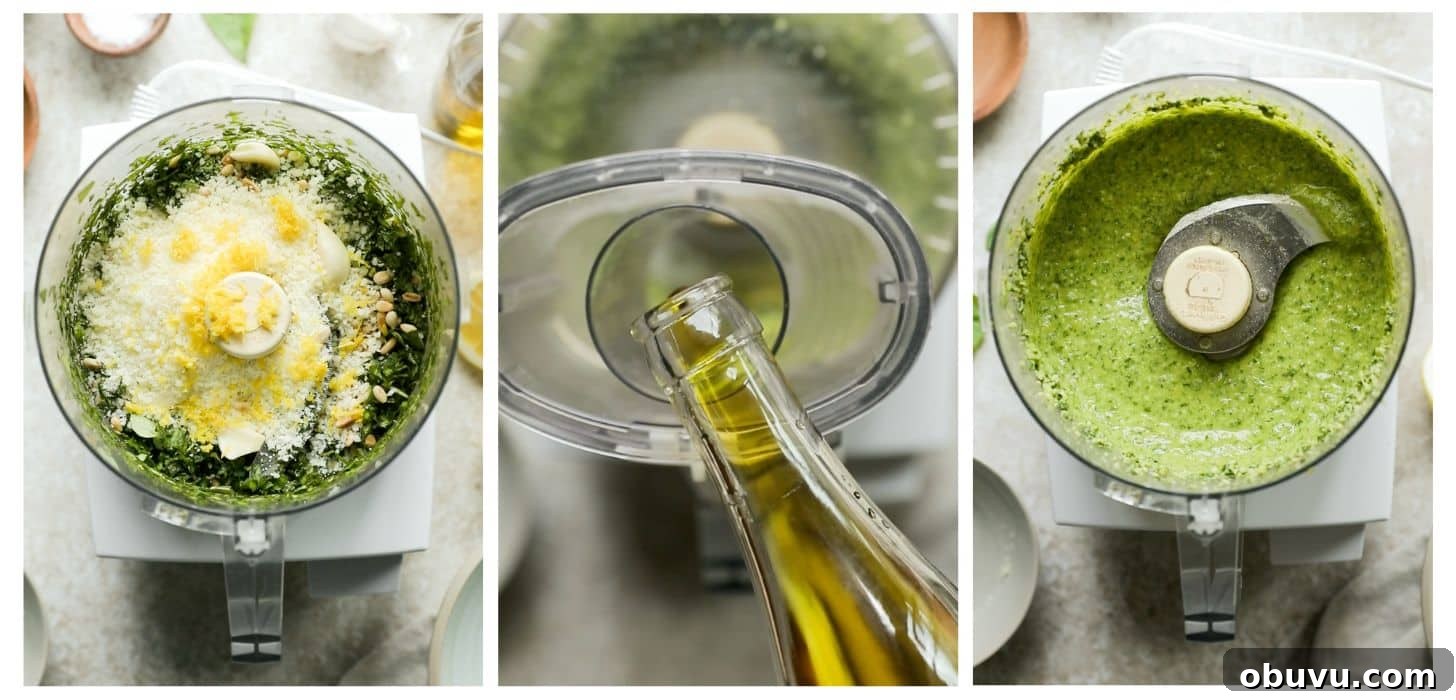
Add the olive oil slowly; pouring it in too quickly can cause the pesto to separate.
Store & freeze leftovers
To store leftovers, spoon the pesto into a jar and pour a thin layer of olive oil over the surface to prevent browning. Seal tightly and refrigerate for up to five days. For longer storage, freeze pesto in an airtight container or in ice cube trays for up to six months. Thaw frozen pesto in the refrigerator overnight before using.
Using this pesto
Pesto isn’t just for pasta. Here are some favorite ways to use this lemon version:
- Use as a marinade or finishing sauce for chicken, pork, or shrimp.
- Drizzle over grilled or roasted vegetables.
- Spread on pizza or serve as a dipping sauce for bread.
- Pile onto an Italian or vegetable sandwich for extra flavor.
- Fry eggs with a little pesto instead of oil for a quick, savory twist.
If you make this recipe, please leave a star rating and a short review. I read every comment and love hearing how you use my recipes—thank you for supporting Sunday Table!
Lemon Pesto with Basil
Pin Recipe
Leave a Review
Ingredients
- 3 Tablespoons pine nuts
- 2 cups fresh basil leaves, packed
- 1 garlic clove, peeled (about 1 teaspoon minced)
- 1/2 cup grated Parmesan
- 2 Tablespoons lemon zest
- 2 Tablespoons lemon juice
- 1/4 cup extra virgin olive oil
- 1/2 teaspoon Kosher salt, plus more to taste
- Freshly-ground black pepper, to taste
Equipment
-
Food processor or blender
Instructions
-
Pour the pine nuts into a small skillet and toast over medium heat until golden-brown. Transfer to a small bowl and let cool.
-
Place the basil in the bowl of a food processor and pulse a few times to break up the leaves. Add the cooled pine nuts, garlic, Parmesan, lemon zest, lemon juice, salt, and pepper. Run the processor, stopping to scrape down the sides occasionally, until everything is finely minced.
-
With the processor running, slowly drizzle in the olive oil until the mixture becomes an emulsified sauce. Taste and adjust seasoning with more salt and pepper if needed.
Notes
Start with one garlic clove and add more to taste; too much garlic can overpower the basil and lemon.
Always use freshly grated Parmesan for the best flavor.
For a thinner, saucier pesto, add extra olive oil one tablespoon at a time until you reach the desired consistency.