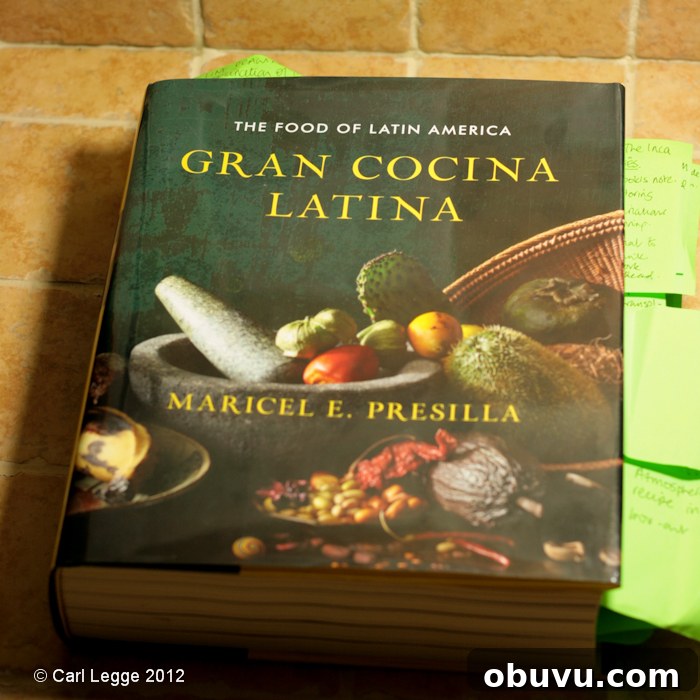
Maricel Presilla’s Gran Cocina Latina (Great Latin Cuisine) is a monumental work and one I greatly admire. Spanning 901 pages and the result of nearly three decades of research, the book goes far beyond a typical cookbook. It combines culinary history, cultural context, personal anecdote and a vast collection of recipes to create a thorough, thoughtful guide to Latin American food. For anyone wanting a deep understanding of the region’s cuisine, this book serves as an indispensable reference.
Presilla brings a rare combination of scholarship and practical experience to the subject. Born in Cuba and based in the United States, she holds a doctorate in medieval history, has earned acclaim as a chef and restaurateur in New Jersey, and has written on cacao and chocolate. Her academic training and hands-on kitchen knowledge give her the authority to trace the origins and evolution of dishes, ingredients and techniques across the Latin world.
The book opens with clear, accessible explanations of Latin America as a culinary region and the principles that shape its cooking. Presilla describes how Latin cooks often build flavor in layers — using adobos, sofritos and table condiments to accumulate complexity — rather than relying solely on single mixed sauces. This layered approach is a helpful lens for understanding many regional dishes and how their components interact.
Presilla embeds culinary practice within geographic, historical and social frameworks, showing how foodways have shifted through colonization, migration and trade. She writes with the conviction that food is frequently political and deeply connected to identity: “Again and again, I was forced to remember that food is always deeply political…the love of food transcends even the most bitter of realities.” This perspective enriches the recipes by placing them in their larger human story.
The core of the book is organized into sixteen focused chapters that group ingredients and dishes logically: tropical roots and starchy vegetables; squashes, corn, quinoa and beans; rice; beverages; small plates; empanadas; the tamal family; cebiches; La Olla (soups and stews); salads; breads; fish and seafood; poultry; meats; hot pepper dishes; and dulce Latino (sweets and desserts). Each chapter begins with a “Chapter at a view” page, a concise mini-contents that makes it easy to locate recipes or themes without paging through the entire volume. Following that overview, each chapter contains an introduction that discusses the topic’s role in Latin cuisines, regional variations, common ingredients and historical notes, often enlivened with stories and anecdotes.
The recipes are clearly written and intended for an American readership, so measurements are primarily in cups and ounces. If you are more familiar with metric, it’s straightforward to adapt: a set of cup measures and a simple ounces-to-grams conversion will make the recipes accessible. The layout of recipe pages is practical for home cooks. Each recipe includes Cook’s Notes that explain the technique or approach, advice on what can be prepared in advance, beverage suggestions, and boxed tips or bulleted points for further clarification. This structure keeps instructions focused and helps the cook plan a recipe from start to finish.
I particularly appreciate the clear line drawings that illustrate techniques and ingredient details; they are informative and helpful in the kitchen. The photographic treatment aims for a careful play of light and composition — Presilla references a Vermeer-like sensibility — which gives the images a distinctive atmosphere. While some readers might prefer more conventional, brightly lit food photography, the pictures still convey the look and mood of many dishes and complement the text without distracting from it.
My own interest in the book grew from practical curiosity: I’m experimenting with growing a number of lesser-known South American crops in North Wales — oca, ulluco, mashua, rocoto, yacon, chañar-like plants and pepino among them. Many of these ingredients are uncommon in Western Europe, and reliable recipe guidance is scarce. Gran Cocina Latina provides cultural context, traditional methods and creative uses that help me imagine how to incorporate these crops into contemporary cooking and connect them to their culinary roots.
For readers attracted to Latin American history, culture and cuisine, Gran Cocina Latina is an exceptional resource. It balances scholarship, storytelling and practical instruction in a way that makes learning about the region’s food both enjoyable and substantial. For anyone passionate about world food and cooking, this book is a rich companion for exploring flavors, techniques and histories across Latin America.
Gran Cocina Latina remains an important, thoughtfully compiled volume for anyone who wants an authoritative, immersive guide to Latin American cooking and culinary heritage.