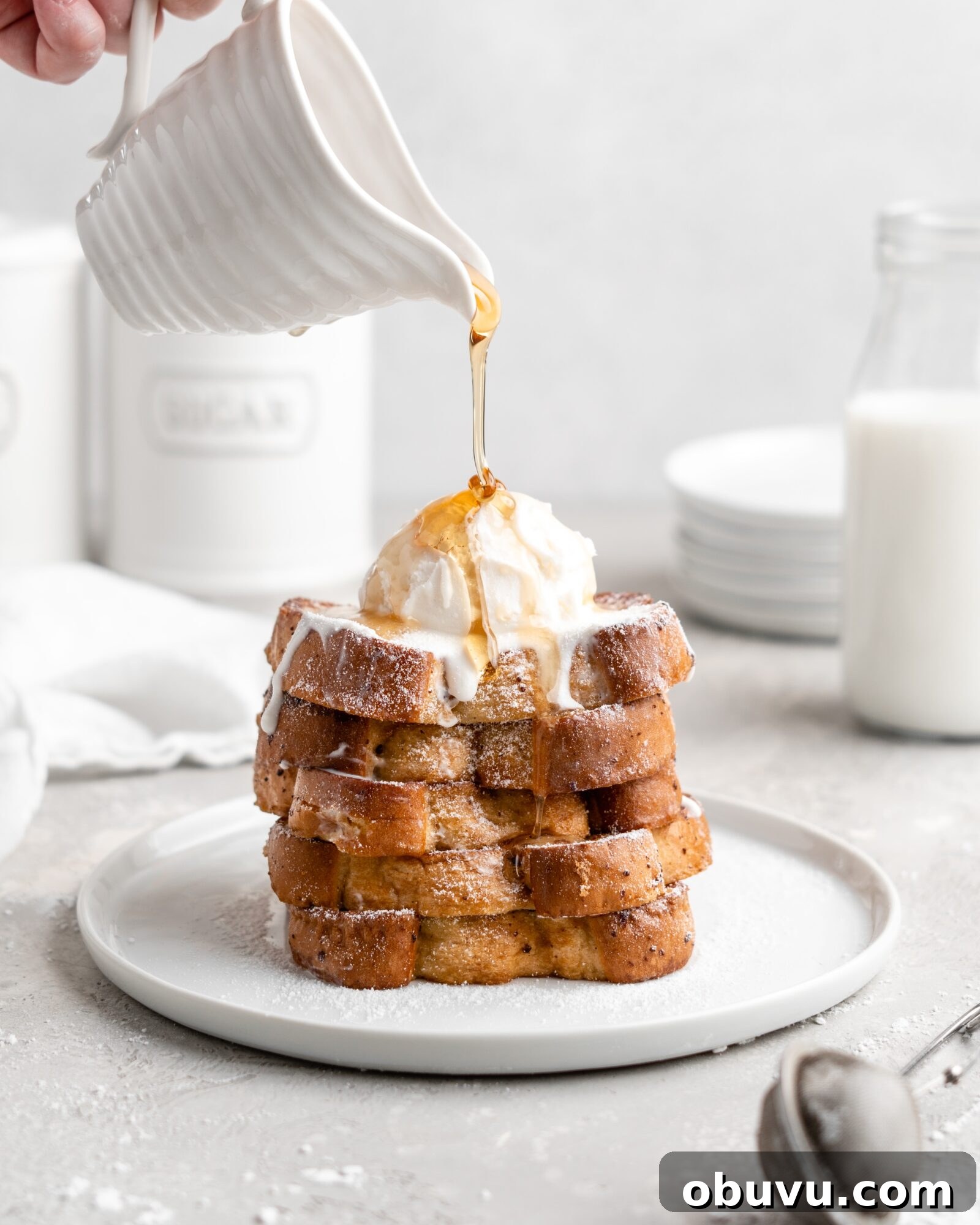
Updated March 2020 with new photos.
Thick, pillow-like slices of French bread are soaked in a Grand Marnier–infused buttermilk custard and fried to a golden finish. This buttermilk French toast is both distinctive and comfortingly familiar—perfect for a leisurely weekend breakfast.
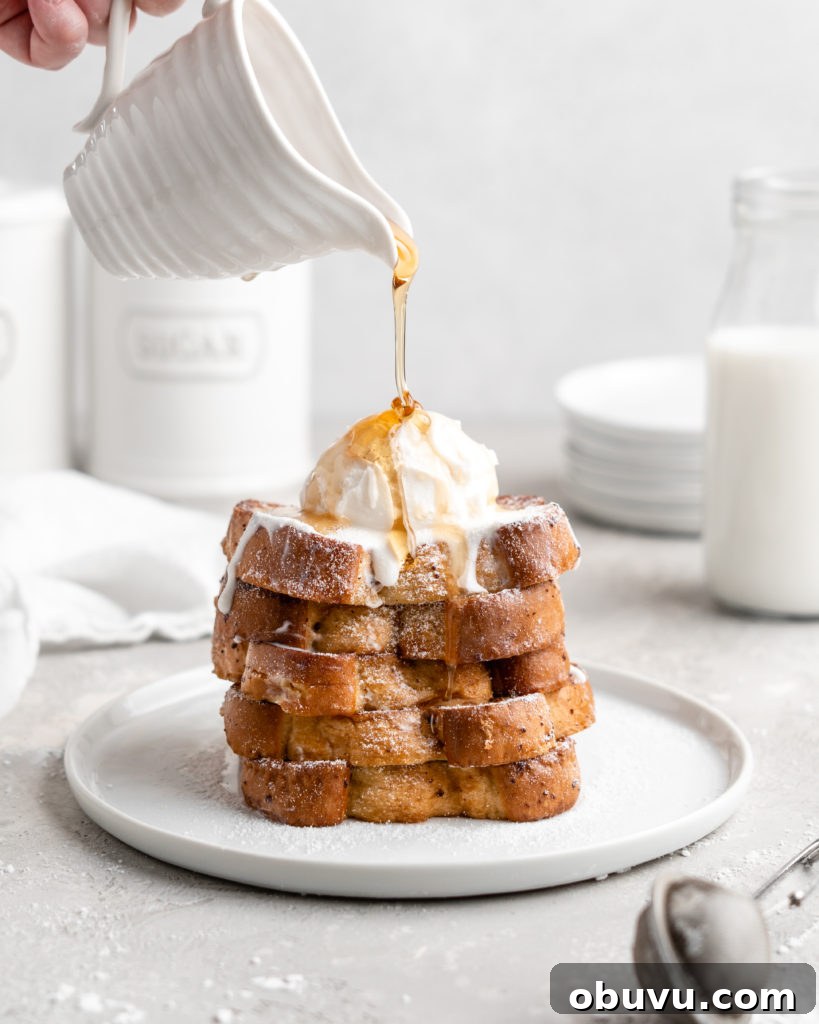
For a long time I made a basic, utilitarian French toast whenever white bread went stale—an egg whisked with skim milk, a dash of cinnamon, a quick dunk of thin slices. It worked in a pinch, but it never matched the rich, pillowy French toast I loved at restaurants. Restaurant versions were flavorful, moist inside, and still crisp on the outside. I assumed it was simply better bread. When I tried a fresh bakery loaf with the same method, the slices turned soggy. Using stale bread instead produced slices that were too dry. After researching and experimenting, I found the right balance of bread, custard, soaking, and cooking that produces a restaurant-quality buttermilk French toast.
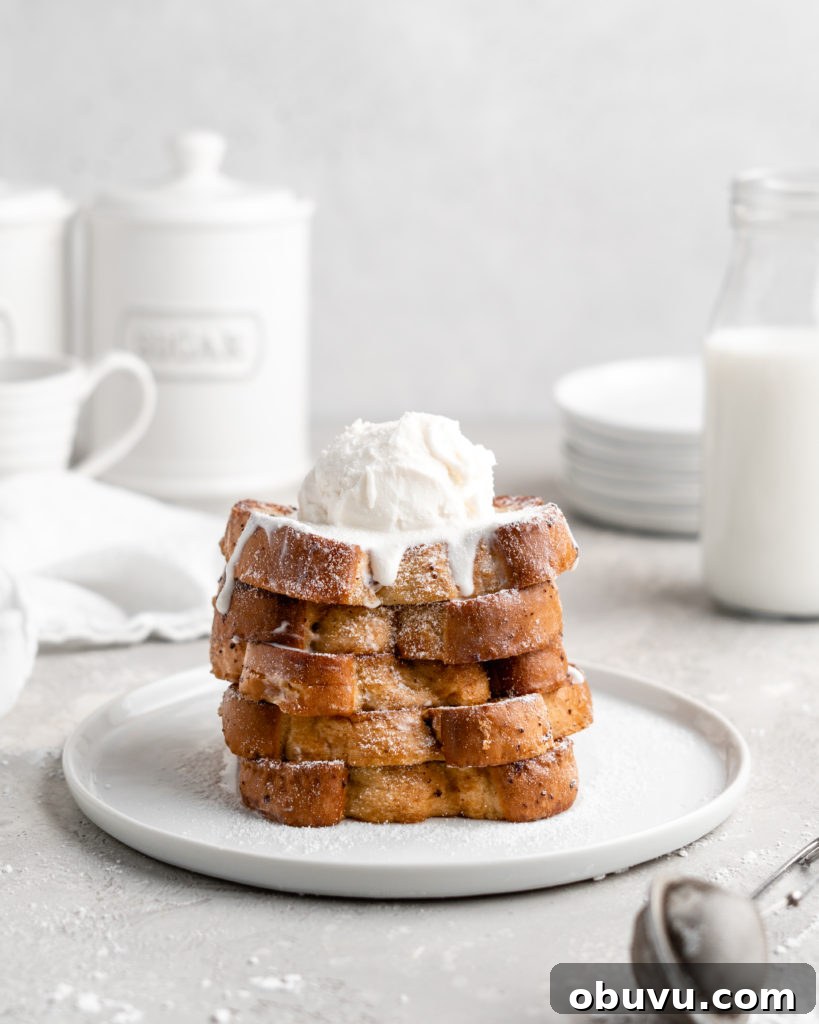
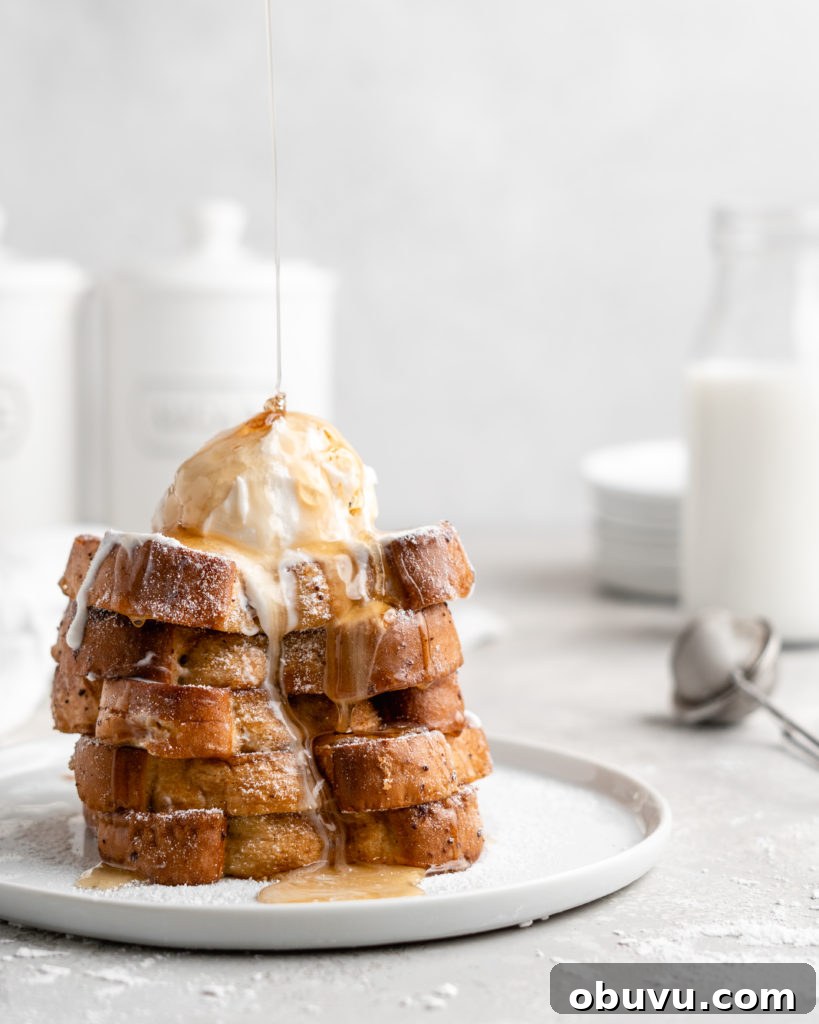
Tips for the Perfect Buttermilk French Toast
After testing different techniques, I compiled these practical tips to ensure tender, flavorful, and well-structured buttermilk French toast.
- Use stale bread. Stale bread soaks up the custard without becoming limp. To stale at home, slice the loaf the night before and leave the pieces uncovered on the counter for at least 8 hours. If you’re short on time, bake slices at 250°F for 20–25 minutes.
- Choose sturdy bread and slice thickly. Brioche, challah, or a sturdy French/Italian loaf work best. Cut slices 3/4″ to 1″ thick so they absorb enough custard without collapsing. Too thin will get soggy; too thick can stay dry inside.
- Strain beaten eggs. Passing beaten eggs through a sieve removes any stringy egg white pieces and yields a smoother custard that bakes and fries evenly.
- Use full-fat buttermilk. Buttermilk adds body and a subtle tang that deepens the flavor and produces a thicker, more luxurious custard than regular milk.
- Bring the custard to room temperature. Letting the custard warm slightly reduces the temperature contrast with the pan and helps prevent the egg from congealing when you cook. If you’re short on time, briefly warm the containers in a bowl of warm water.
- Soak properly. Soak slices 30–40 seconds per side (I do 30 seconds for 3/4″ slices and 40 seconds for 1″ slices). Then place the soaked slices on a wire rack and rest for about 5 minutes—this allows the custard to penetrate the center for an even texture.
- Fry with butter and oil. Butter adds flavor while oil raises the smoke point and prevents burning. Use a neutral, high-smoke-point oil such as canola or grapeseed alongside butter.
- Cook over moderate heat. High heat will brown the outside too quickly while leaving the center undercooked. Aim for a steady medium heat and cook until golden, about 3 minutes per side.
- Keep warm in the oven if needed. You can place cooked slices on a wire rack set over a baking sheet and warm them in a 375°F oven for 5 minutes to let the custard finish setting. If serving immediately, you can skip this step.
- Try the Grand Marnier. Adding a tablespoon of Grand Marnier gives a delicate orange note that complements cinnamon and nutmeg. The alcohol cooks off, leaving behind a bright, subtle flavor.
- Adjust sugar to taste. If serving with lightly sweet toppings like butter or cream, you may want a little more sugar (up to 1/2 cup). If you plan to douse the toast in maple syrup, reduce the sugar to around 1/4 cup.
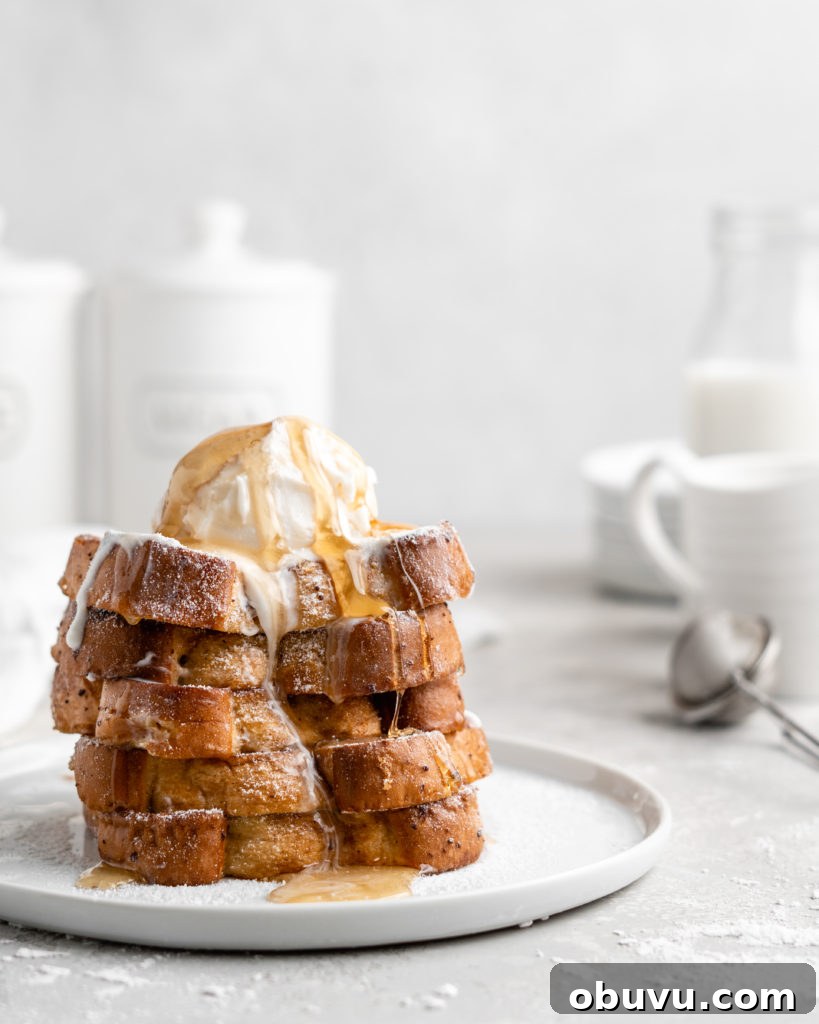
Get the Recipe:
Buttermilk French Toast
Ingredients
- 1 Loaf Very stale French or Italian bread, cut into 3/4″–1″ slices
- 6 Eggs
- 1 cup Full-fat buttermilk
- 1/2 cup Half & half
- 1/3 cup Sugar (adjust to taste)
- 1 tbsp Grand Marnier
- 1 tsp Vanilla extract
- 1 tsp Cinnamon
- Dash of nutmeg
- Pinch of salt
Instructions
- Preheat oven to 375°F (optional, if you plan to finish the slices in the oven).
- Whisk eggs until well beaten and strain through a sieve to remove any large bits. Add buttermilk, half & half, sugar, Grand Marnier, vanilla, cinnamon, nutmeg, and salt; whisk until combined. Transfer the custard to a large shallow dish for soaking.
- Place a wire cooling rack over a baking sheet. Submerge bread slices in the custard and soak 30–40 seconds per side. Transfer soaked slices to the wire rack and rest about 5 minutes to allow the custard to penetrate evenly.
- Preheat a large frying pan over medium heat. Add 1/2 tablespoon butter and 1/2 tablespoon neutral oil per batch. When the butter melts and foaming subsides, add bread slices (don’t overcrowd). Cook about 3 minutes per side, until golden brown.
- Optional: After frying, return slices to the wire rack and bake in the 375°F oven for 5 minutes to let the custard fully set. Serve warm with your favorite toppings.
Notes
†† Use full-fat buttermilk; low-fat varieties make the custard too thin.
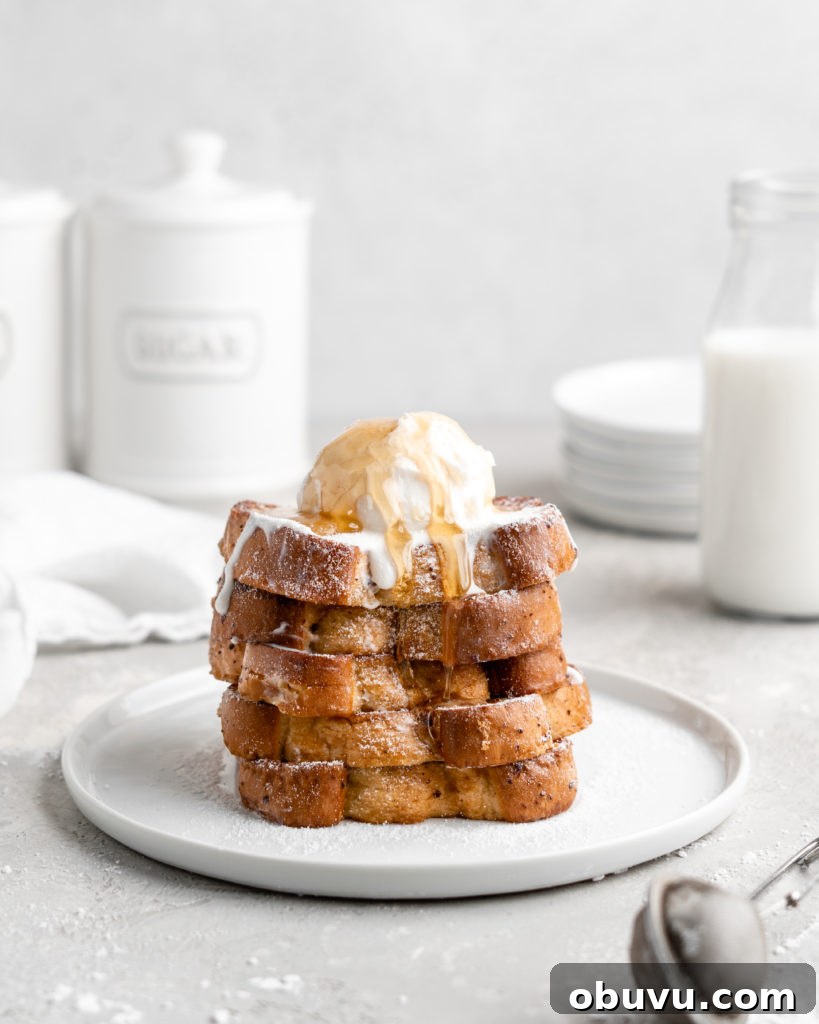
Source: Adapted from Martha Stewart