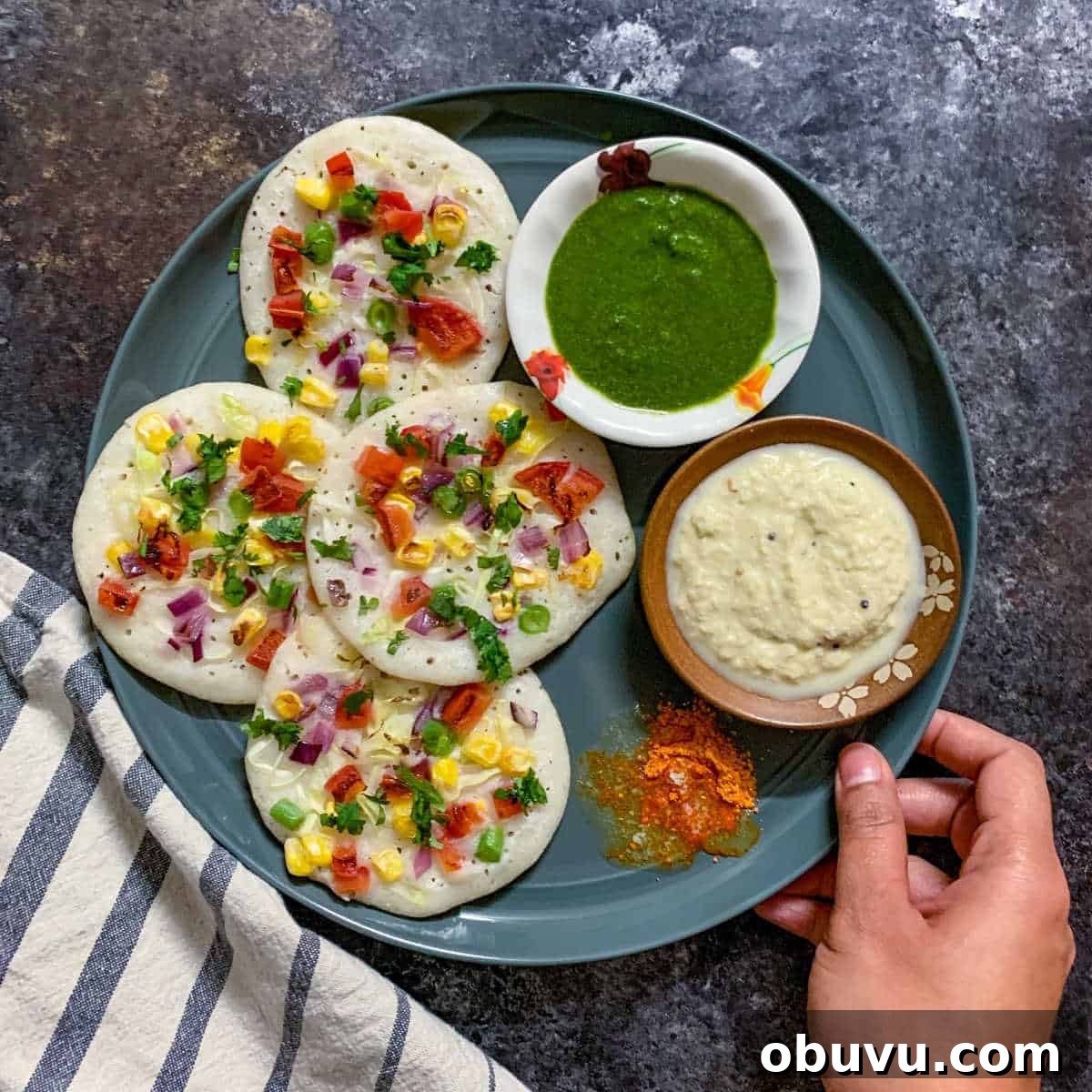
Uttapam, also spelled uthappam, is a savory pancake from South India that’s both healthy and satisfying. This easy uttapam recipe shows you how to make uttapams that are crispy on the outside and fluffy inside. They’re ready in about 15–20 minutes and are perfect topped with vegetables, masala, or paneer. Serve them with coconut chutney, green chutney, sambar, podi, or ketchup. This recipe is vegan and gluten-free when you use a basic idli/dosa batter.
Recipes like these uttapams are great because they work for breakfast, lunch, or dinner — similar to oats-chickpea savory pancakes or lentil dosas. I love recipes that can be adapted to any mealtime and use the same batter in different ways.
Different ways to make uttapam
You can make uttapam from homemade idli or dosa batter, from store-bought batter, or from instant mixes using suji (semolina) and rice flour. If you prefer a batter without rice or without fermentation, try a no-fermentation, no-rice dosa batter — it works well for uttapams too.
Using idli/dosa batter for uttapam
A multipurpose idli-dosa batter is very versatile. I often prepare a large batch and use it throughout the week: idlis on day one, dosas or appe (paniyaram) on day two, and uttapams or vegetable dhokla on day three. Keeping the batter slightly thick makes it easy to adjust the consistency later depending on what you want to cook.
Best toppings for uttapam
Plain uttapams can be dull, so always top them. Popular options include onion, tomato, bell peppers, cabbage, sweet corn, green beans, peas, and green chilies. You can make a simple onion uttapam, a mixed vegetable uttapam, a potato masala uttapam, or add cheese or paneer for extra richness. Don’t overcrowd the surface with toppings — choose what your family prefers and mix and match.
How to cook uttapam
- Adjust the batter to a pourable pancake-like consistency by adding a little water. It should be thicker than dosa batter but thinner than idli batter.
- Preheat a skillet or tawa on medium heat until warm but not smoking.
- Pour a ladleful of batter into the center and spread slightly for a large uttapam, or pour smaller amounts for mini uttapams.
- When bubbles appear on the surface, sprinkle your prepared toppings and press them gently into the batter.
- Add a spoonful of oil or ghee around the edges and cook for 2 minutes or until the bottom turns golden brown.
- For thicker uttapams, cover and cook on low heat so the batter cooks through.
- Flip carefully and cook the other side for 1–2 minutes on low heat until the vegetables brown slightly.
- Transfer to a serving plate and repeat with the remaining batter.
What to serve with uttapam
Serve uttapams hot with coconut chutney, green chutney, sambar, podi (gun powder), or ketchup. They pair well with any of these condiments depending on taste and occasion.
Tips for crispy, fluffy uttapam
- Make the batter slightly thick at home — this creates a multipurpose batter suitable for idli, dosa, uttapam, appe, or dhokla.
- For uttapams, use a batter consistency a bit thicker than dosa but thinner than idli. Add water carefully to reach this balance.
- Keep the tawa warm on medium heat. If the pan is too hot, the outside will brown before the center cooks.
- Avoid piling on too many toppings, which can make the uttapam soggy.
- Cook both sides well to get a crisp exterior while keeping the inside soft.
Common problems and solutions
Batter sticking to the pan:
Let the batter set and cook on one side before attempting to flip. Use enough oil or ghee around the edges to ease flipping. If the top still looks wet, wait a little longer — flipping too soon often causes sticking. For cast-iron pans, make sure they’re well seasoned. Rubbing a half-cut onion over the tawa right before pouring the batter can also help prevent sticking.
Batter too thin:
Add some rawa (semolina) and let the batter rest for 10 minutes. This firms up the batter and helps make crispier uttapams.
Batter too thick:
Add water a few tablespoons at a time until you reach a pourable, pancake-like consistency.
Homemade uttapam recipe overview
This recipe uses a multipurpose idli-dosa batter made from soaked idli rice, urad dal (whole or split), fenugreek seeds, and a little poha (flattened rice) for softness. Grind the ingredients with minimal water to a smooth, thick paste, combine the rice and dal portions, and ferment in a warm place until the batter is airy and slightly tangy. Adjust salt and water before making uttapams.
For the uttapams: heat the tawa, pour batter, top with seasoned chopped vegetables and optional cheese or paneer, cook until golden and crisp on both sides, and serve immediately with chutney and sambar. This batch makes mini or medium uttapams; the batter keeps in the fridge for 3–4 days if stored without added salt.
Notes
Any high-speed blender or mixer-grinder works well for grinding the batter; food processors are usually not ideal. If you can’t find idli rice, use a short-grain rice or a mix with parboiled rice. Fenugreek seeds or poha help make the batter fluffy; use at least one if you want soft idlis. If you’re making only dosas or uttapams you can skip them. Add salt only to the portion of batter you plan to use to avoid quick souring of the entire batch.
Vegetable options for toppings include finely chopped onion, bell pepper, tomato, cabbage, sweet corn, green beans, peas, and green chilies. Be creative and choose toppings your family prefers.
Nutrition (per mini uttapam)
Calories: 56 kcal | Carbohydrates: 12 g | Protein: 3 g | Fat: 2 g | Sodium: 1 mg | Potassium: 13 mg | Fiber: 1 g | Sugar: 1 g | Calcium: 3 mg | Iron: 1 mg