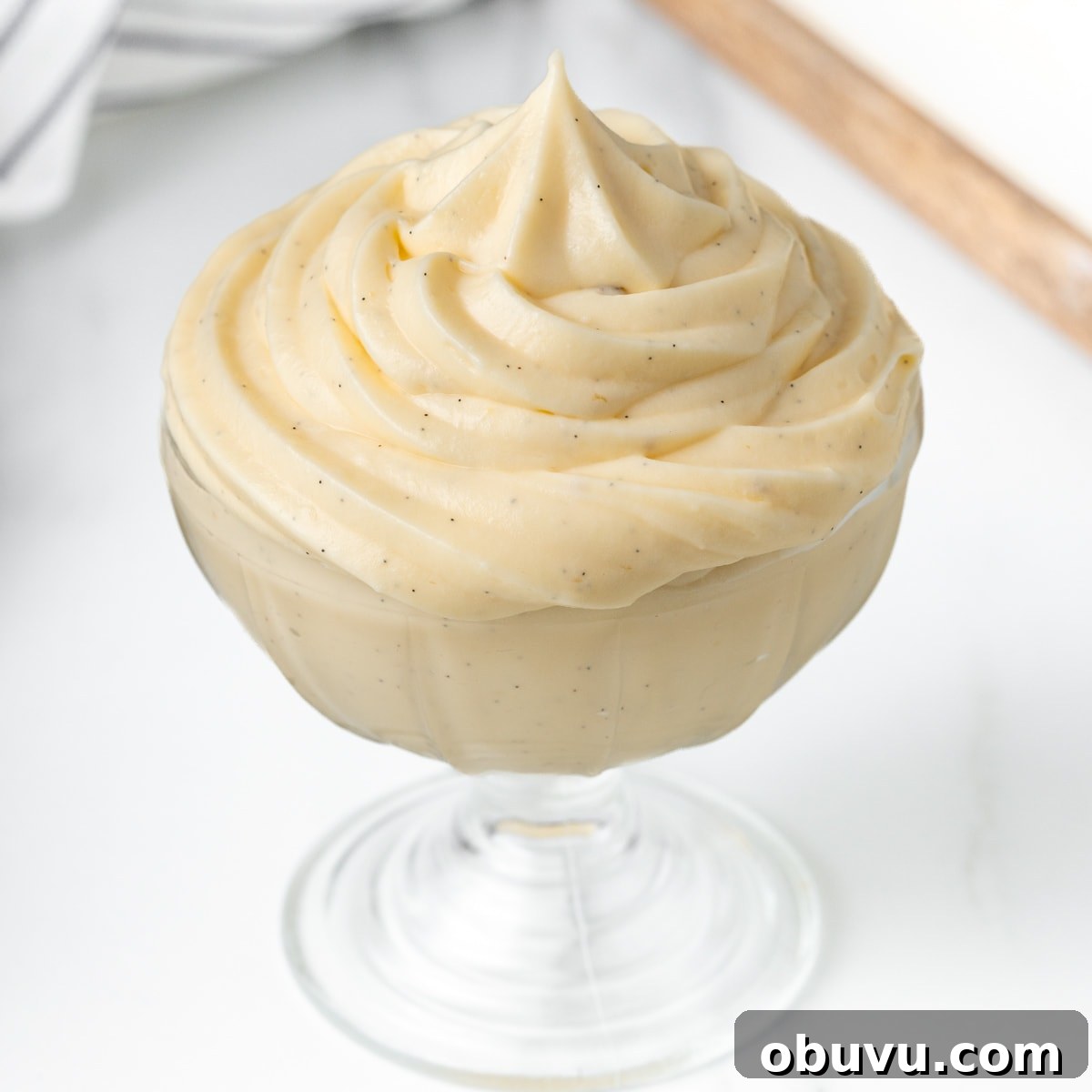
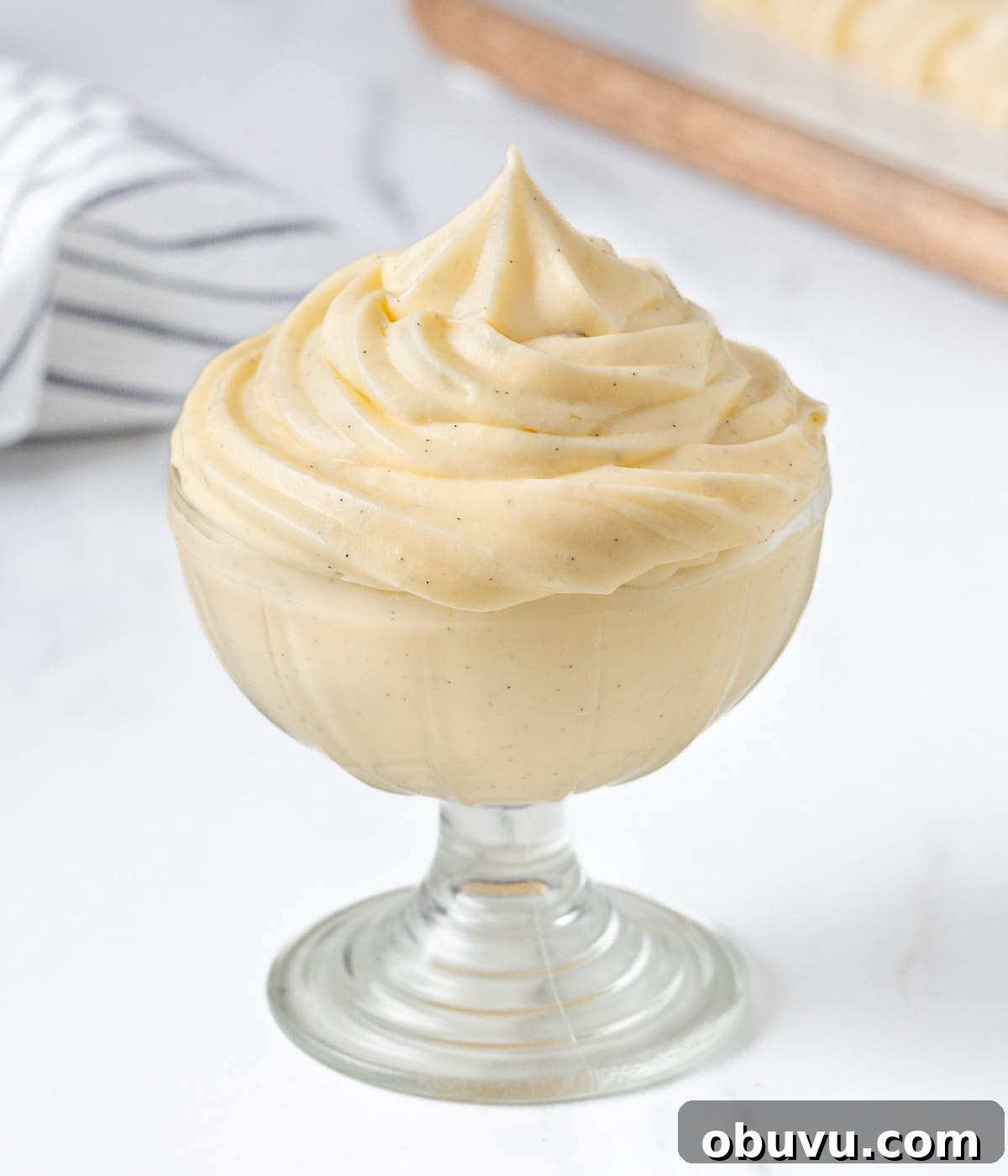
This Mousseline Cream (Crème Mousseline) is a classic French cream made by whipping butter into pastry cream (Crème Pâtissière). The resulting vanilla‑scented, silky and slightly airy cream is ideal as a filling or topping for cakes, tarts and choux pastries.
What is Crème Mousseline
Crème Mousseline (mousseline cream) is a rich, fluffy custard-based cream made by folding or whipping a generous amount of butter into crème pâtissière (pastry cream). The technique yields a smoother, richer cream than plain pastry cream while keeping a lighter mouthfeel than many buttercreams. It’s a staple in French pastry for filling entremets, layer cakes, tarts and choux desserts.
The base pastry cream is usually flavored with vanilla, but mousseline can be adapted with nut pastes, chocolate, tea, coffee or fruit purées for different profiles.
Ingredients
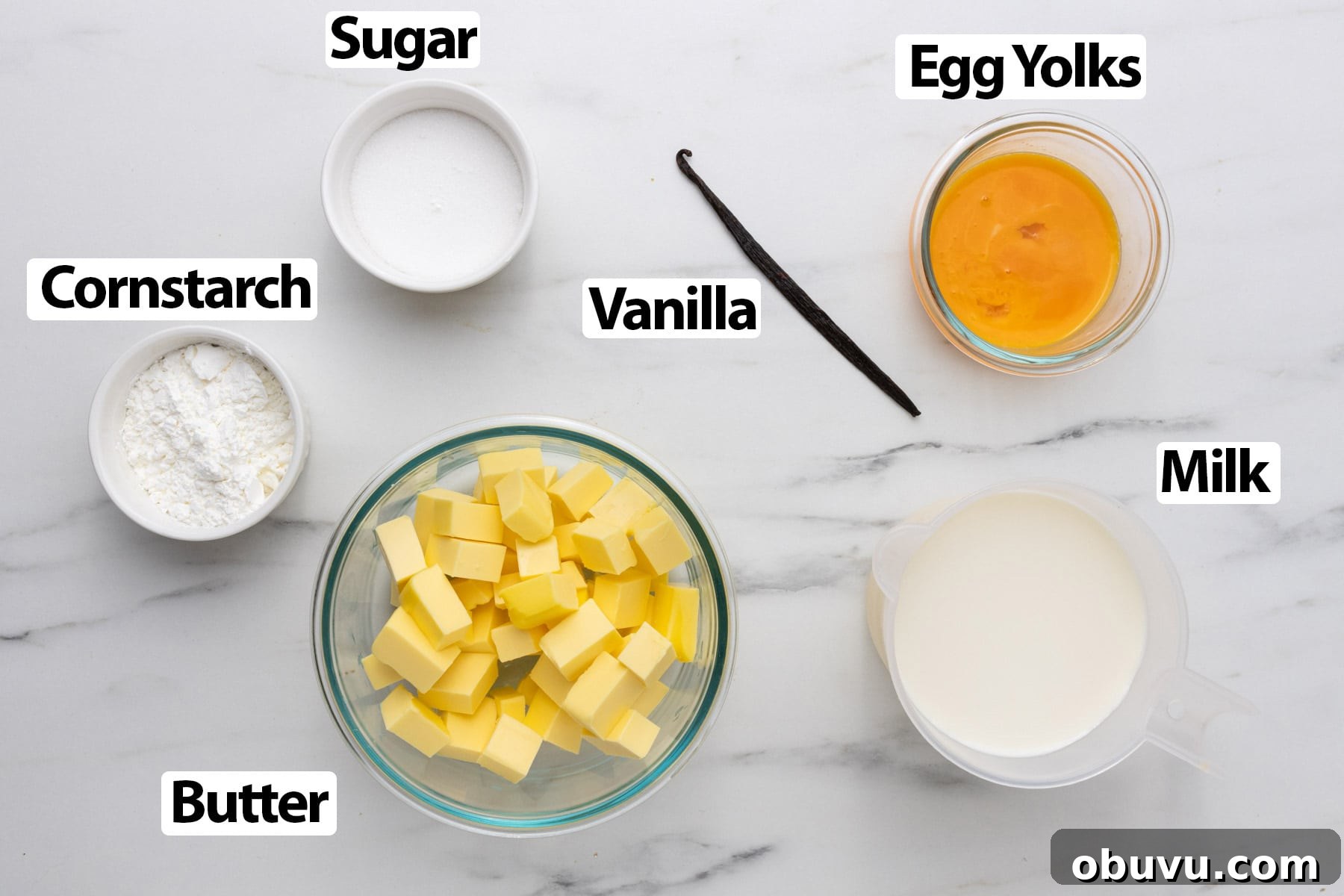
Scroll to the recipe card below for exact quantities
Core ingredients and notes:
- Milk: Use full‑fat (whole) milk for the best texture and flavor.
- Vanilla: Fresh vanilla bean produces the most aromatic result; vanilla paste is a good alternative and extract can be used if needed.
- Egg yolks: Use large yolks at room temperature to ensure proper emulsification.
- Sugar: Fine granulated or caster sugar works best.
- Cornstarch: Thickens the pastry cream and keeps it smooth. All‑purpose flour can substitute but yields a heavier texture.
- Butter: Use high‑quality, European‑style unsalted butter (around 82% fat). Butter temperature is crucial — it should be soft but cool so it incorporates smoothly without melting.
Flavour variations
- Nuts: Add praline or nut paste (hazelnut, pistachio) for classic Paris‑Brest style filling.
- Chocolate: Replace vanilla pastry cream with a chocolate pastry cream for a chocolate mousseline.
- Fruit: Stir in a thin fruit purée or replace part of the milk with purée for a fruit‑forward cream.
- Tea & Coffee: Infuse the milk with tea leaves or coffee for a nuanced flavor.
How to make Crème Mousseline — step by step
Making the Crème Pâtissière (pastry cream)
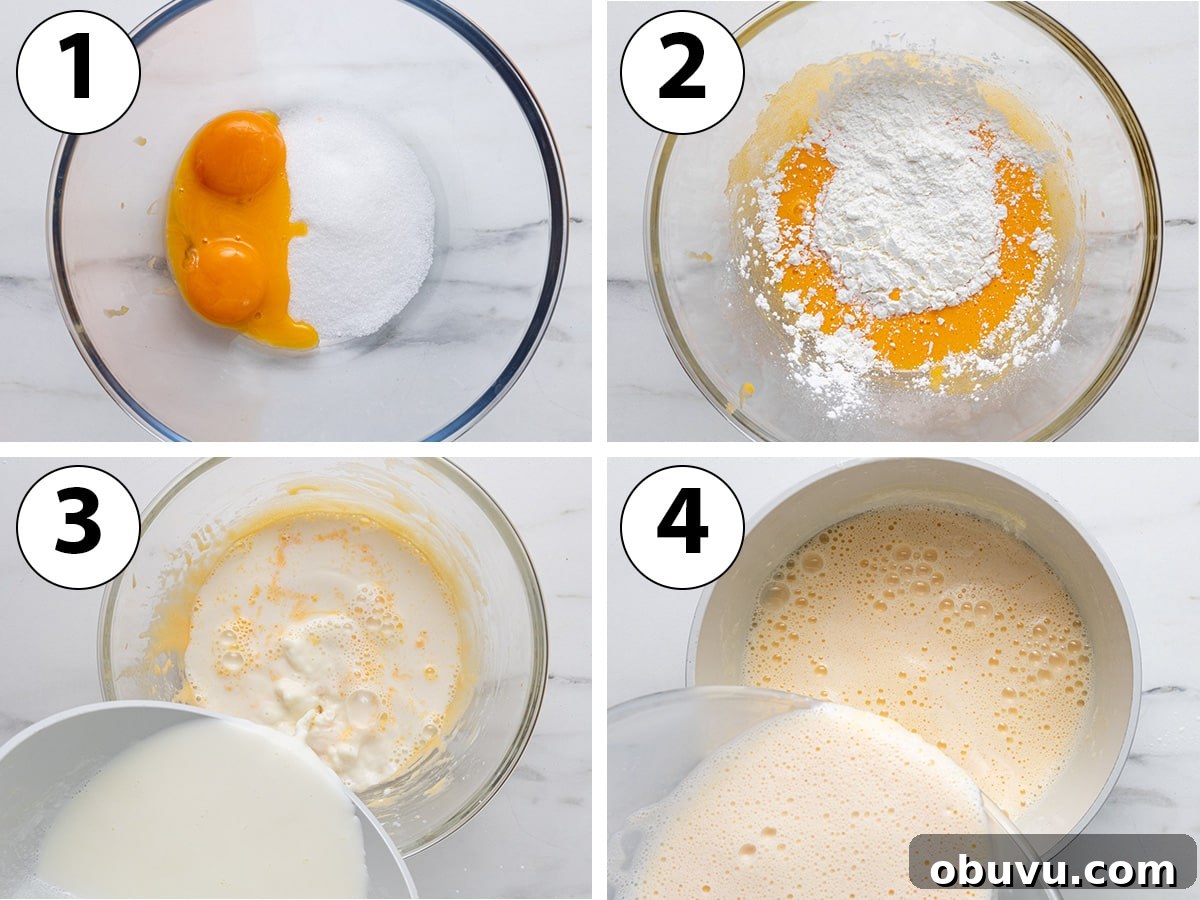
- Warm the milk with the split vanilla bean and scraped seeds until it simmers, then turn off the heat and let it infuse for at least 20 minutes. Remove the pod. (If using vanilla paste or extract, simply add it to the milk without infusing.)
- Whisk egg yolks and sugar until smooth, then add sifted cornstarch and whisk to combine.
- Temper the yolk mixture by slowly pouring the hot milk into it while whisking, then return the mixture to the saucepan.
- Cook over low heat, stirring constantly for 5–8 minutes until the cream thickens. When large bubbles start appearing, whisk vigorously for 30–60 seconds and remove from heat. Avoid boiling to prevent curdling.
- Off the stove, whisk in the first portion of room‑temperature butter a little at a time until combined. Transfer to a shallow dish, press plastic wrap directly onto the surface and chill for at least 1 hour (up to 24 hours). If chilled longer, bring to room temperature before continuing.
Adding the butter — method 1
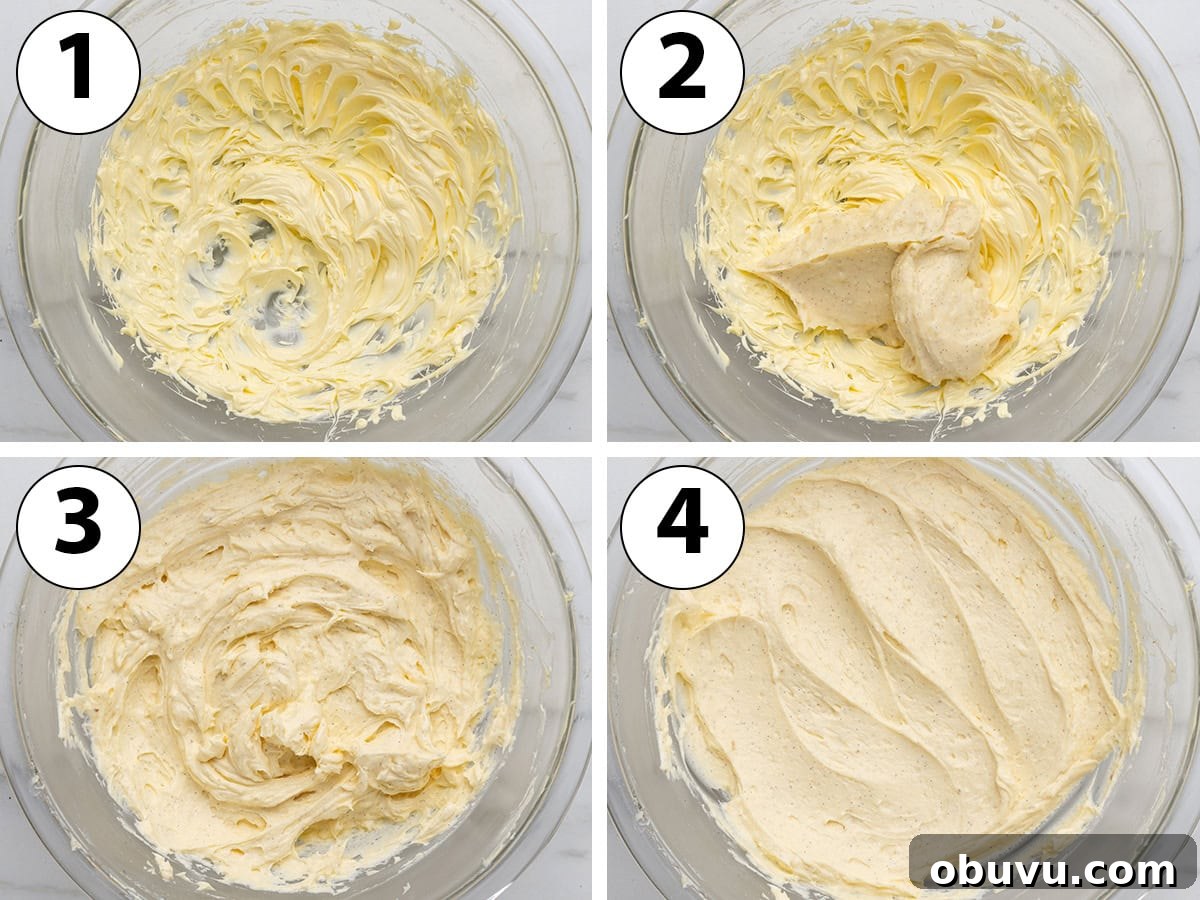
- Whip the softened butter in a stand mixer with the whisk attachment until light and fluffy (2–3 minutes). The butter should be soft but not oily.
- With the mixer running on medium, add the room‑temperature pastry cream in small amounts, ensuring each addition is fully incorporated before adding more.
- Once fully combined, increase speed to high and whip a couple more minutes until the mousseline is pale, smooth and airy. If it becomes too soft, chill briefly and then finish whipping.
Adding the butter — method 2
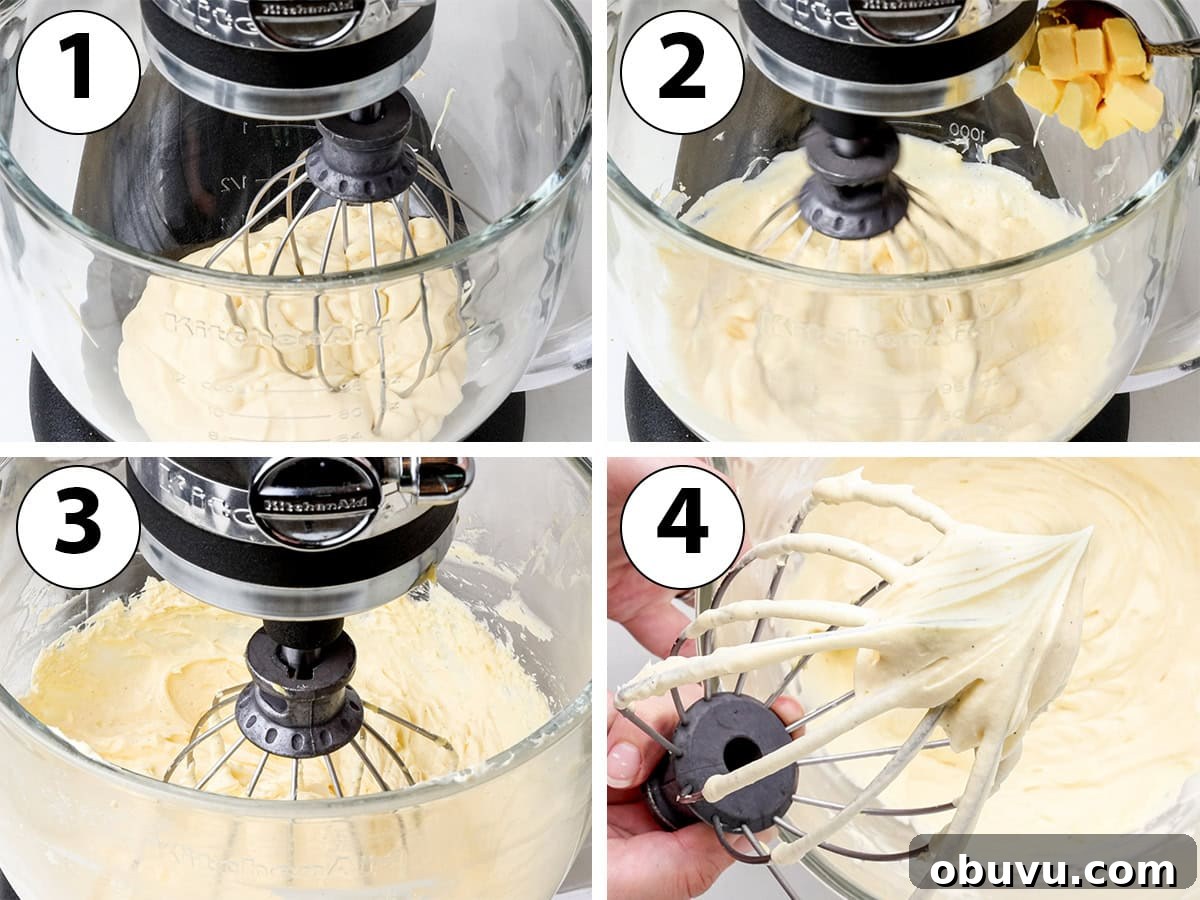
- Whisk the chilled pastry cream alone for a few minutes to loosen and bring it closer to room temperature.
- With the mixer on medium, add small cubes of soft butter gradually, making sure each addition is fully incorporated before adding more.
- When all butter is incorporated, whip on high for a short time until the cream is light and smooth. If splitting or lumps appear, adjust temperature slightly (cool briefly if too warm, allow to warm a bit if too cold) and continue mixing.
Recipe FAQs
Crème mousseline starts with crème pâtissière and gains volume and richness from the addition of a significant amount of butter. The result is lighter and fluffier than pastry cream alone, with a richer, more buttery flavor.
Both are butter‑enriched pastry creams, but the ratio differs. Mousseline typically uses more pastry cream relative to butter, yielding a lighter texture. German buttercream generally has a higher proportion of butter, producing a denser, richer buttercream.
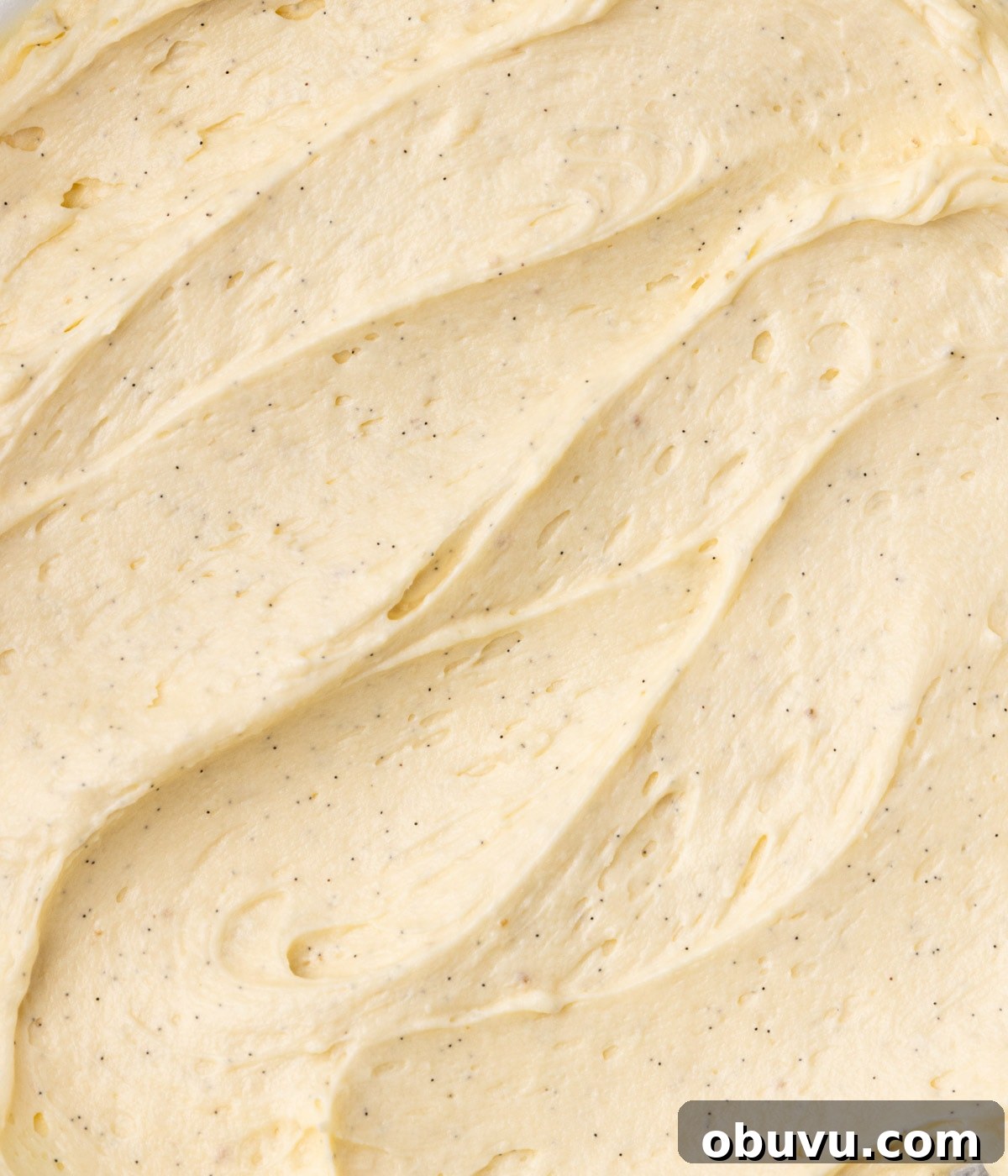
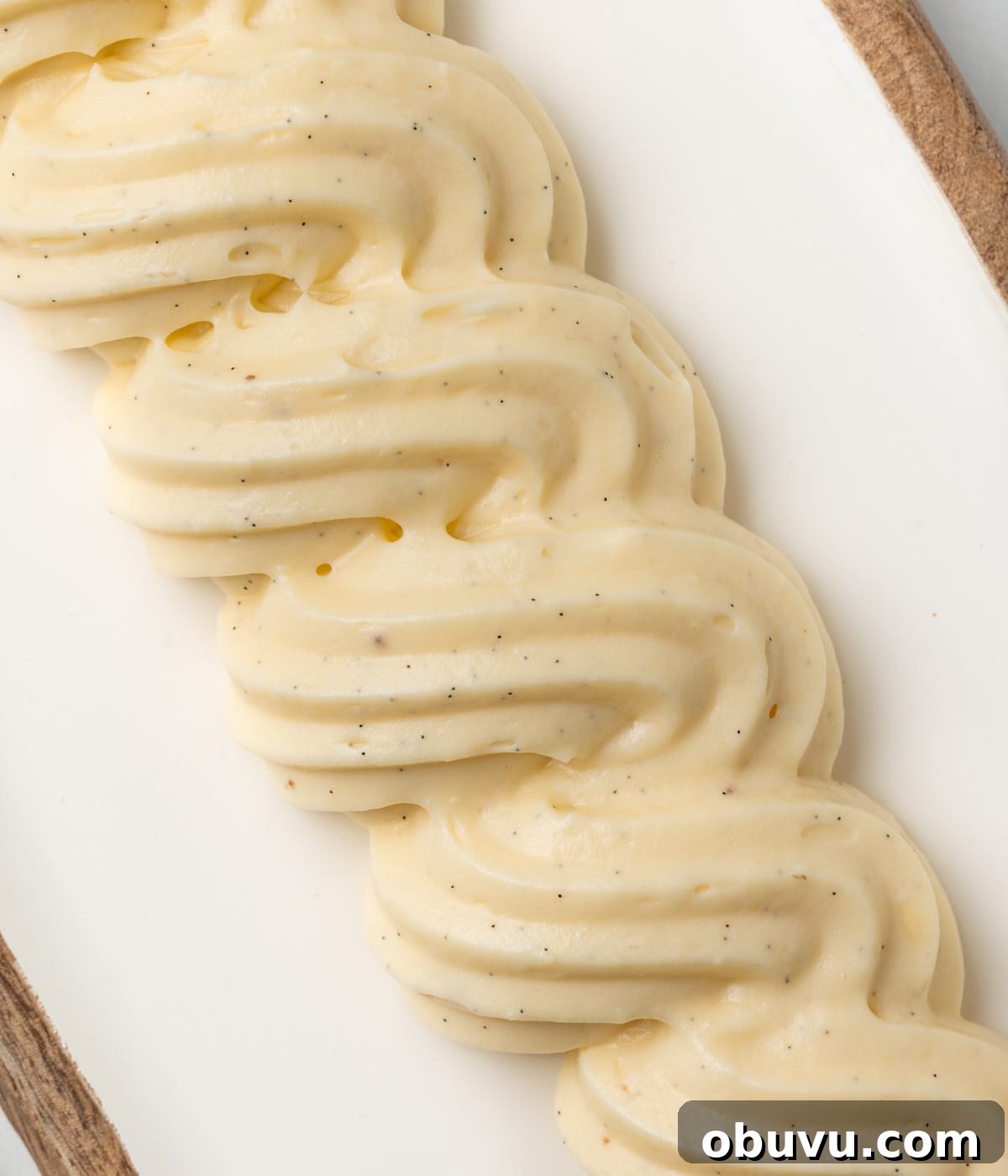
Mousseline is silky, slightly airy and smooth, denser than a whipped cream frosting but lighter than many buttercreams. Adjusting the butter-to-pastry-cream ratio will change the final texture.
Tips & Troubleshooting
- Grainy pastry cream: Usually caused by overheating; cook gently and aim for 82–84°C (180–183°F). If grainy, press the custard through a fine mesh sieve. A brief pass with an immersion blender can help smooth it, but avoid over‑blending.
- Splitting when adding butter: Temperature mismatch is the usual cause. Both components should be close to room temperature. If the mousseline looks greasy, chill briefly. If you see butter lumps, let the bowl warm slightly and continue whipping.
- Fixes: If too warm, cool in the refrigerator for a few minutes and rewhip. If too cold, allow to warm slightly at room temperature and whip again. Small temperature adjustments often rescue the texture.
How to use Crème Mousseline
- Entremets and layer cakes: Traditional for Fraisier and other classic French gateaux, mousseline provides structure and creaminess between layers.
- Choux pastries: Ideal for filling éclairs, profiteroles and Paris‑Brest when flavored with praline or other pastes.
- Tarts: Use mousseline for a lighter, more refined tart filling than straight pastry cream.
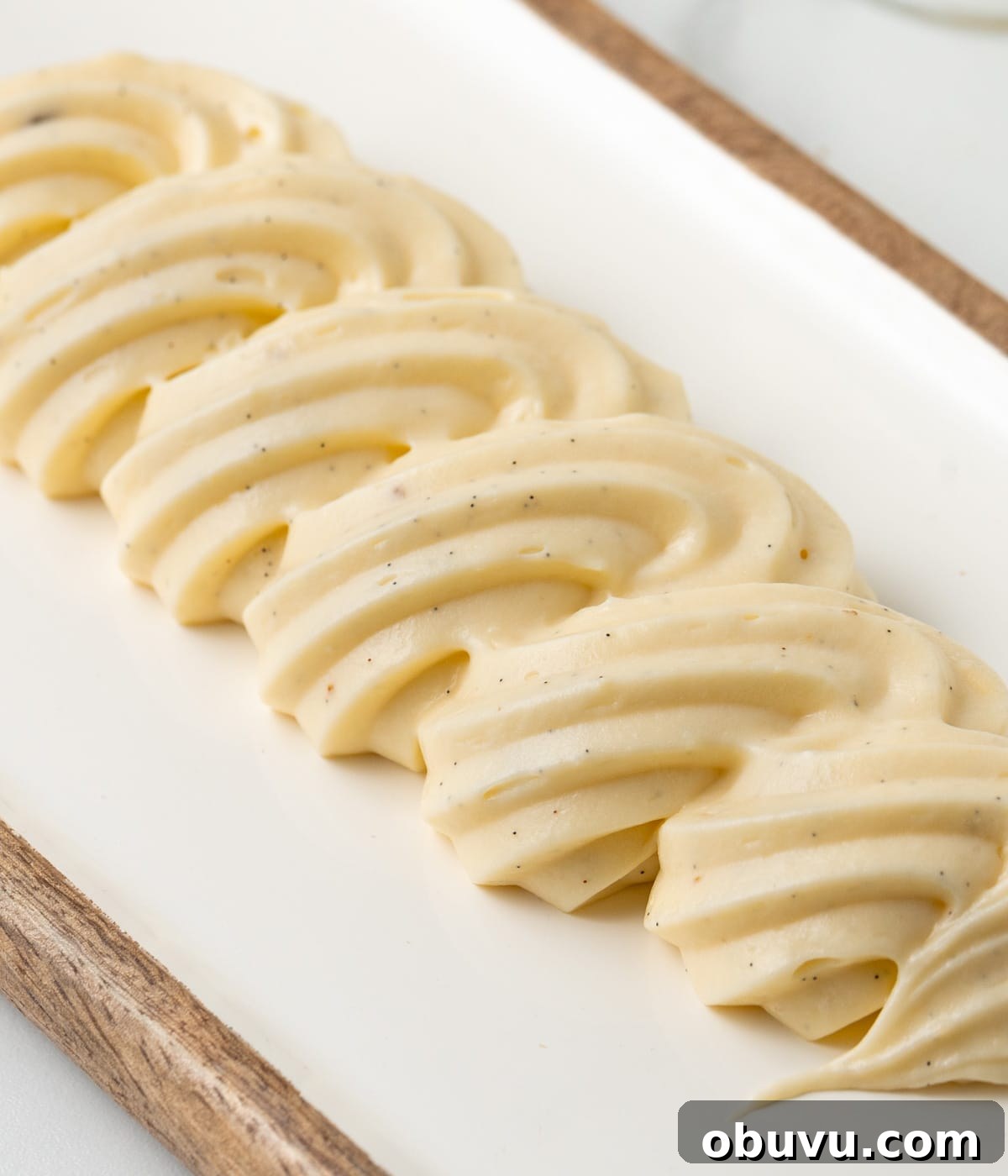
- Frosting or filling: Pipe or spread over cakes and cupcakes for a luscious, buttery finish.
Storing & Freezing
Store mousseline cream in an airtight container in the refrigerator for up to 3 days. Press plastic wrap directly onto the surface to prevent a skin from forming. Freezing is not recommended, as thawing will alter the light, whipped texture.
More basic French creams
- Crème Pâtissière (Pastry Cream)
- Diplomat Cream
- Bavarian Cream
- Crème Anglaise
- Crème Légère
- Chocolate Pastry Cream
- Crémeux
- Namelaka
- Crème Chantilly
- Stabilised Mascarpone Whipped Cream
My debut cookbook “Bite‑Sized French Pastries for the Beginner Baker” is available now.
Recipe
Ingredients
- 500 ml full cream / whole milk
- 1 vanilla bean, or 1½ tsp vanilla paste
- 4 large egg yolks, room temperature
- 60 g caster sugar
- 40 g cornstarch, sifted
- 50 g unsalted butter (part 1), soft, room temperature
- 200 g unsalted butter (part 2), soft, room temperature
Instructions
Crème Pâtissière (Pastry Cream)
- Heat the milk with the split vanilla bean and seeds to a simmer. Turn off heat and let infuse at least 20 minutes, then remove the pod. (If using vanilla paste, skip infusion.)
- Whisk yolks and sugar until smooth, then whisk in cornstarch.
- Temper the yolk mixture with the warm milk while whisking, then return it to the saucepan.
- Cook on low heat, stirring constantly, for 5–8 minutes until thickened. When large bubbles form, whisk vigorously for 30–60 seconds and remove from heat. Do not boil.
- Off the heat, whisk in 50 g butter a little at a time until incorporated. Transfer to a shallow dish, press plastic wrap onto the surface and chill at least 1 hour (up to 24 hours).
Adding the butter — Method 1
- Bring the chilled pastry cream back toward room temperature for about 30 minutes.
- Whip the 200 g softened butter until light and fluffy (2–3 minutes).
- With the mixer on medium, add the pastry cream in small portions until fully incorporated. Increase speed and whip briefly until the mousseline is light and smooth. Chill briefly if it becomes too soft.
Adding the butter — Method 2
- Whisk the pastry cream alone for 2–3 minutes to loosen it and bring it closer to room temperature.
- With the mixer on medium, add small cubes of soft butter gradually, fully incorporating each addition.
- Once all butter is added, whip on high for a short time until light and airy. Adjust temperature if the cream splits or shows butter lumps.
Notes
- Do not overheat the custard; ideal cooking temperature is about 82–84°C (180–183°F).
- If the pastry cream is chilled for a long time, return it to room temperature before adding the remaining butter.
- Whipping times depend on butter temperature—scrape the bowl as needed for an even texture.
- If the cream softens or splits, chill briefly or allow to warm slightly and rewhip as required.
Nutrition (per serving)
Calories: 665 kcal | Carbohydrates: 27 g | Protein: 7 g | Fat: 60 g
Made this recipe? Leave a comment below and share a photo of your creation on Instagram by tagging @a.baking.journey.