An epicurean adventure to: The United Kingdom
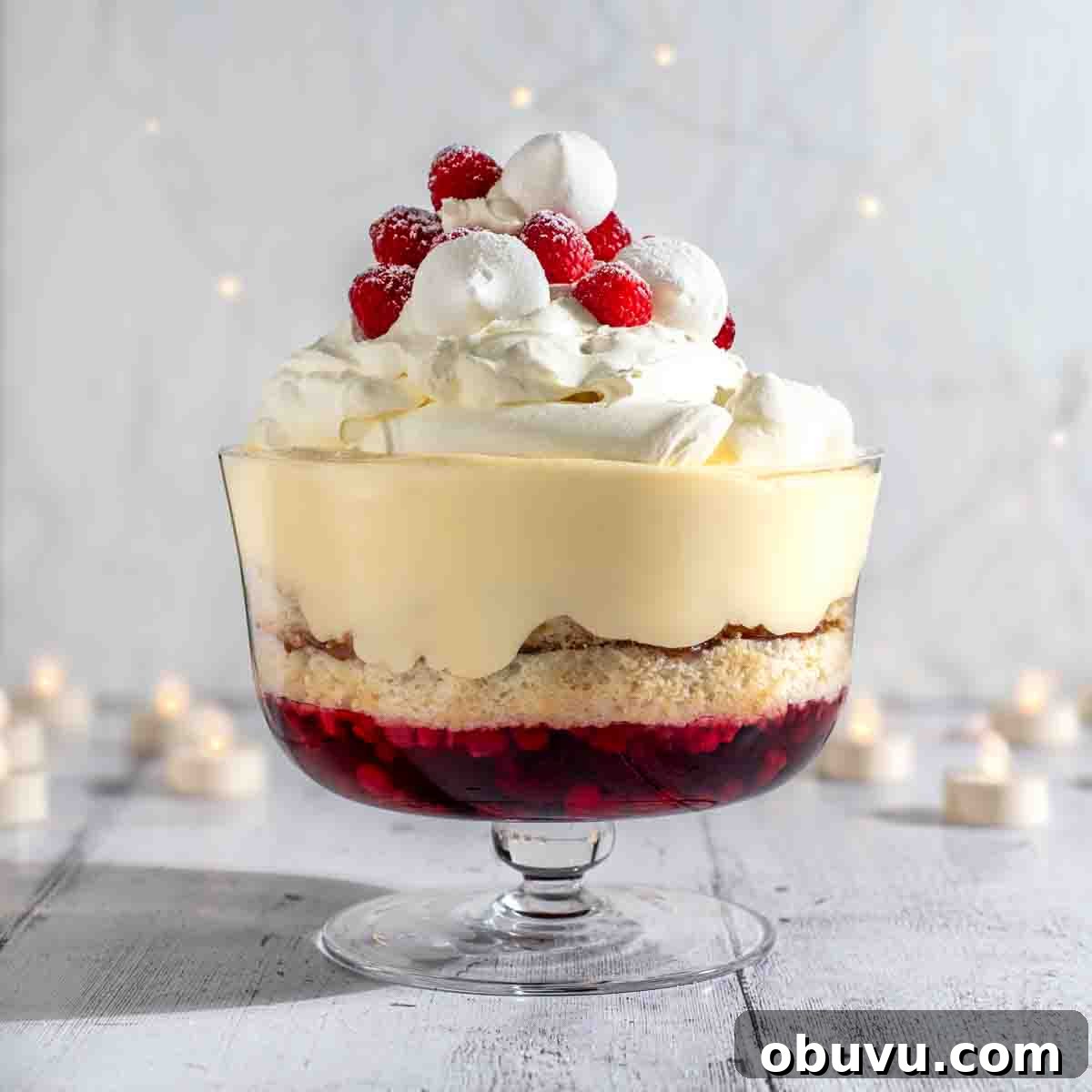
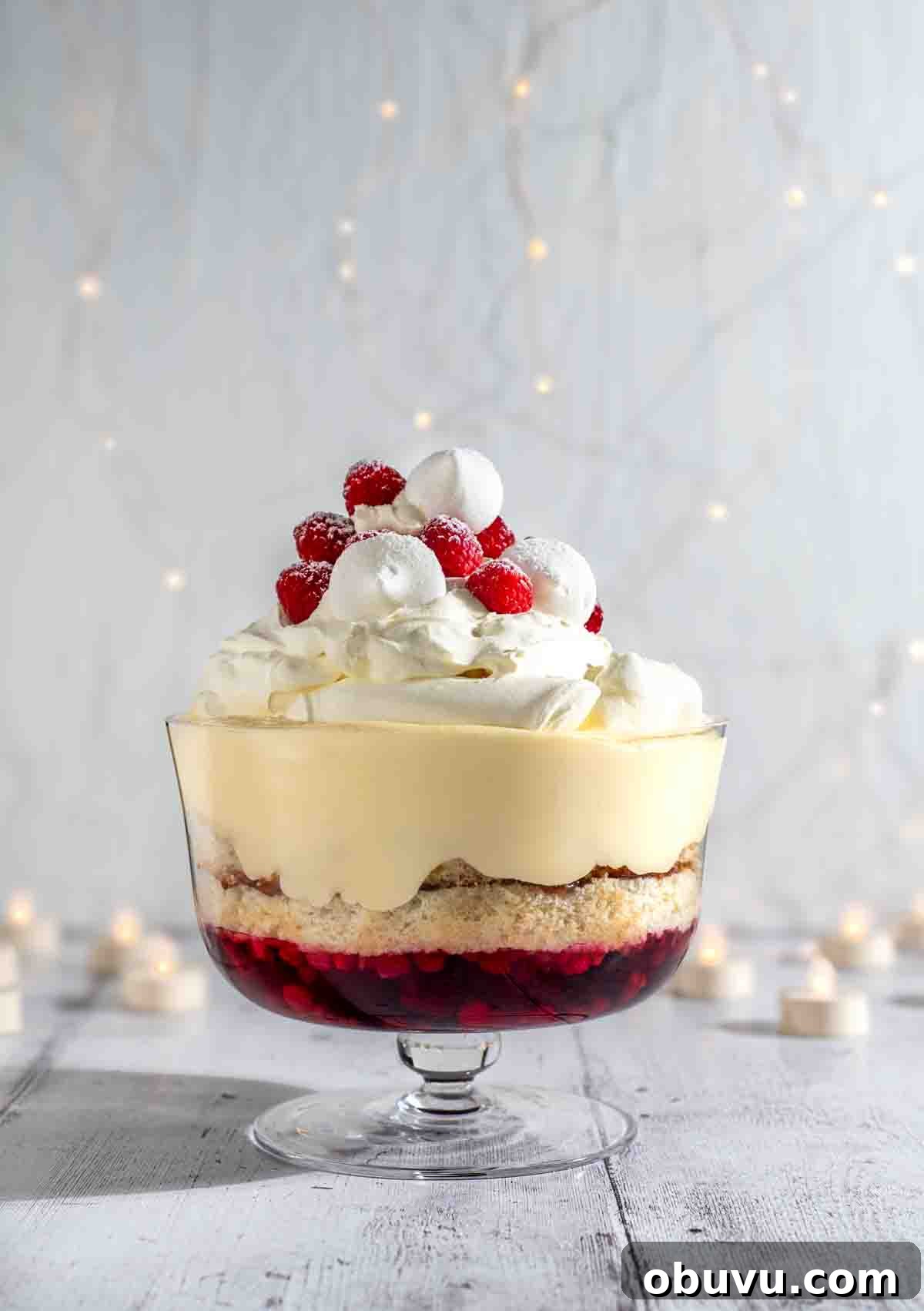
Christmas is a time for indulgence, and a classic Sherry Trifle makes a festive table truly memorable. English trifles vary from family to family, but the traditional trifle has four essential components.
The classic English trifle is built from:
- A cake base (sponge fingers, Madeira or sponge cake).
- A fruity layer (fresh or canned seasonal fruit).
- A luscious custard or crème pâtissière.
- A billowing cloud of whipped cream.
The order and style of each layer are yours to personalise: keep a family tradition or start a new one. Finish the trifle with decorations like flaked almonds, crushed biscuits, extra fruit, colourful sprinkles or mini meringues — whatever suits your taste and the occasion.
Jelly often sparks lively debate, but its use in trifle dates back centuries — the earliest recorded trifle with jelly appears in 1760. In this recipe we include a jelly layer: the cake is sandwiched with jam, lowered onto set jelly and then soaked with sherry.
For the custard layer we favour crème pâtissière for its richness, but a traditional custard works well too. The recipe below is written for a 20cm trifle bowl; scale quantities to fit a different size.
Remember: trifle isn’t just for Christmas — enjoy it anytime.
Fast facts – United Kingdom

| Location | The United Kingdom (UK) sits in north-western Europe and includes England, Scotland, Wales and Northern Ireland. |
| Capital | London. |
| Language | English is the most widely spoken language. The UK also has indigenous languages such as Welsh, Gaelic, Scots, Cornish and Manx, plus several regional and sign languages. |
| Population | About 66.8 million people. |
| Trivia | Letters to Father Christmas addressed to whimsical places such as “Toyland” are usually routed to Edinburgh; letters addressed to the North Pole are often forwarded to the Santa Claus Holiday Village in Rovaniemi, Finland. |
What’s to love about this recipe
- A traditional trifle makes a striking centrepiece for a festive table.
- This sherry trifle respects classic flavours while offering a modern presentation.
- The main elements — cake, fruit, custard and cream — can be adapted to suit your preferences.
- Crème pâtissière provides a rich, velvety custard layer, but quality shop-bought custard also works.
- The recipe is flexible and easy to scale for different bowl sizes.
Key ingredients and substitutions
See the recipe card below for the full ingredient list and quantities.
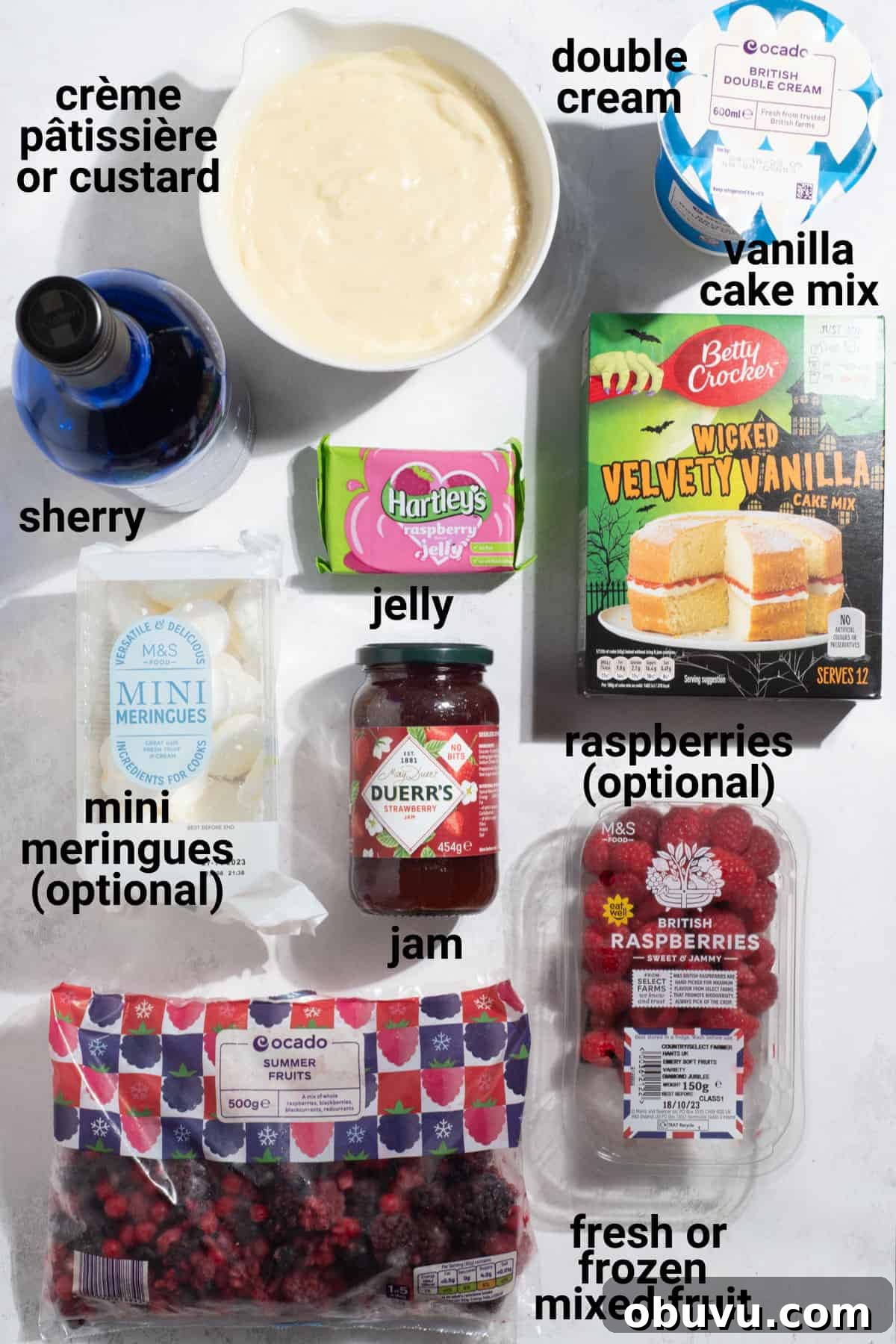
Vanilla cake mix or store-bought cake
This recipe uses an entire round cake instead of sponge fingers. A box cake mix is convenient and reliable — great for non-bakers — but you can bake a sponge from scratch or use shop-bought Madeira or sponge fingers. Match your cake pan to your trifle bowl: for a 20cm bowl use a 20cm (8″) tin. After baking, level the top, slice the cake horizontally and spread jam between layers. Trimming the edges is optional but gives a neater appearance.
Jelly
Raspberry or strawberry jelly pairs well with berries; choose a flavour that complements your fruit. Jelly quantity depends on bowl size and the thickness of the jelly layer you prefer — in a 20cm bowl ~500ml of prepared jelly works well.
Fruit
Frozen mixed berries are convenient (no need to defrost before adding; warm jelly will thaw them). Fresh berries, canned fruit (well-drained) or other seasonal fruits all work beautifully.
Jam
Strawberry or raspberry jam are classic choices. Match the jam to your fruit if desired — it’s all about personal taste.
Sweet sherry
This is a sherry trifle, so we typically use eight tablespoons (about 120ml). Adjust to taste or substitute another fortified wine such as Madeira. For a non-alcoholic version, omit the sherry or replace it with fruit juice like orange.
Crème pâtissière or custard
Crème pâtissière (pastry cream) is richer and thicker than standard custard because of its egg yolks and gives excellent texture. It’s straightforward to make and can be prepared ahead. If short on time, use a quality ready-made custard or cook a custard from powder. Aim for a slightly thicker custard so the trifle doesn’t become soggy.
Double cream
Use double cream (heavy cream) for a luxuriously thick whipped topping; whipping cream is an acceptable substitute. Tips: whip cold cream for better stability, and optionally add a tablespoon of icing sugar and a teaspoon of vanilla to make Chantilly cream. Stop whipping when soft peaks form to keep the topping light and cloud-like.
Toppings
Be creative: fresh raspberries and mini meringues are lovely, but you can use sliced strawberries, crushed biscuits, chocolate shavings, toasted nuts, edible flowers or a fruit coulis. Small jelly cubes, crushed candy canes or festive decorations also work.
Advisable tasks to do a day in advance
Christmas Day gets busy, so prepare ahead to save time and stress. Start the trifle a day early:
- Bake the cake.
- Prepare and set the jelly layer.
- Make the crème pâtissière or custard; cover with cling film to prevent a skin and give it a good whisk before using. Add a splash of milk or cream if it has become too firm.
How to make Sherry Trifle: Step-by-step
- Bake the box cake mix as directed and cool completely. Use a tin that matches your trifle bowl diameter (e.g. 20cm).
- Prepare the jelly according to the packet instructions.
- Place fruit (375ml fresh or frozen mixed berries in this recipe) into the bottom of the trifle bowl. If using frozen berries, they can go in straight from the freezer; drain canned fruit well first.
- Pour the prepared jelly over the fruit to your preferred level.
- Chill the bowl in the fridge for at least 6 hours, or overnight, until the jelly is fully set.
- Trim the cake top if desired, then slice the cake horizontally to create two layers.
- Place the first cake layer on top of the set jelly and fruit.
- Spread jam (about 4 tablespoons) evenly over the cake layer, leaving a small margin at the edge.
- Place the second cake layer on top of the jam-covered layer.
- Spoon sweet sherry (about 8 tablespoons) evenly over the top cake layer.
- Slowly spoon in crème pâtissière or custard (about 1000ml), leaving room for the cream layer.
- Spoon or dollop whipped double cream (about 500ml, whipped to soft peaks) on top, building a billowy finish with a large spoon.
- Decorate with fresh raspberries, mini meringues or other toppings as desired.
Top tips
Prep in advance
Bake the cake, set the jelly and prepare the custard the day before. Cover custard or pastry cream with cling film to stop a skin forming.
Smooth the custard
If chilled, whisk the crème pâtissière or custard before using to restore a smooth consistency. Add a little milk or cream if it’s too firm.
Choose thicker custard
Use a slightly thicker custard than crème anglaise to prevent sogginess and to keep the cream layer from sinking.
Whip the cream just before serving
Whip the cream immediately before serving to keep it glossy and stable.
Drain canned fruit thoroughly
If using canned fruit, drain well to avoid excess moisture in the trifle.
Variations
- Cake: Use Madeira cake, swiss roll, sponge fingers or ladyfingers instead of baking a cake.
- Fruit: Substitute with fresh strawberries, blueberries, peaches, mandarins or canned fruit. Dried fruit compote also pairs well with custard.
- Jelly: Try different jelly flavours to match the fruit, from traditional raspberry to more exotic options depending on availability.
- Make individual trifles in glass bowls or glasses for single servings.
Trifle topping ideas
- Fresh fruits
- Crushed amaretti, shortbread or ginger snaps
- Chocolate shavings or crushed Flake
- Sugared rosemary sprigs (decoration only)
- Sprinkles, nuts, mint leaves or edible flowers
- Toasted coconut, crushed praline or fruit coulis
- Small cubes of jelly, crushed candy canes or truffles for an extra treat
Storage suggestions
Store leftover trifle in the fridge, tightly covered to prevent drying or odour absorption. Consume within a day or two for best texture; trifles do not freeze well as dairy layers can separate and become watery.
More Christmas recipes
Try other classic treats for your festive menu, from roast potatoes to cookies and mince pies — there are many easy and delicious options to complement your trifle.
Recipe

Festive Sherry Trifle (English Trifle)
Equipment
- 1 20cm diameter trifle bowl
Ingredients
- 1 box vanilla cake mix (or 1–2 shop-bought plain Madeira loaves or sponge fingers)
- 500ml prepared strawberry or raspberry jelly (adjust to bowl size)
- 375ml fresh or frozen mixed berries
- 4 tbsp strawberry or raspberry jam (about 60ml)
- 8 tbsp sweet sherry (about 120ml)
- 1000ml crème pâtissière or custard (shop-bought or homemade)
- 500ml double cream, fridge-cold, whipped to soft peaks
- 50g fresh raspberries (optional, for decoration)
- Mini meringues (optional, for decoration)
Instructions
The cake
- Bake the box cake mix as directed and allow to cool completely. Use a tin that matches your trifle bowl diameter (20cm if using a 20cm bowl). Trim and slice horizontally to create two layers.
The jelly layer
- Prepare the jelly according to packet instructions.
- Place fruit into the bottom of the trifle bowl (frozen berries can be used straight from the freezer; drain canned fruit well).
- Pour the prepared jelly over the fruit to your preferred level.
- Chill in the fridge for at least 6 hours or overnight until fully set.
Build the trifle
- Place one cake layer on top of the set jelly and fruit.
- Spread jam evenly over the cake layer, leaving a small margin at the edges.
- Top with the second cake layer.
- Spoon the sherry evenly over the cake.
- Slowly spoon in the crème pâtissière or custard, leaving room for the cream.
- Top with whipped double cream, adding spoonfuls to create a billowy finish.
- Decorate with raspberries, mini meringues or other toppings of your choice.
Notes
Prep the cake, jelly and custard a day ahead to save time. Cover custard with cling film to prevent a skin. If pastry cream has set in the fridge, whisk or stir it, adding a little milk or cream if necessary to loosen. Choose a slightly thicker custard to avoid sogginess. Whip cream just before serving for the best texture.
Nutritional data disclaimer
The nutritional information is an estimate provided by a third party and may vary with brands and portion sizes. Consult a qualified professional for personalised dietary advice.
Nutrition
| Carbohydrates: 65 g
| Protein: 7 g
| Fat: 21 g
| Sugar: 33 g
For food safety advice, including guidance on food allergies, consult official food safety resources.
More sweet treats from the United Kingdom
Explore other British classics to round out your festive spread: Gypsy Creams, Chocolate Tiffin, Eve’s Pudding, Sticky Ginger Cake, Fruity Flapjacks and more.