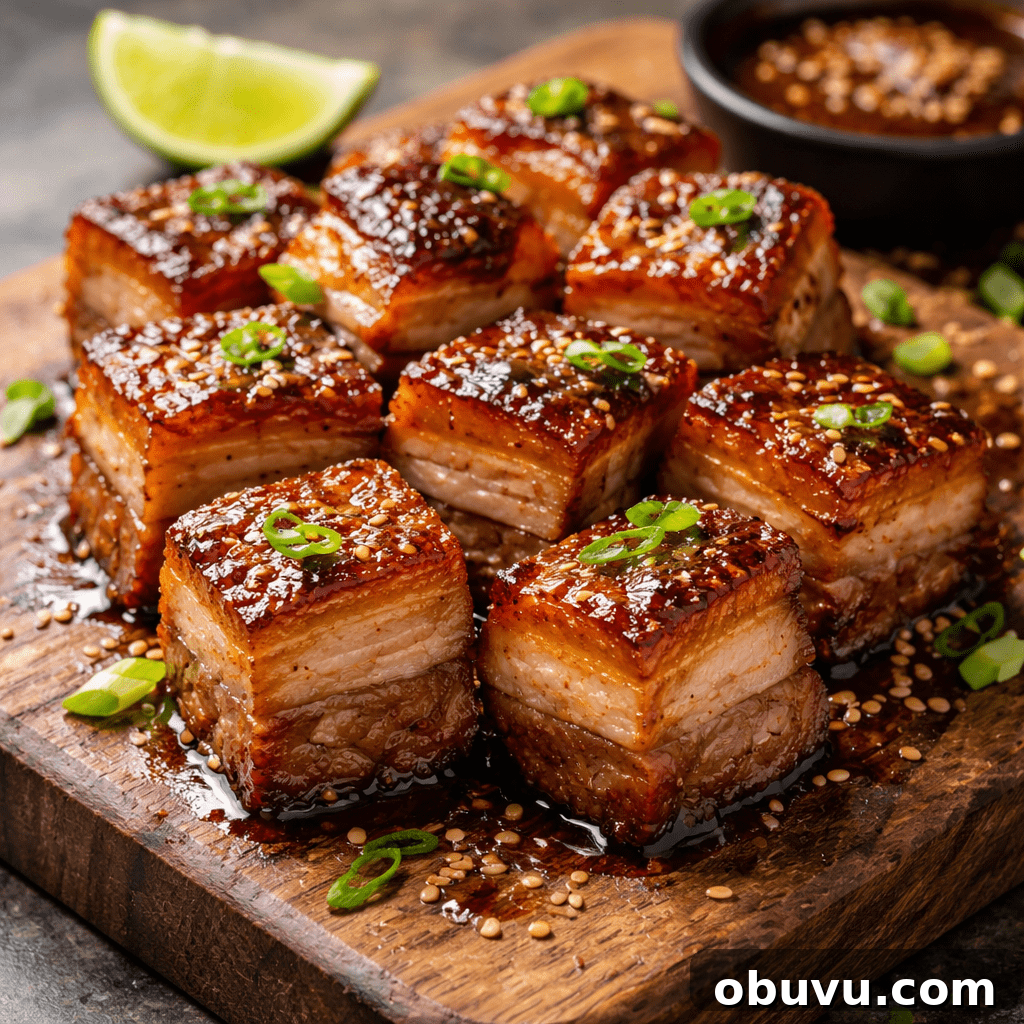
These Sticky Asian Glazed Pork Belly Burnt Ends were part of the People’s Choice winning lineup at EGGtoberfest in 2017 with Team EGGcellent Eats. The trick isn’t just the smoke—it’s the transformation from a well-seasoned, dry bark into a glossy, sticky lacquer. We use the Big Green Egg to render the fat slowly until the cubes are probe-tender, then finish them in a pan with a glaze featuring gochujang, ginger, and honey.
Whether you need a show-stopping appetizer or a main dish served over jasmine rice, this recipe balances fat, smoke, and bright Asian flavors. Fire up the egg and prepare for true barbecue candy.
The “So What?” — Why the Asian Glaze?
Pork belly is incredibly rich. A typical American-style BBQ sauce adds more sugar and heaviness, while an Asian glaze brings acidity from rice vinegar and fermented heat from gochujang to cut through the fat. That balance keeps the dish lively rather than cloying, so every bite feels fresh and exciting rather than overly sweet.
Step 1: Sourcing the Perfect Pork Belly
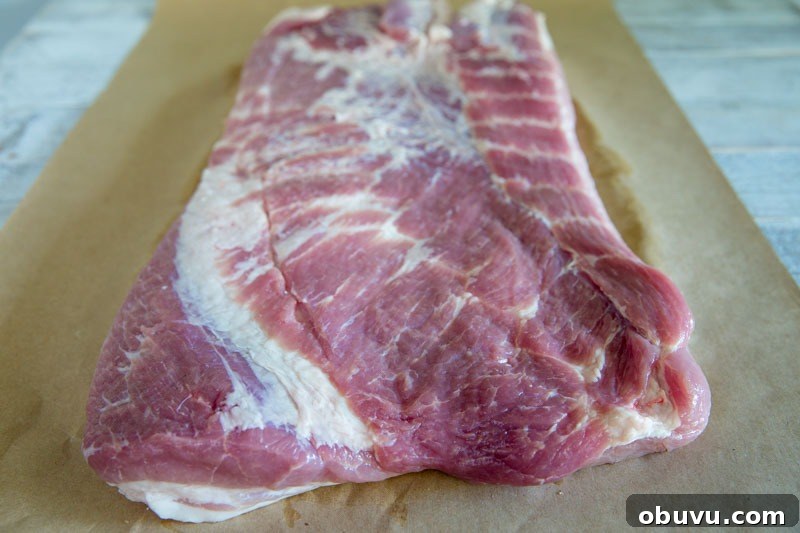
Great burnt ends start with quality meat. For bite-sized pork belly burnt ends you want a slab that can sustain a long, slow cook while staying juicy.
- Where to buy: Warehouse grocers such as Costco often carry good pork belly at a fair price. Local butchers, Asian markets, and specialty grocers are also excellent sources.
- What to look for: Choose a slab with clear layers of meat and fat. Avoid pieces that are almost all fat; look for roughly balanced striations of pink meat and white fat for best texture.
- Skin removed: Most retail pork belly comes without skin. If yours has skin, trim it off—crispy skin is great in other preparations but becomes tough during a burnt-end style cook.
The “So What?” — Whole Slab vs. Pre-Sliced
Pre-sliced strips can work, but buy a whole slab if possible. Cubing the meat yourself lets you cut uniform 1.5-inch squares so every piece cooks evenly. If pieces vary, small cubes will dry out before larger ones finish.
Step 2: The Cubing and the Foundation
Now transform the slab into bite-sized morsels. Uniform cubes will reach the desired tenderness at the same time.
- Trim and cut: If the skin is present, remove it. Cut the belly into uniform 1.5-inch cubes—remember they will shrink slightly as fat renders.
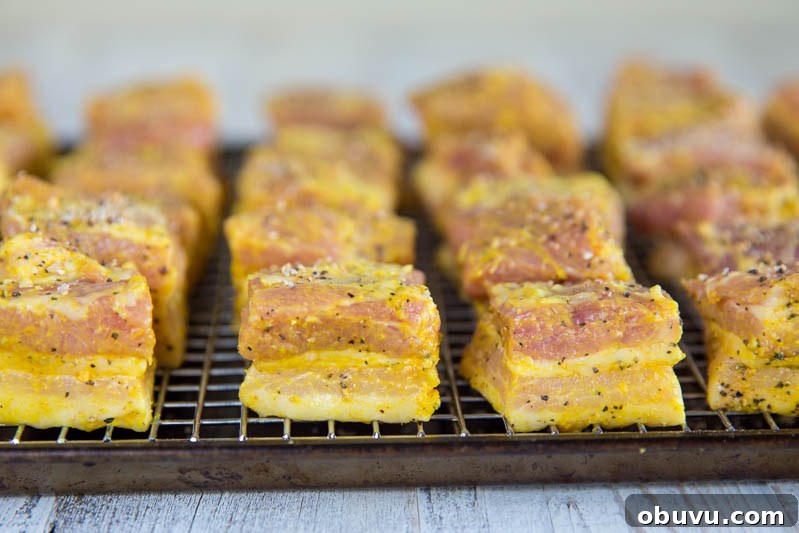
- Bind: Place cubes in a bowl and coat lightly with yellow mustard. The mustard’s vinegar helps the seasoning adhere and aids the surface to tenderize; it won’t make the pork taste like mustard.
- Season: Keep it simple—generous salt and coarse black pepper. The glaze provides complex flavors later; the salt-and-pepper base seasons the meat itself.
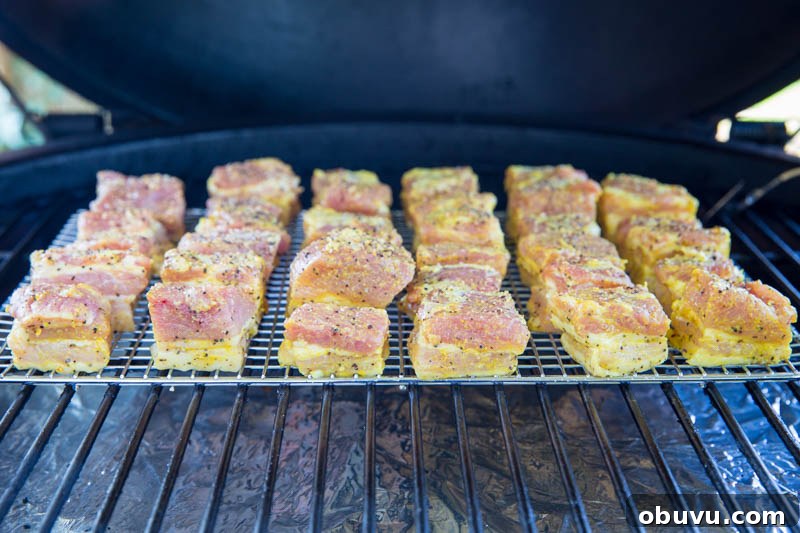
- Rack placement: Arrange cubes on a wire cooling rack set inside a sheet pan. This allows smoke to circulate around every side and makes transferring to the egg easy.
Grilling by Feel: The Spacing Secret
Leave at least a half-inch between cubes so they don’t touch. Crowded cubes steam instead of smoke and won’t develop the deep mahogany bark that makes the final glaze pop visually and texturally.
Step 3: The Smoke Session
Set up the Egg for indirect heat and let it do its work. The goal is steady, gentle heat that renders fat and builds smoke flavor without burning sugars.
- Setup: Use a convEGGtor (legs up) for indirect cooking and place the cooking grid on top.
- Temperature: Target 275°F. This low-and-slow range renders fat without caramelizing sugars too quickly.
- Wood: Apple or cherry wood pairs perfectly with the Asian glaze, adding subtle sweetness and a mahogany color. A single chunk of hickory is an option for a stronger smoke profile.
- Placement: Place the wire rack directly on the cooking grid so smoke reaches all sides.
Grilling by Feel: The Bark Check
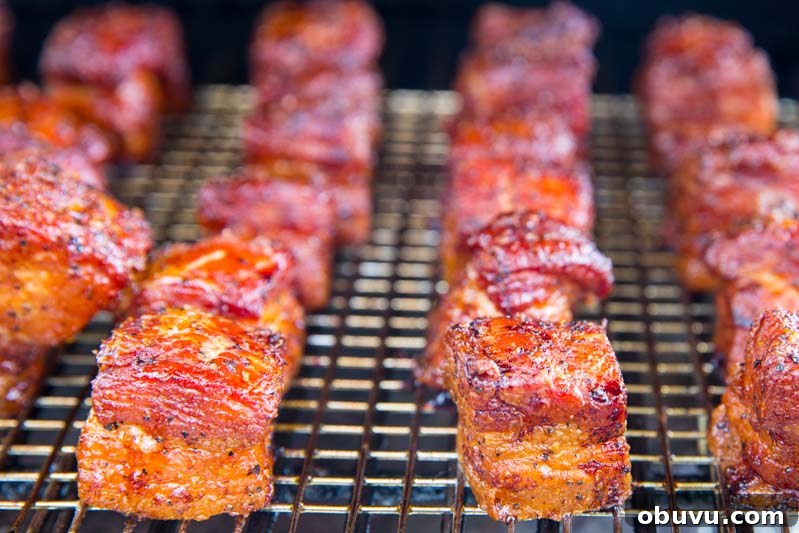
Smoke the cubes for about 2.5 to 3 hours. Watch for edges to darken, fat to become translucent and slightly squishy, and a deep reddish-brown bark to form. These visual cues are just as important as time.
The “So What?” — Why the convEGGtor Matters
Pork belly renders a lot of fat; if cooked over direct heat you’ll get constant flare-ups and burnt spots. The convEGGtor creates an oven-like environment that protects the meat from flames and lets fat melt slowly, basting the meat from the inside out.
Step 4: Managing the Bark and the Spritz
During this phase you want to build a robust bark while keeping the exterior supple. Patience here pays off.
- Spritz: Every 45 minutes quickly spritz the cubes with apple juice. The moisture helps caramelization while preventing the edges from becoming hard.
- Temperature target: Aim for an internal temperature around 190°F. Check a few larger cubes with an instant-read thermometer.
- Texture check: At 190°F the fat should be well rendered and the cubes should feel tender when squeezed lightly—close to probe-tender but not quite finished.
Grilling by Feel: Color is Your Guide
If cubes hit 190°F but still look pale, give them more time to pick up smoke. If the bark is darkening too fast, move to the pan to avoid burning. Aim for a mahogany exterior and a tender interior.
The “So What?” — Why Apple Juice?
Spritzing cools the surface so the interior can catch up, and smoke adheres better to cold, moist surfaces. Keeping the surface tacky with apple juice helps the pork absorb more fruitwood flavor.
Step 5: Crafting the Sticky Asian Glaze
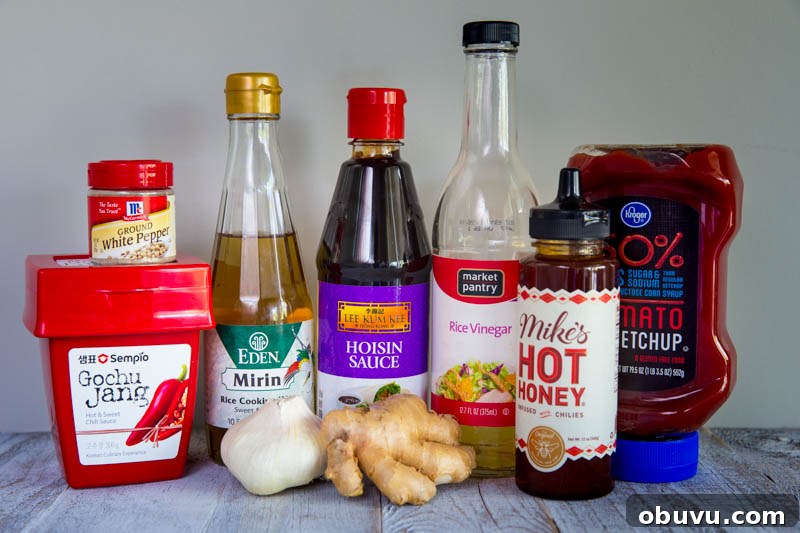
While the pork finishes its initial smoke, prepare the glaze. This sauce combines the fermented depth of gochujang with the sweet, salty, and tangy elements of hoisin, honey, and rice vinegar for a glossy, layered finish.
Glaze components:
- Gochujang: Fermented red chili paste that delivers savory heat and umami.
- Hoisin: Thick, sweet, and salty—acts as an Asian-style BBQ base.
- Honey: Gives shine and sticky sweetness.
- Ketchup: Adds tomato tang and helps the glaze cling.
- Mirin or Korean rice wine and rice vinegar: Provide acidity to balance the fat.
- Fresh garlic and ginger: Finely grated for aromatic brightness.
- White pepper: Offers a clean, floral heat that suits Asian flavor profiles.
The “So What?” — Why White Pepper?
White pepper is common in Asian cooking because it has a sharper, slightly fermented earthiness and doesn’t alter the bright red color of the glaze. It warms the palate without overwhelming ginger and honey notes.
Step 6: The Transition to the Pan
When cubes reach about 190°F and show a deep mahogany color, switch to the finishing phase to braise them in the glaze and melt any remaining connective tissue.
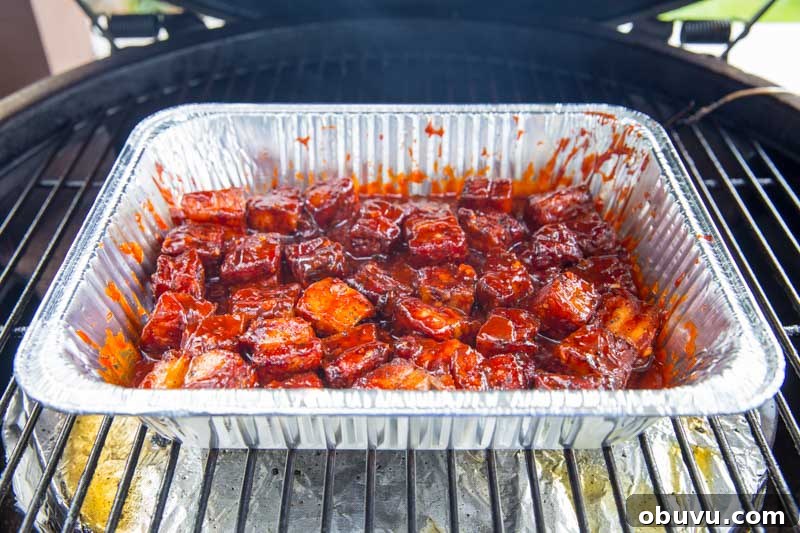
- Transfer: Remove the wire rack and transfer the cubes to an aluminum pan.
- Coat: Pour the prepared glaze over the hot cubes and toss gently to coat every piece.
- Seal: Cover tightly with foil to trap heat and moisture, allowing the pork to braise in its rendered fat and the glaze.
Return the covered pan to the grill for 45–60 minutes, aiming for an internal temperature around 203°F–205°F. At that point the pork should be probe-tender and the thermometer should slide in and out with no resistance.
The “So What?” — Why Use an Aluminum Pan?
A pan prevents the sugar-heavy glaze from dripping onto the coals and creating acrid smoke. It also lets the pork confit in the sauce, breaking down collagen and turning the meat into tender BBQ candy rather than chewy bites.
The Final Reveal: How to Know When They Are Done
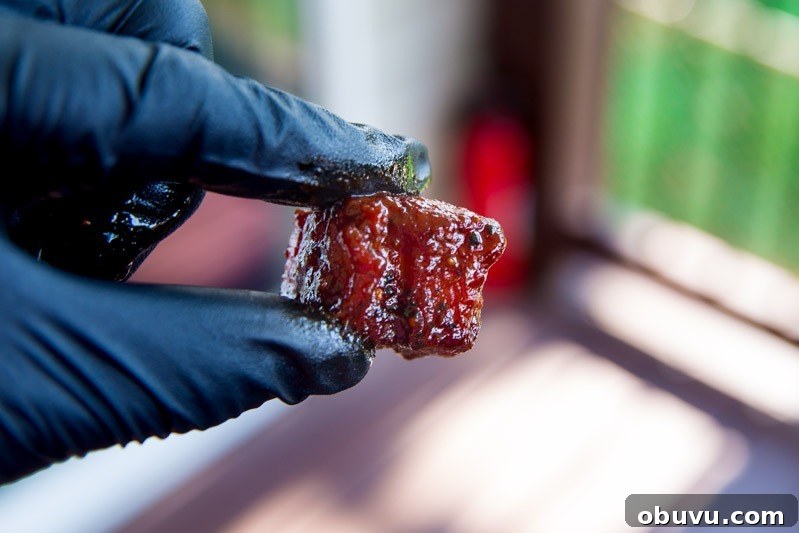
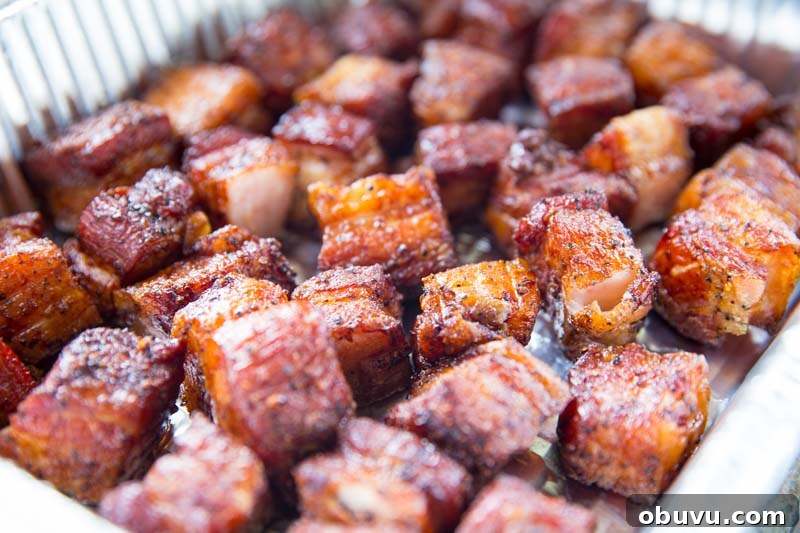
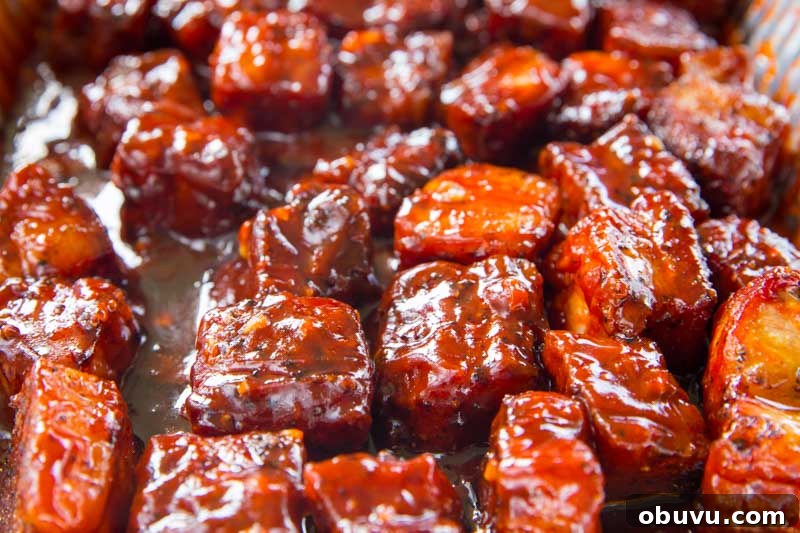
After the final braise, remove the foil and check two things: glaze consistency and texture. The glaze should be thick, dark, and sticky—clinging to each cube rather than pooling. For texture, a probe or toothpick should slide in and out with zero resistance, similar to cutting through room-temperature butter.
If the glaze is still thin, leave the pan uncovered on the grill for 5–10 minutes to allow moisture to evaporate and sugars to caramelize into a tacky finish. Once reduced and probe-tender, remove the pan and serve hot.
These pork belly nuggets are a crowd-pleaser: smoky, sweet, spicy, and richly satisfying. The glaze also works beautifully on other proteins—try it on salmon, ribs, or even roasted vegetables for a punchy Asian glaze.
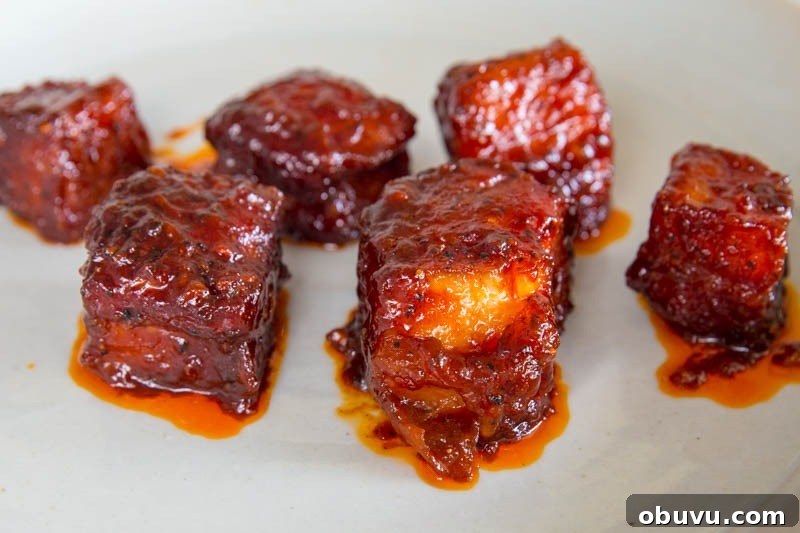
Sticky Asian Glazed Pork Belly Burnt Ends (BBQ Candy)
A sticky, savory-sweet glaze with fermented heat balances the richness of pork belly to create addictive bite-sized burnt ends.
Equipment
- 1 wire rack
Ingredients
Pork Belly:
- 1.5–3 pounds pork belly, skin removed
- 3 tbsp yellow mustard (binder)
- 1 tbsp kosher salt
- 1.5 tbsp coarse ground pepper
Asian Glaze:
- 1/2 cup gochujang
- 1/4 cup hoisin sauce
- 1/4 cup ketchup
- 1/4 cup honey
- 1/4 cup soy sauce
- 1/4 cup Korean rice wine (mirin can be substituted)
- 1 tbsp unseasoned rice vinegar
- 2 tbsp fresh ginger, finely grated
- 3 cloves garlic, finely grated
- 1 tbsp ground white pepper
Instructions
- Prep: Cut the pork belly into 1.5-inch cubes. Coat with a thin layer of mustard and season generously with salt and pepper.
- Smoke: Set the Big Green Egg to 275°F for indirect cooking with fruitwood. Place cubes on a wire rack and smoke until the internal temperature reaches 190°F (about 2.5 to 3 hours). Spritz with apple juice every 45 minutes.
- Glaze: Whisk the glaze ingredients together while the pork smokes. When the cubes reach 190°F, transfer them into an aluminum pan and toss thoroughly with the glaze.
- Braise: Cover the pan tightly with foil and return to the grill for 45 to 60 minutes until the pork is probe-tender (around 203°F to 205°F).
- Finish: Remove the foil for the last 10 minutes if you want the glaze to thicken further. Serve hot.
Additional Info
Prep Time: 20 minutes | Cook Time: 4 hours | Total Time: 4 hours 20 minutes | Servings: 6
Course: Appetizer, Main | Cuisine: American BBQ, Asian