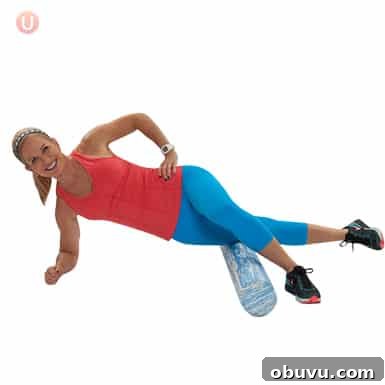
Using a foam roller on the IT band is an effective way to relieve tightness and restore mobility in the hips and lateral thigh. Tight iliotibial (IT) bands are common, particularly among runners and active people, and can lead to pain and movement restrictions if left unaddressed. Regular foam rolling can both help resolve existing tightness and reduce the chance of future problems.
The IT band is a long strip of connective tissue that runs along the outside of the thigh from the hip to the shin. Because it crosses the hip and knee joints, tightness here can contribute to hip discomfort, knee pain, or altered movement patterns. When you roll the outer thigh on a foam roller, move slowly, breathe steadily, and pause on any tender spots you encounter. Holding gentle pressure on a tight knot helps the tissue relax and can break up adhesions over time.
Foam rollers are affordable, widely available at sporting goods stores, and easy to carry. Although they look simple, they are made from firm foam and can be uncomfortable when you first use them—mild discomfort is normal as the tissue releases.
Foam rolling offers many benefits, including improved circulation, reduced muscle tension, and enhanced flexibility. It’s commonly used as part of myofascial release routines to speed recovery and support range of motion. Try the IT band roll before or after workouts, or as part of a broader routine for loosening tight muscles.
How To Perform Foam Roller IT Band
1) Lie on your right side with your right forearm on the floor for support and the foam roller positioned just above the right knee.
2) Bend your left knee and place your left foot in front of the right leg to help stabilize your hips.
3) Keep your right leg relaxed and slowly roll your body so the foam roller moves up the outside of your thigh toward the hip. Move gently back and forth for about 30–60 seconds, focusing on areas of tightness or discomfort. When you find a tender spot, pause and breathe into the area for several breaths to encourage release.
4) Repeat the same steps on the left side.